Antibiotic Residues in Milk – Why Early Detection Matters
Milk quality assurance has always been a critical part of the dairy industry, but growing consumer expectations, tighter compliance requirements, and the financial implications of contamination events mean antibiotic residue management is more important than ever. Across New Zealand’s dairy sector, companies such as Evident are seeing increasing demand for rapid screening technologies that help farmers and processors manage residue risk more proactively and with greater confidence.
For dairy farmers, even a single contaminated vat can have serious consequences. Beyond the immediate financial loss of dumped milk, there are broader impacts including disruption to milk collection, compliance issues, reputational damage, and potential downstream effects throughout the supply chain.
In export-driven dairy markets such as New Zealand, maintaining confidence in milk quality and food safety standards is critical. Managing antibiotic residue risk effectively helps protect not only individual farming operations, but also the reputation of the wider dairy industry.
While antibiotic treatments remain an important part of animal health management, ensuring treated cows are correctly identified and withholding periods are adhered to is essential. However, despite best management practices, mistakes can still happen. Human error, communication breakdowns, accidental line-ups, or animals re-entering the herd too early can all lead to antibiotic residues entering the milk supply.
This is where rapid screening technology is becoming increasingly valuable on farm and at processing sites. Evident believes the dairy industry is moving toward more proactive quality assurance systems, where rapid onsite screening supports existing herd management and compliance processes.
Traditionally, residue testing has often involved sending samples away for laboratory analysis or relying solely on withholding procedures and management systems. While laboratory testing remains important, waiting for results can create delays and uncertainty, particularly when milk cannot be returned to the herd supply until confirmation is received.
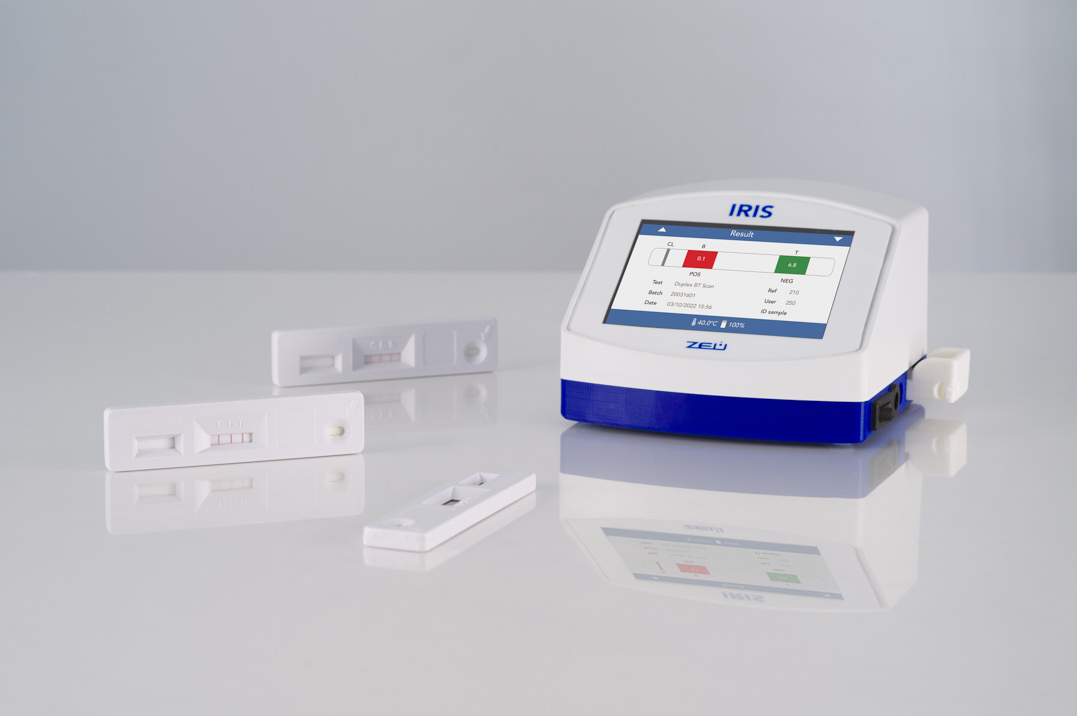
The Zeulab IRIS rapid screening system, supplied in New Zealand by Evident, is designed specifically for this purpose, offering rapid antibiotic residue screening directly at the point of testing. The compact system detects two key antibiotic groups commonly monitored within the dairy industry – beta-lactams and tetracyclines – helping farmers make faster, more informed decisions around milk management following treatment.
For many farms, one of the biggest advantages of rapid screening is the potential to reduce unnecessary milk disposal following treatment. After a cow has completed the required withholding period, additional milkings are often discarded before the cow can safely re-enter the herd. Depending on the treatment involved, this can result in a significant volume of milk being lost.
Rapid screening provides an opportunity to verify whether antibiotic residues are still present rather than relying solely on standard timelines. In some cases, milk may test negative earlier than expected, allowing the cow to potentially return to the herd sooner while still maintaining confidence in milk quality and safety.
The speed of testing is another major advantage. In a busy dairy environment, fast decision-making matters. Rapid screening allows issues to be identified early so decisions can be made immediately.
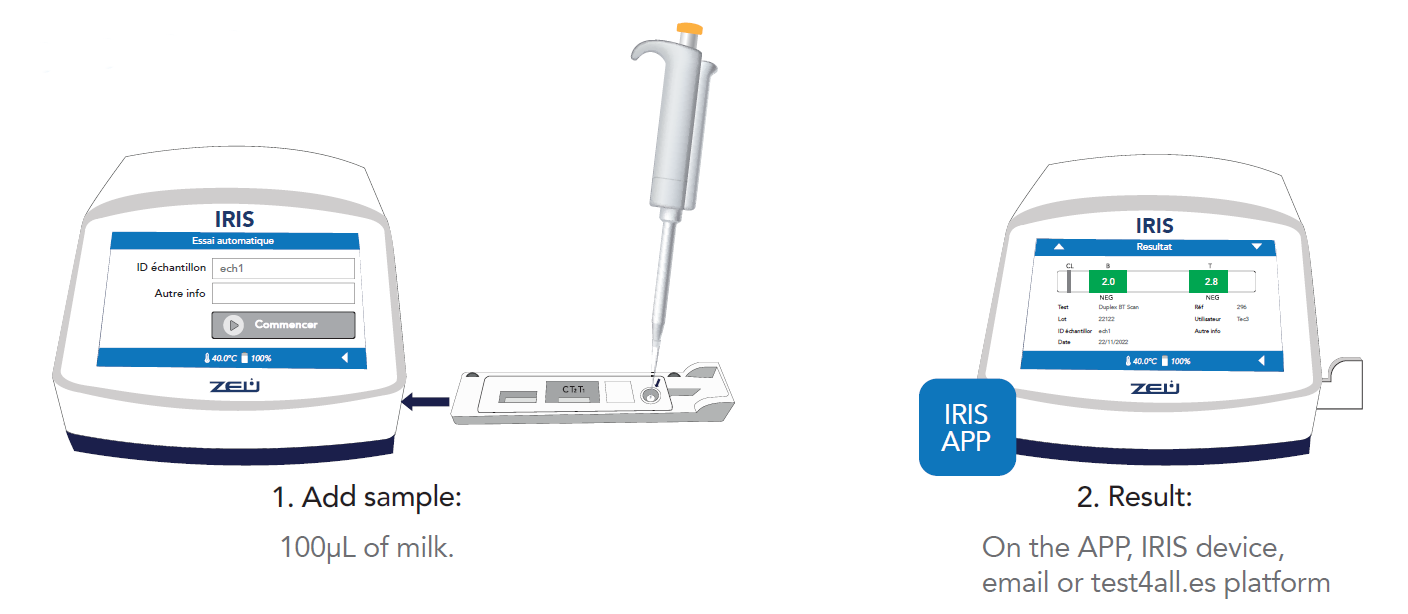
Ease of use is also important. The IRIS system combines incubation and optical reading into a single automated process, reducing the likelihood of operator interpretation errors. The user simply adds the milk sample to the cassette, inserts it into the instrument, and the system performs the analysis automatically.
For many farms and dairy operations, the value lies not only in compliance, but in risk reduction. Early detection can help prevent costly contamination incidents before milk enters bulk storage or transport systems. Evident is seeing growing interest from dairy operations looking for practical ways to strengthen risk management processes while maintaining operational efficiency.
Portable screening systems are also increasingly attractive due to their flexibility. IRIS is compact and designed for use across a range of dairy environments, from on-farm screening through to tanker testing, receiving stations, and processing facilities.
Importantly, rapid screening technology is not intended to replace good herd management and treatment recording practices. Rather, it acts as an additional safeguard within an overall milk quality programme.
As dairy operations continue to focus on quality assurance, traceability, and minimising risk, technologies that support rapid and reliable decision-making are likely to become an increasingly important part of modern dairy management.
To learn more about rapid antibiotic residue screening solutions for dairy applications, contact Evident to discuss the Zeulab IRIS system and how rapid onsite testing may support your milk quality management programme.
When it comes to protecting milk quality, early detection can make all the difference.
Evident
Phone: 09 218 5150
Email: sales@evident.co.nz
Web: www.evident.co.nz