
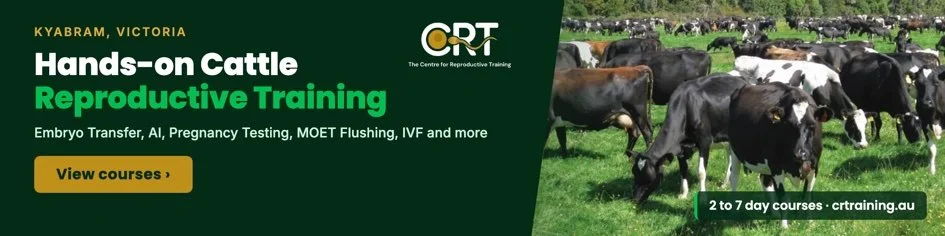
For New Zealand readers looking to develop practical reproductive skills, the Centre for Reproductive Training offers nine specialist courses at its Kyabram facility in Victoria, Australia.
Looking to develop your skills in animal reproduction? Knowing how a reproductive procedure works is one thing; gaining practical experience is another. The Centre for Reproductive Training (CRT) brings the two together through nine specialist courses at its training facility in Kyabram, Victoria, Australia. For New Zealand readers considering training across the Tasman, its approach combines classroom theory with hands-on learning involving real animal cases and laboratory procedures. The nine courses are Embryo Transfer, Field Embryology, Artificial Insemination, Pregnancy Testing, Bovine Ovum Pick-up, IVF/Embryology, MOET Embryo Flushing, Bull Semen Collection, Semen Assessment and Andrology. The breadth of the offering reflects CRT’s aim to provide specialist learning opportunities across animal reproduction, rather than concentrating on a single technique.
The courses grew from a shared ambition: to help secure the future of skilled reproductive technicians while responding to ongoing demand for animal reproductive training. For CRT’s founders, the answer was to draw on leaders within the industry and create a learning environment where explanation and application sit side by side. Rather than treating practical work as an addition to theory, the courses bring the two together.
Learn alongside industry expertise
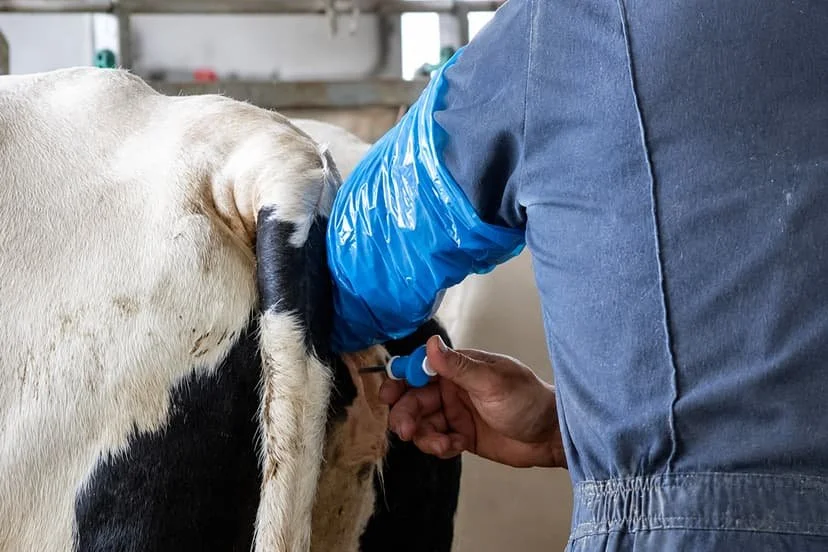
At CRT, you learn with leading reproductive specialists, commercial service providers and scientific expertise. The training facility also draws on the equipment and expertise of its sister commercial reproduction company, giving you exposure to a broad range of reproductive services in a commercial setting. This combination is a distinctive feature of the centre’s approach, connecting your specialist training with the work of an operating reproduction business.
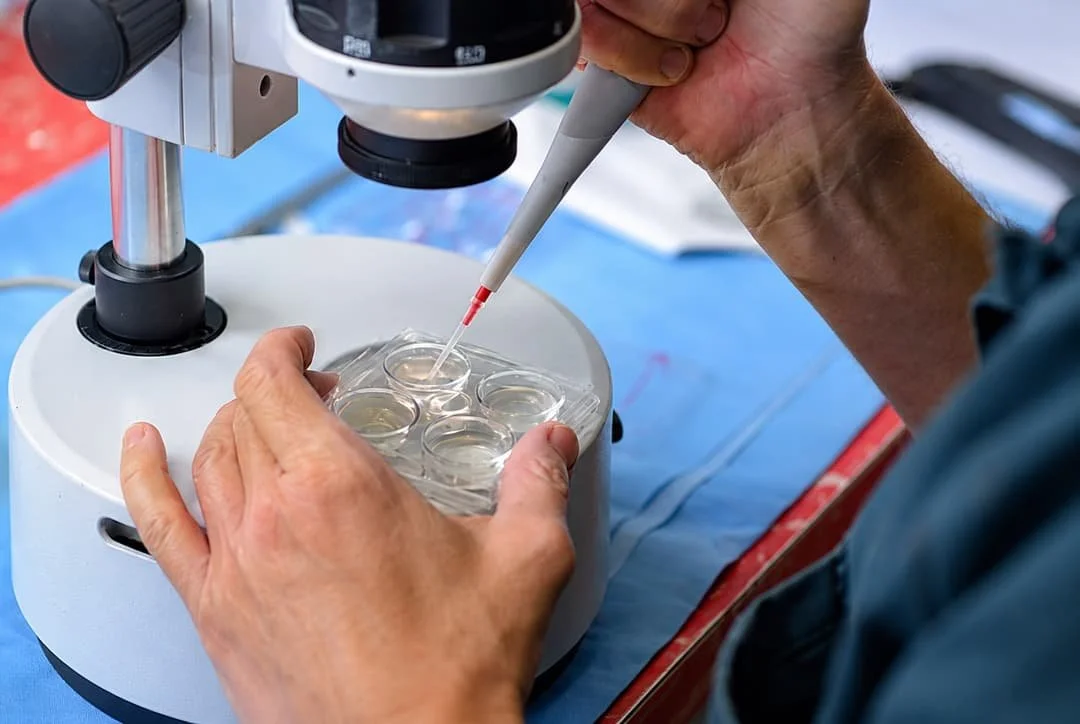
That connection gives the learning a practical context. Participants are exposed not just to descriptions of reproductive processes, but to the services, equipment and laboratory work that support them. The emphasis is on linking what is taught with how it is applied—a consistent thread running through CRT’s hands-on methodology, whether the focus is an animal case or a laboratory procedure.
Skills beyond the classroom
CRT’s training focus is industry best practice, with courses developed to help participants navigate the changing demands of the reproductive sector. Compliance is part of that picture, with requirements intended to reduce risks for animals, technicians and farmers alike. The centre’s approach places practical learning within this broader context: developing skills while recognising the responsibilities that accompany reproductive work.
The aim is for you to leave with more than a statement of attainment or the ability to explain a process. CRT’s focus is on genuine hands-on skills you can continue to develop and use within the reproductive sector. For those exploring their next training step, that emphasis on practical capability is central to the centre’s offering: learning that connects knowledge with experience.
Demand for CRT’s course modules, together with interest in its offering and feedback from participants, points to the appeal of this approach.
Choose your training pathway
All CRT courses are conducted under veterinary supervision and delivered by highly experienced trainers. They are open to anyone over the age of 18
Courses run for two to five days and can be taken individually as stand-alone options, however if you are considering travelling from New Zealand for a broader training program, two or more courses can also be combined into a tailored arrangement.
Ready to take the next step in your reproductive training? For New Zealand readers considering a hands-on learning opportunity across the Tasman, CRT brings industry expertise, commercial reproductive services and practical training together at its Kyabram facility. Explore the nine specialist courses and consider which pathway suits your interests. At the heart of the offering is a clear ambition: helping you build practical skills for your future in animal reproduction.