
By Dianna Malcolm
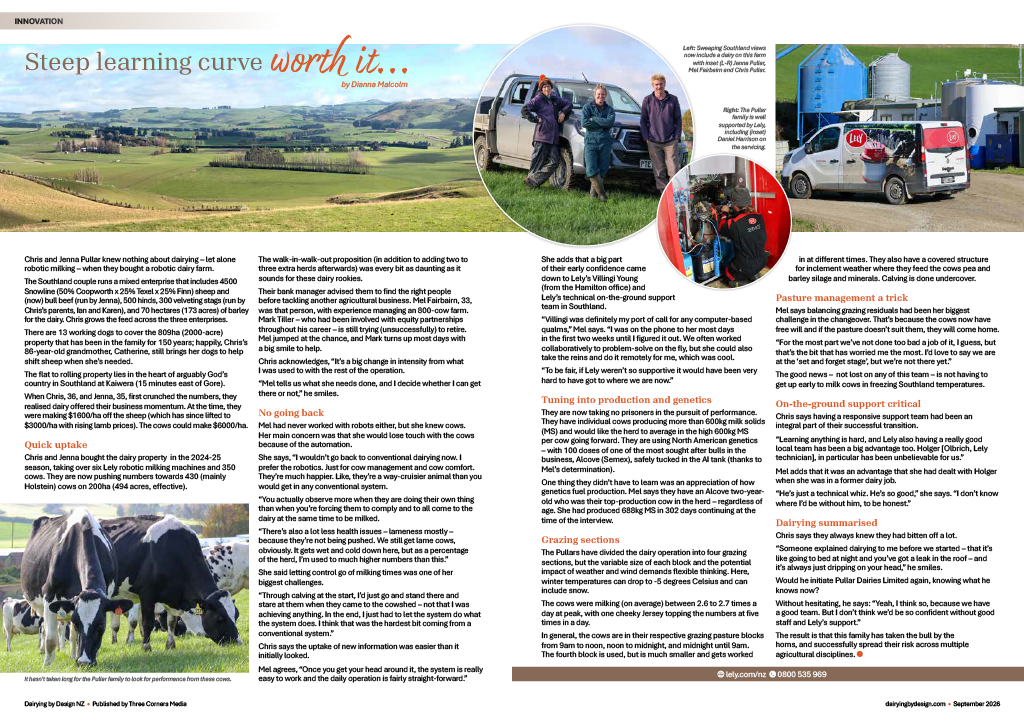
Photos by Dianna Malcom - click image to read in full PDF
Chris and Jenna Pullar knew nothing about dairying – let alone robotic milking – when they bought a robotic dairy farm.
The Southland couple runs a mixed enterprise that includes 4500 Snowline (50% Coopworth x 25% Texel x 25% Finn) sheep and (now) bull beef (run by Jenna), 500 hinds, 300 velveting stags (run by Chris’s parents, Ian and Karen), and 70 hectares of barley for the dairy. Chris grows the feed across the three enterprises.
There are 13 working dogs to cover the 809ha (2000-acre) property that has been in the family for 150 years; happily, Chris’s 86-year-old grandmother, Catherine, still brings her dogs to help shift sheep when she’s needed.
The flat to rolling property lies in the heart of arguably God’s country in Southland at Kaiwera (15 minutes east of Gore).
When Chris, 36, and Jenna, 35, first crunched the numbers, they realised dairy offered their business momentum. At the time, they were making $1600/ha off the sheep (which has since lifted to $3000/ha with rising lamb prices). The cows could make $6000/ha.
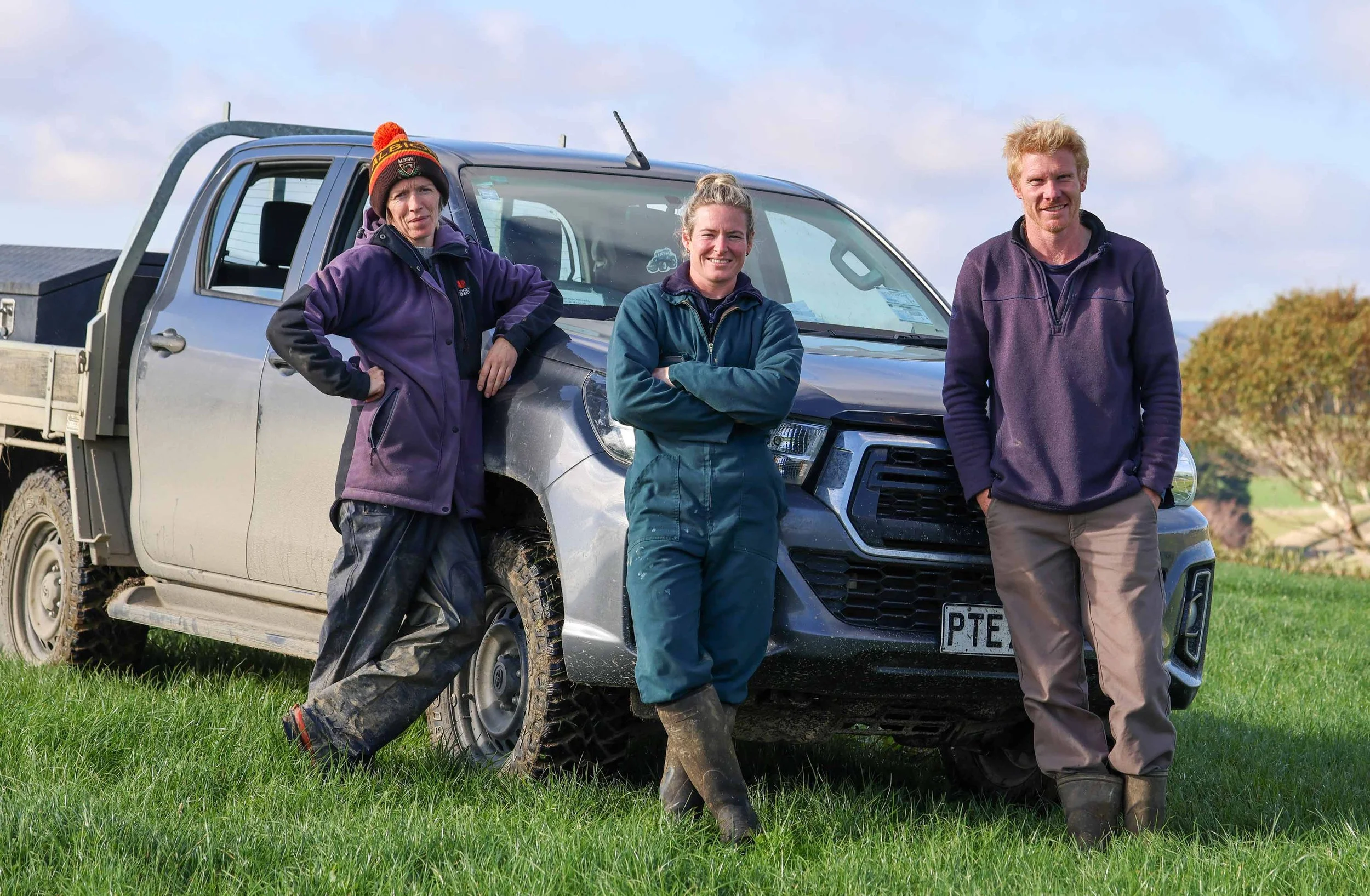
Photo by Dianna Malcolm - Sweeping Southland views now include dairy on this farm with inset (L-R) Jenna Pullar, Mel Fairbairn and Chris Pullar.
Quick uptake
Chris and Jenna bought the dairy property in the 2024-25 season, taking over six Lely robotic milking machines and 350 cows. They are now pushing numbers towards 430 (mainly Holstein) cows on 200ha (494 acres, effective).
The walk-in-walk-out proposition (in addition to adding two to three extra herds afterwards) was every bit as daunting as it sounds for these dairy rookies.
Their bank manager advised them to find the right people before tackling another agricultural business. Mel Fairbairn, 33, was that person, with experience managing an 800-cow farm. Mark Tiller – who had been involved with equity partnerships throughout his career – is still trying (unsuccessfully) to retire. Mel jumped at the chance, and Mark turns up most days with a big smile to help.
Chris acknowledges, “It's a big change in intensity from what I was used to with the rest of the operation.
“Mel tells us what she needs done, and I decide whether I can get there or not,” he smiles.
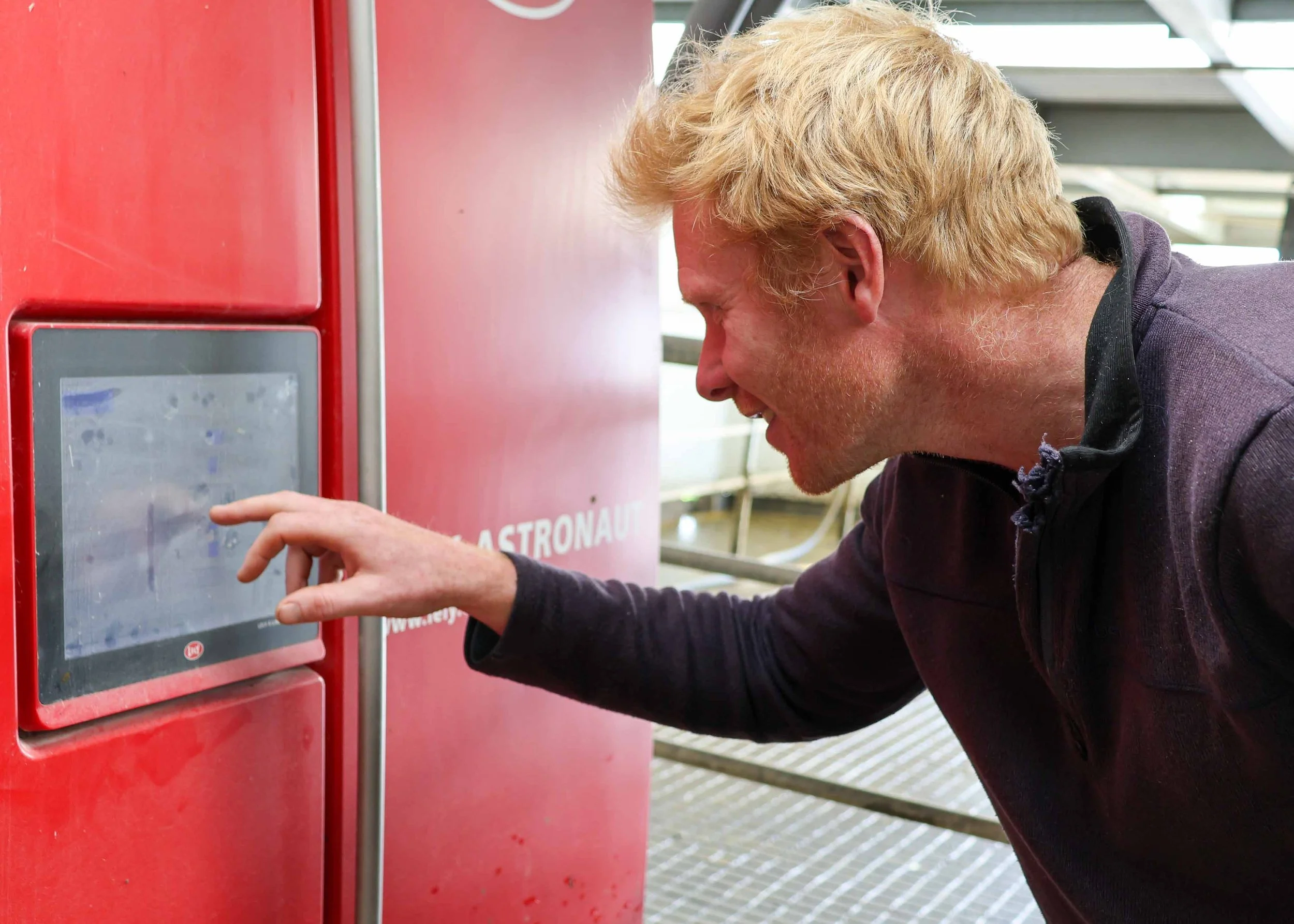
Photo by Dianna Malcom - Chris Pullar checking out the Lely Astronaut
No going back
Mel had never worked with robots either, but she knew cows. Her main concern was that she would lose touch with the cows because of the automation.
She says, “I wouldn’t go back conventional dairying now. I prefer the robotics. Just for cow management and cow comfort. They're much happier. Like, they’re a way-cruisier animal than you would get in any conventional system.
“You actually observe more when they are doing their own thing than when you’re forcing them to comply and to all come to the dairy at the same time to be milked.
“There's also a lot less health issues – lameness mostly – because they’re not being pushed. We still get lame cows, obviously. It gets wet and cold down here, but as a percentage of the herd, I’m used to much higher numbers than this.”
She said letting control go of milking times was one of her biggest challenges.
“Through calving at the start, I’d just go and stand there and stare at them when they came to the cowshed – not that I was achieving anything. In the end, I just had to let the system do what the system does. I think that was the hardest bit coming from a conventional system.”
Chris says the uptake of new information was easier than it initially looked.
Mel agrees, “Once you get your head around it, the system is really easy to work and the daily operation is fairly straight-forward.”
She adds that a big part of their early confidence came down to Lely’s Villingi Young (from the Hamilton office) and Lely’s technical on-the-ground support team in Southland.
“Villingi was definitely my port of call for any computer-based qualms,” Mel says. “I was on the phone to her most days in the first two weeks until I figured it out. We often worked collaboratively to problem-solve on the fly, but she could also take the reins and do it remotely for me, which was cool.
“To be fair, if Lely weren’t so supportive it would have been very hard to have got to where we are now.”
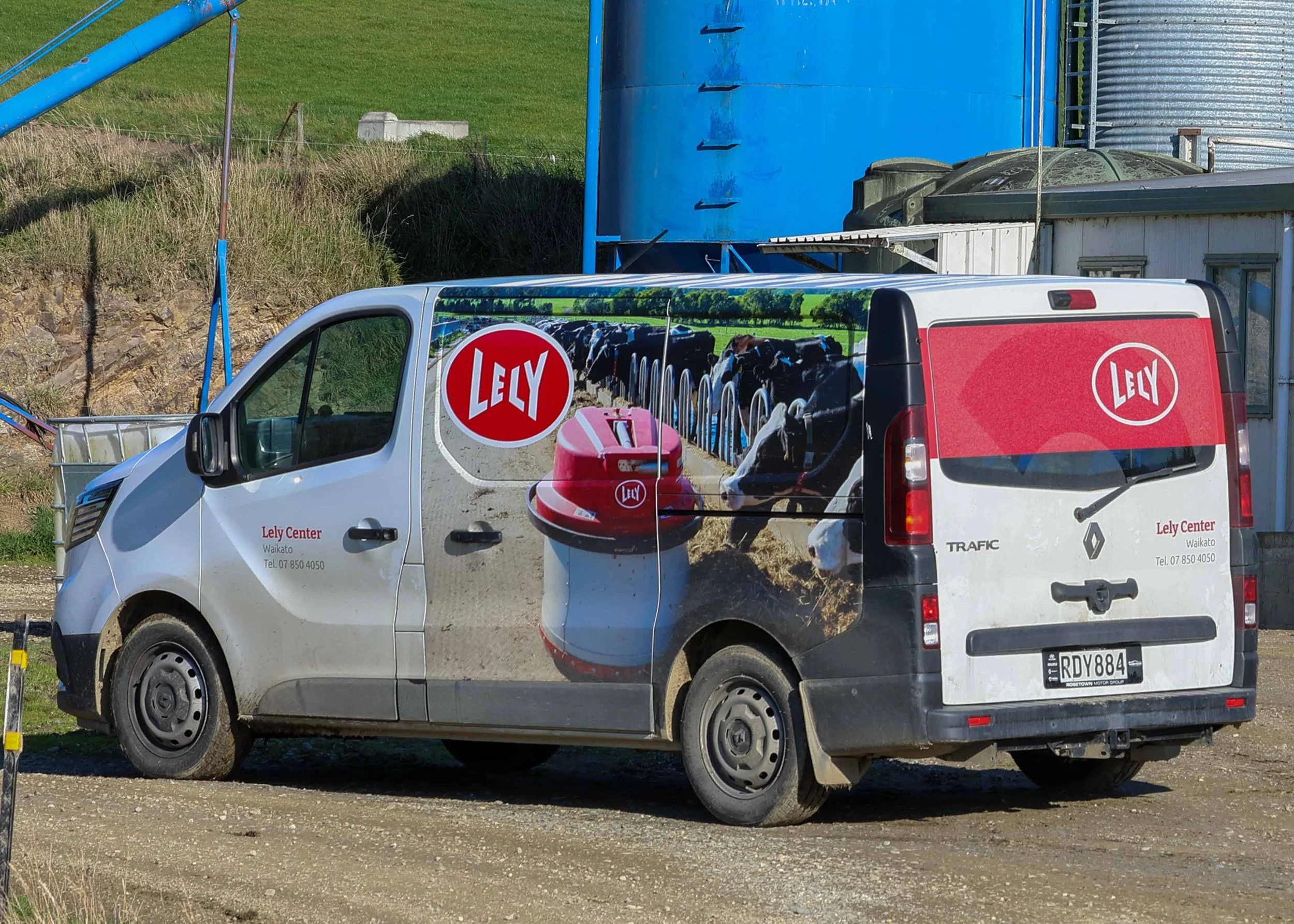
Photo by Dianna Malcolm
Tuning into production and genetics
They are now taking no prisoners in the pursuit of performance. They have individual cows producing more than 600kg milk solids (MS) and would like the herd to average in the high 600kg MS per cow going forward. They are using North American genetics – with 100 doses of one of the most sought after bulls in the business, Alcove (Semex), safely tucked in the AI tank (thanks to Mel’s determination).
One thing they didn’t have to learn was an appreciation of how genetics fuel production. Mel says they have an Alcove two-year-old who was their top-production cow in the herd – regardless of age. She had produced 688kg MS in 302 days continuing at the time of the interview.
Grazing sections
The Pullars have divided the dairy operation into four grazing sections, but the variable size of each block and the potential impact of weather and wind demands flexible thinking. Here, winter temperatures can drop to -5 degrees Celsius and can include snow.
The cows were milking (on average) between 2.6 to 2.7 times a day at peak, with one cheeky Jersey topping the numbers at five times in a day.
In general, the cows are in their respective grazing pasture blocks from 9am to noon, noon to midnight, and midnight until 9am. The fourth block is used, but is much smaller and gets worked in at different times. They also have a covered structure for inclement weather where they feed the cows pea and barley silage and minerals. Calving is done undercover.
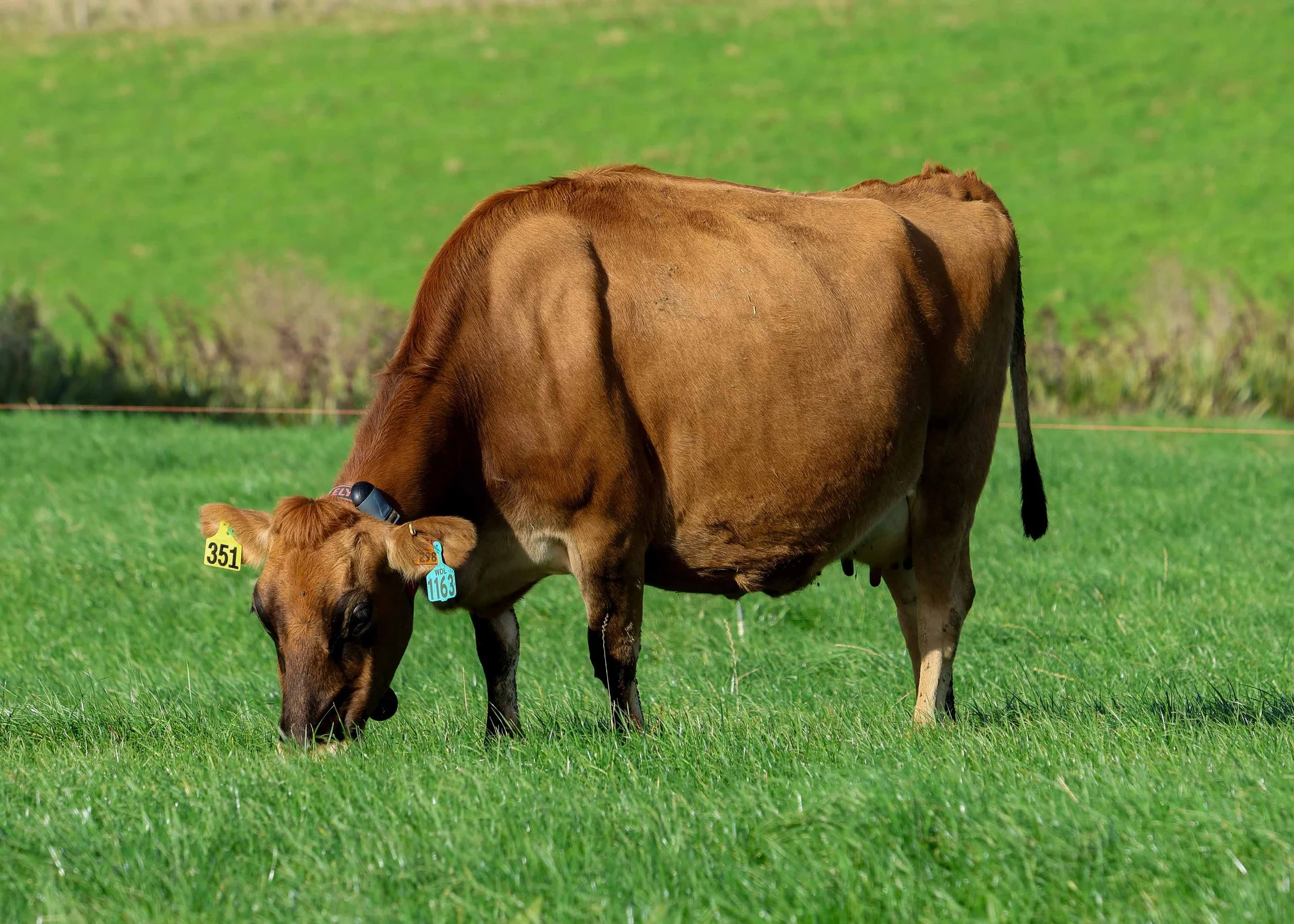
Photo by Dianna Malcolm
Pasture management a trick
Mel says balancing grazing residuals had been her biggest challenge in the changeover. That’s because the cows now have free will and if the pasture doesn’t suit them, they will come home.
“For the most part we’ve not done too bad a job of it, I guess, but that’s the bit that has worried me the most. I’d love to say we are at the ‘set and forget stage’, but we’re not there yet.”
The good news – not lost on any of this team – is not having to get up early to milk cows in freezing Southland temperatures.
On-the-ground support critical
Chris says having a responsive support team had been an integral part of their successful transition.
“Learning anything is hard, and Lely also having a really good local team has been a big advantage too. Holger [Olbrich, Lely technician], in particular has been unbelievable for us.”
Mel adds that it was an advantage that she had dealt with Holger when she was in a former dairy job.
“He's just a technical whiz. He's so good,” she says. “I don’t know where I’d be without him, to be honest.”
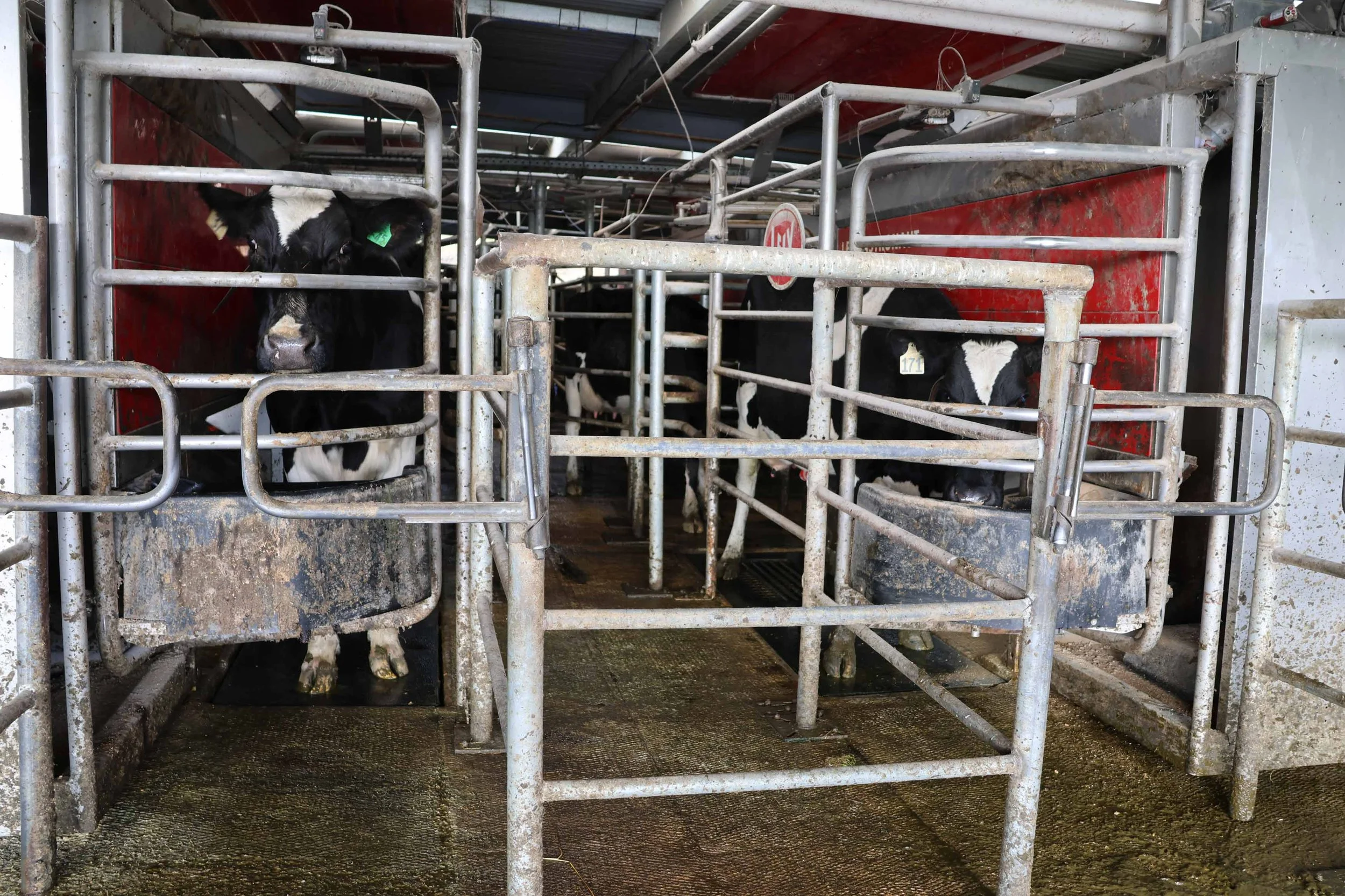
Photo by Dianna Malcolm
Dairying summarised
Chris says they always knew they had bitten off a lot.
“Someone explained dairying to me before we started – that it’s like going to bed at night and you've got a leak in the roof – and it's always just dripping on your head,” he smiles.
Would he initiate Pullar Dairies Limited again, knowing what he knows now?
Without hesitating, he says: “Yeah, I think so, because we have a good team. But I don’t think we’d be so confident without good staff and Lely’s support.” The result is that this family has taken the bull by the horns, and successfully spread their risk across multiple agricultural discipline.