
This is day 3 of our 7-day series on the farm characters. So far, we have met the cow that always seems to know when something is happening and the escape artist who apparently considers a fence to be an invitation rather than a boundary. Today, we are meeting the cow who has taken a rather different approach to life. She does not need to escape, investigate or cause a commotion. She simply seems to have decided that she is in charge.
Every herd has a pecking order
Spend enough time watching a group of cows and you start to notice that they do not all behave as though they have exactly the same standing within the group. Some are more assertive than others, some are happy to keep their distance and some seem remarkably comfortable occupying the space they want.
Then there is the boss cow.
She does not necessarily make a great deal of noise about it. In fact, she may look perfectly ordinary until another cow gets a little too close to where she wants to be. Then something changes. A look, a movement, a step forward or a quiet insistence that the other cow should probably find somewhere else can be enough.
The other cow usually gets the message.
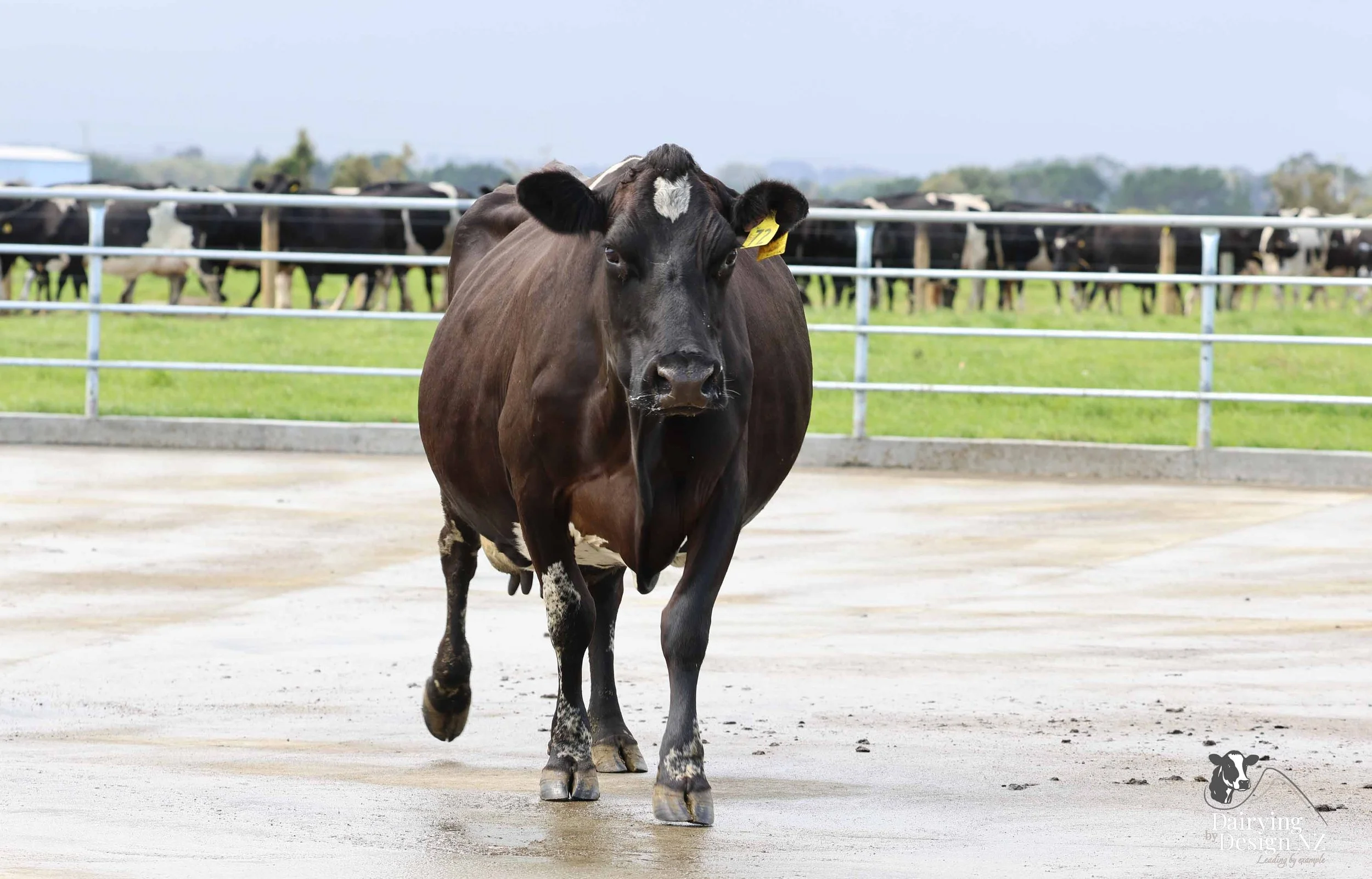
Photo by Dianna Malcolm
She knows what she wants
The boss cow is often recognised less by one spectacular behaviour than by a collection of little moments. She walks into a space and other cows give way. She approaches an area and somehow manages to occupy it. She appears to have very little interest in negotiating when she has already made up her mind.
Of course, calling her the "boss" is a farmer's way of describing what they see rather than a scientific job title. Cattle have social relationships and establish patterns of interaction within groups, but that does not mean there is one cow sitting at the top issuing instructions to everyone else.
Still, some individuals clearly appear more assertive than others, and farmers quickly learn to recognise those personalities.
The boss cow is simply the one who seems to have taken that role particularly seriously.
The art of getting your own way
What makes the boss cow entertaining is that she does not necessarily have to do very much. She can make another cow move without appearing to put much effort into it.
A less confident cow may approach a particular spot, only for the boss cow to arrive and somehow claim it. There might be a brief interaction and then the first cow moves away. From the outside, it can look as though a decision has been made without a meeting ever being called.
Farmers who spend a lot of time around their herd become familiar with these interactions. They might not watch every encounter, but they notice the recurring characters. They know which cows tend to stand together, which ones tend to avoid each other and which individual seems particularly determined to have things her own way.
It becomes another part of knowing the herd.
She does not need to be the biggest
One of the interesting things about the boss cow is that she does not necessarily fit the image you might expect. She does not have to be the largest animal in the group, nor does she need to be particularly dramatic.
Sometimes it is simply confidence.
A cow can be physically impressive without being especially assertive, while another seemingly unremarkable animal can have an extraordinary ability to make her presence felt.
That is one of the reasons individual personalities are so noticeable on a farm. If you only ever looked at a herd as a whole, you could easily miss the small differences between animals. Spend enough time with them, however, and those differences become obvious.
You start to recognise the characters.
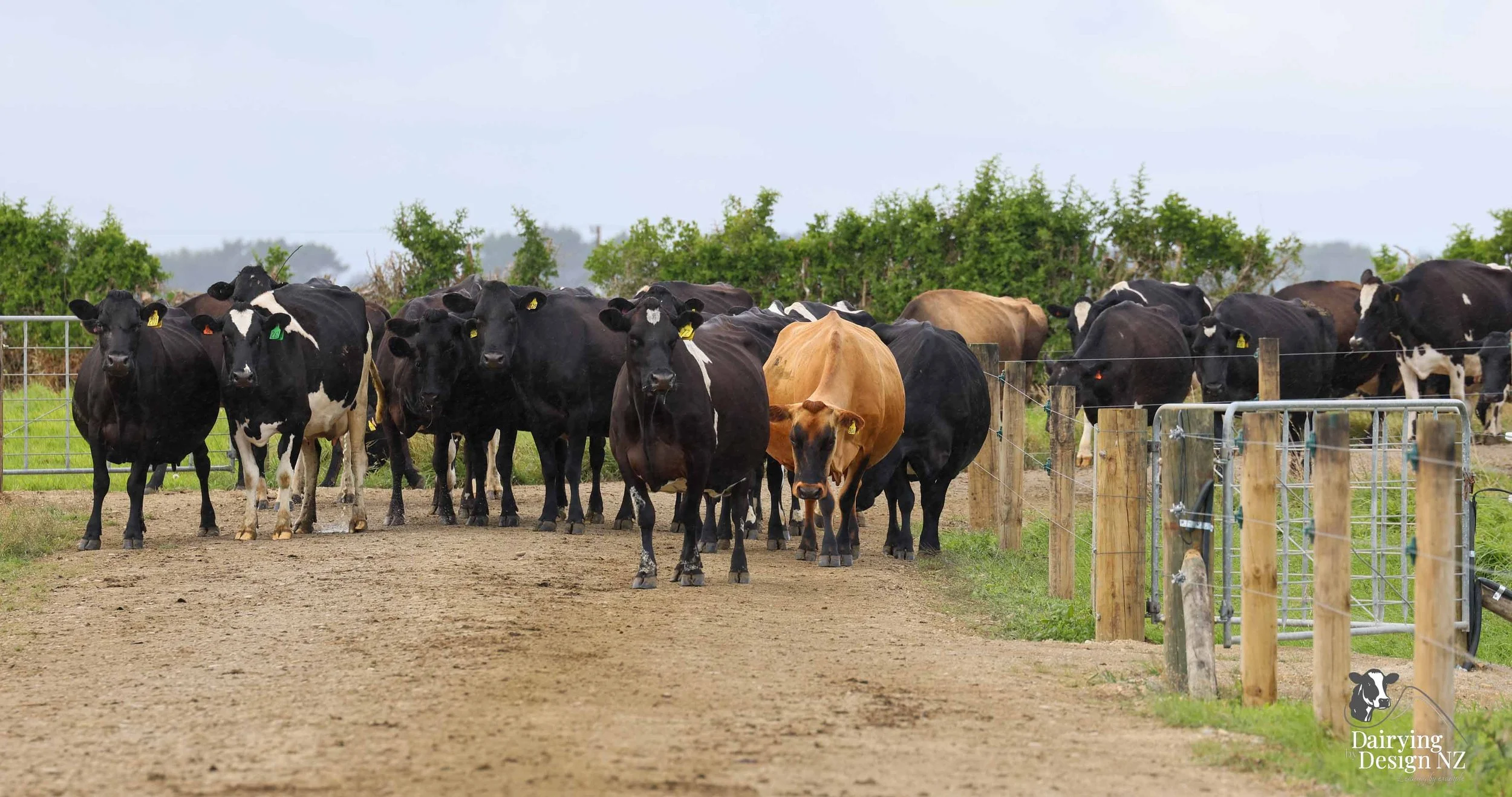
Photo by Dianna Malcolm
The unofficial traffic controller
There are times when the boss cow seems to have appointed herself as the herd's unofficial traffic controller. She may be standing exactly where another cow wants to go, moving into a space just as someone else approaches or positioning herself where she can make her presence felt.
It can be quite comical to watch.
A group of cows can appear to be moving along quite peacefully when suddenly one animal decides another has ventured too close. There is a brief exchange, a bit of movement and then everything settles down again.
To someone unfamiliar with cattle, it might look like nothing much happened.
To someone who knows the cows, it can be obvious that a small piece of herd politics has just taken place.
Farmers notice the relationships
One of the pleasures of farming livestock is that the longer you work with the same animals, the more familiar their individual personalities become. You begin to recognise relationships that you might never have noticed when you first met the herd.
There are cows that seem to spend a lot of time together. There are others that tend to keep their distance. There are individuals that appear to be more assertive and others that are perfectly content to let someone else have the prime position.
The boss cow stands out because her interactions are often so predictable.
You can almost see it coming.
Another cow approaches. The boss cow notices. There is a brief exchange. Someone moves.
And the boss cow carries on as though nothing happened.
It is not always about winning
It is worth remembering that what looks like bossiness to a human observer is not necessarily about one cow deliberately trying to dominate the entire herd. Cattle have their own social behaviours and ways of establishing space and relationships.
That is why it is better to enjoy the observation without trying to give it a complicated human explanation.
Farmers are often very good at doing exactly that. They give an animal a nickname or a reputation because it makes sense of what they see every day. "She's the boss" might simply mean that she is an assertive cow who regularly gets her way when another animal challenges her space.
It is shorthand.
And it is useful shorthand when you are dealing with hundreds of individual animals and need to know who is who.
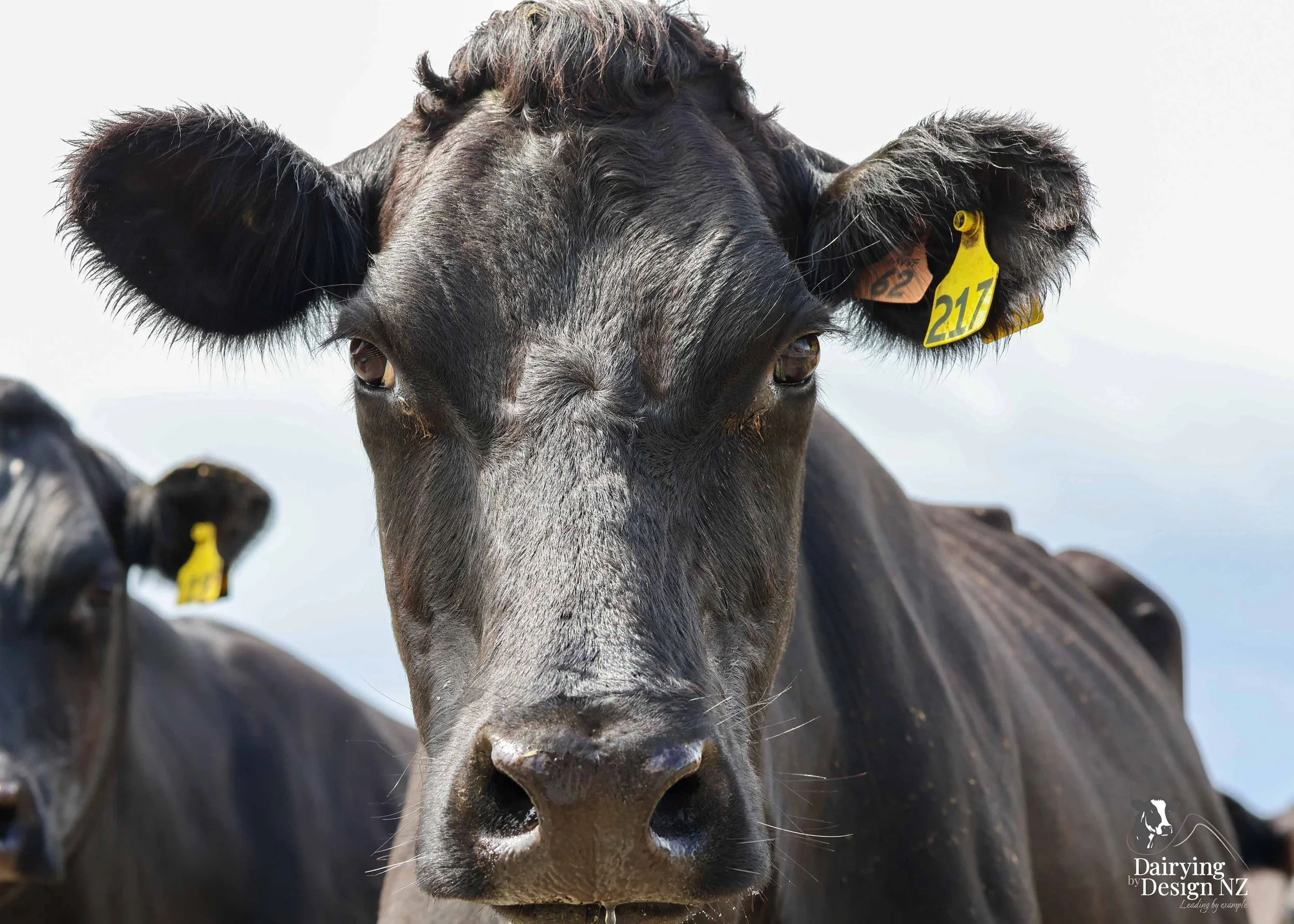
Photo by Diana Malcolm
The boss has a reputation
Just like the escape artist from yesterday, the boss cow can develop something of a reputation around the farm. People learn which cow she is. They learn that she has a certain way about her. They may even find themselves watching for her when a group of cows is moving or settling into a new area.
Her reputation can become part of the stories told about the herd.
Someone might mention that she has always been like that. Another person might remember an occasion when she took over a particular situation. Before long, a simple cow has become a character with a history.
That is the funny thing about farm life. You can spend years around animals and end up knowing far more about their individual quirks than you ever expected.
You may know their numbers, their history and their place in the herd, but you also know which one is likely to push her way to the front and which one would rather avoid the argument altogether.
There is something reassuring about knowing your cows
In a world where farming is increasingly surrounded by measurements, records, technology and data, there is still something wonderfully simple about knowing your animals as individuals.
The boss cow is not a number on a screen.
She is the cow who has a particular personality. She is the one other cows seem to make room for. She is the one a farmer can recognise from a distance and say, "That's her."
It is not necessarily important information in a conventional sense, but it is part of the accumulated knowledge that comes from spending time around a herd.
And perhaps that is what makes these farm characters worth talking about.
They remind us that a dairy farm is not simply a collection of buildings, machinery, paddocks and production figures. It is a living place, populated by animals with individual quirks and people who gradually learn to recognise them.
The boss cow has no official position, no staff and certainly no salary, but somehow she has managed to establish herself as one of the farm's senior management team.
Tomorrow, we meet another character who takes a completely different approach. The troublemaker does not necessarily want to be in charge. She simply seems to have a remarkable talent for being involved whenever something goes slightly wrong. See you tomorrow for day 4 of the farm characters.