
Cow activity and technology for heat detection
Welcome to Day 3 of our seven-day series on better mating results. So far, we have looked at getting cows into the right condition for mating and recognising the signs of heat that can easily be missed. Today, we look at how cow activity and technology can help take some of the guesswork out of heat detection.
Turning movement into information
Every cow is constantly giving off information through her behaviour. How much she walks, when she becomes more active, how often she interacts with other cows and changes in her normal routine can all provide clues about what is happening reproductively.
The challenge for farmers is that it is impossible to watch every cow continuously.
This is where activity monitoring technology can add another layer to traditional heat detection. Rather than relying solely on what can be observed during a paddock check, activity systems can monitor cows throughout the day and night, identifying changes from an individual cow's normal behaviour.
“Technology does not replace good stockmanship. It gives farmers another set of eyes when nobody is standing in the paddock.”
Why individual behaviour matters
One of the strengths of activity monitoring is that it can establish a picture of what is normal for an individual cow.
Cows naturally differ in temperament and activity levels. One cow may normally be highly active, while another may be comparatively quiet. Looking only at absolute activity can therefore make it difficult to distinguish normal behaviour from a meaningful change.
Monitoring the individual cow's usual pattern can provide a more useful baseline. When her activity changes significantly, that information can prompt a closer look.
This is particularly valuable during mating, when timing matters and the window for identifying a cow on heat can be relatively short.
Catching the night-time heats
One of the practical advantages of activity monitoring is the ability to capture behaviour outside normal observation times.
A cow may show increased activity during the evening or overnight when nobody is watching the herd. By the time the morning check takes place, the most obvious signs may have disappeared.
For farmers, this can mean the difference between having a cow identified for mating and missing the opportunity altogether.
Technology can flag a change in activity so the farmer knows which cows deserve closer attention rather than having to assess the entire herd equally.
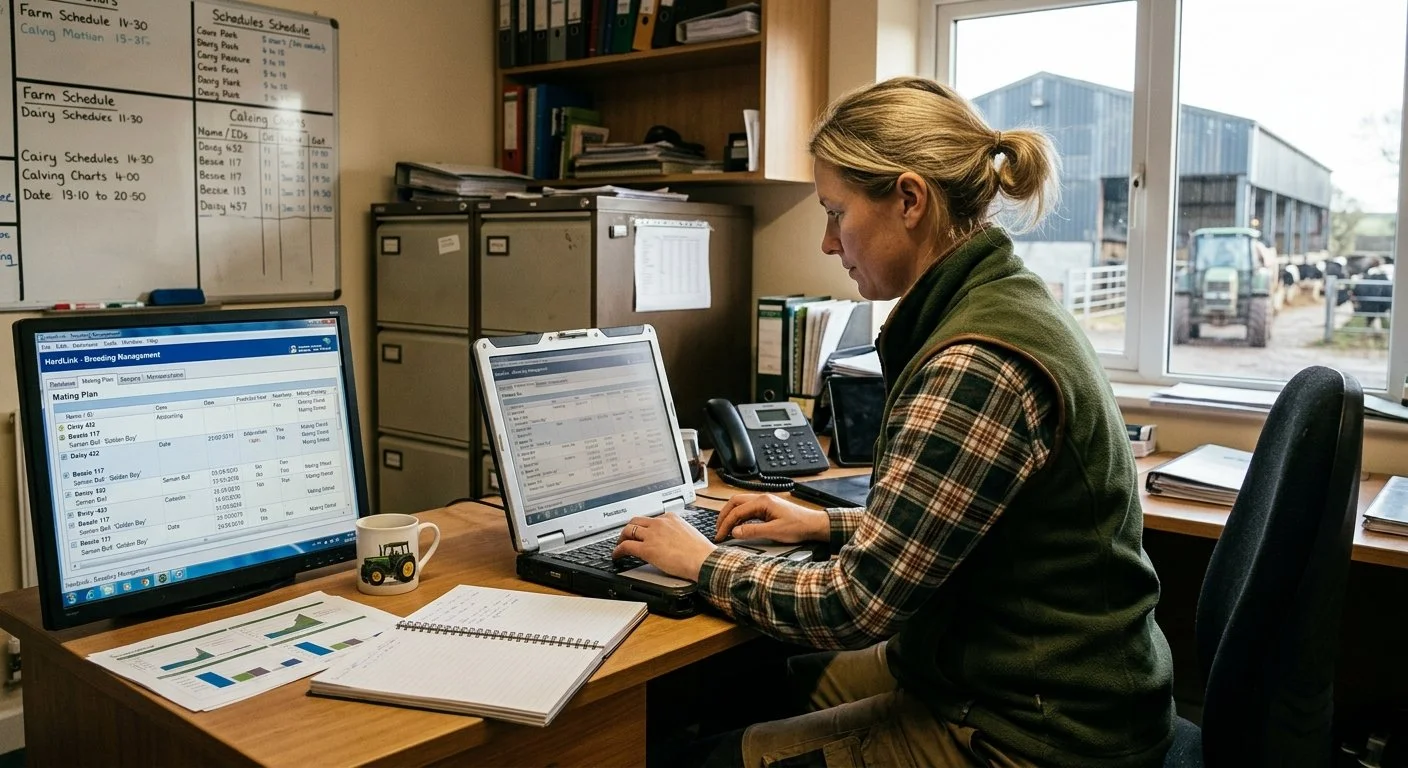
Technology still needs interpretation
An alert is not a diagnosis.
Increased activity can occur for several reasons, so technology should be viewed as another piece of information rather than an automatic instruction to mate a cow.
A farmer can combine the activity information with what they know about the cow, including her calving date, previous reproductive history, health status and any physical signs being observed in the herd.
This combination of data and stockmanship is where technology can become particularly useful.
Making the system work for the farm
There is no single technology solution that will suit every dairy farm.
Activity monitoring systems vary in the way they collect and present information, and farmers need to consider what will fit their herd, facilities and existing management practices.
The important question is not simply whether technology can detect activity. It is whether the information provided can be incorporated into the farm's daily routine and used to make better decisions.
If alerts are difficult to access, too frequent to interpret or disconnected from the way the farm operates, the technology may not deliver its full potential.
A useful system should make decision-making easier rather than creating another job that gets pushed aside during a busy day.
Keep the human eye involved
There is a temptation with any new technology to assume that the computer will do all the work. In reproductive management, that is rarely the best approach.
Farmers know their cows. They notice when an animal is not behaving normally, looks different or simply does not seem right. Technology can support those observations by highlighting cows that may otherwise have gone unnoticed.
Likewise, if an activity alert does not match what the farmer is seeing, that is worth investigating rather than automatically accepting the alert.
The most effective approach is often a combination of technology, records and practical observation.
More than just mating information
Although activity monitoring is particularly useful during mating, the information collected can have value beyond heat detection.
Changes in normal activity may also help draw attention to cows that require closer observation for other reasons. The same data can contribute to a broader understanding of herd behaviour and individual cow performance.
This makes activity monitoring potentially more than a short-term mating tool. It can become part of a wider approach to herd management, provided the information is understood and acted upon appropriately.

Data is only useful when it leads to action
Having more information does not automatically result in better reproductive performance.
The real value comes from what happens after an alert is received. Someone needs to review the information, assess the cow and decide whether action is required.
This is why technology should be considered as part of the farm's overall reproductive system rather than as a standalone solution.
Before mating begins, it is worth making sure everyone knows what the alerts mean, who is responsible for checking them and how confirmed heats will be recorded. Having that process established before the pressure of mating arrives can help prevent information from being overlooked.
Activity monitoring can provide farmers with another valuable source of information during mating, particularly when cows show subtle signs of heat or activity occurs outside normal observation times.
The key is to use technology alongside good stockmanship rather than instead of it. Individual activity patterns can help identify cows requiring attention, while farmer observation and reproductive records provide the context needed to make sound decisions.
Used well, technology can help turn thousands of individual cow movements into useful information and give farmers another opportunity to identify a cow before her mating window is missed.
Tomorrow, we move from the cow to the bull and look at bull management and serving capacity, because getting the cows ready is only half of the mating equation.