Creating new pathways into dairy farming for the next generation
This is day 7, the final instalment of our seven-day series, The Future-Proof Dairy, where we have explored some of the emerging ideas, technologies and changes that could shape the next generation of New Zealand dairy farming.
Over the past week, we have looked at breeding cows for lower methane emissions and greater heat tolerance, virtual fencing, alternative sources of farm income, artificial intelligence, diverse pasture systems and the potential for dairy farms to become more circular in the way they use energy and nutrients.
However, there is one part of future-proofing that matters more than any piece of technology or farming system. People are the ones who will ultimately make the decisions, adapt to change, manage the farm and carry the industry forward.
New Zealand dairy farming has always relied on people who are prepared to start somewhere, gain experience, build equity and gradually take on greater responsibility. For many farmers, sharemilking has provided that pathway from employee to herd-owning sharemilker and eventually farm ownership.
But the financial barriers facing the next generation are becoming increasingly significant. The cost of land, livestock, infrastructure and capital can make traditional pathways into farm ownership appear further out of reach for people who may already have the skills and experience required to run a successful dairy operation.
That raises an important question for the future of the industry. Do we need to rethink the way people enter dairy farm ownership?

The capital challenge
One of the biggest barriers facing aspiring dairy farmers is not necessarily a lack of ambition, ability or willingness to work. It is access to capital.
Buying a dairy farm requires a significant financial commitment, and even building enough equity to move into ownership can take many years. Someone may have extensive experience managing cows, pasture, staff, budgets and farm performance, yet still be unable to purchase a property.
This creates a difficult gap between capability and ownership.
The challenge is particularly important because the dairy industry needs people who understand farming and want to build businesses for the long term. If talented people cannot see a realistic pathway from employment into equity and ownership, the industry risks losing people who could otherwise become the next generation of farm owners and leaders.
This is where alternative equity models could become increasingly relevant.
Rather than expecting someone to purchase an entire farming business immediately, ownership could potentially be built progressively. An aspiring farmer could begin by owning livestock or equipment, then gradually acquire a greater share of the business as their financial position develops.
The pathway does not necessarily need to be one enormous financial leap. It could be a series of smaller steps that allow skills, responsibility and equity to grow together.
Sharemilking has already shown what is possible
New Zealand's sharemilking system has provided an important pathway into dairy farm ownership for generations.
The model recognises that capital is not the only asset a farmer brings to a business. Experience, labour, livestock management, leadership, financial management and the ability to run a profitable operation all have genuine value.
For many farmers, sharemilking has been the mechanism that allowed them to build livestock ownership and business experience while working towards greater independence.
The success of the model provides an important lesson for the future.
There does not necessarily need to be only one form of ownership.
As the financial requirements of farm ownership continue to change, the industry may need to consider how the principles behind sharemilking could be adapted into new arrangements that provide more opportunities for aspiring farmers to build equity.
That could involve staged ownership, partnerships or other arrangements where responsibility and financial interest increase over time.
The details would need to be carefully structured, but the fundamental idea is worth considering. Someone does not necessarily need to own an entire farm before they can begin owning a meaningful part of the business.
Building equity without buying the whole farm
Staged ownership could provide an interesting bridge between employment and full farm ownership.
An aspiring farmer might begin with a smaller equity stake and gradually increase that stake over several years. Their contribution could include capital, livestock, management expertise, labour or a combination of these.
For an established farmer, this approach could also provide an opportunity to begin transferring responsibility without having to sell the entire business at once.
This could be particularly relevant for farmers approaching retirement. Instead of succession being treated as a single event where ownership changes hands on one particular day, it could become a gradual process that allows the next generation to become increasingly involved.
Responsibility could be transferred alongside equity, allowing younger farmers to develop their decision-making skills while still having access to the experience of the outgoing generation.
That experience can be one of the most valuable assets on a farm.
It includes knowledge about the property, local weather patterns, pasture performance, animal behaviour, staff management, suppliers, financial decisions and the countless practical lessons that are accumulated over decades.
A gradual transition creates an opportunity to transfer that knowledge rather than simply transferring a title.
Partnerships could open another door
The farming partnership of the future may also look different from the traditional family model.
A dairy business could potentially involve several people bringing different assets to the table. One person might provide land, another livestock, another management expertise, while another contributes capital.
The structure could allow each person's contribution to be recognised within the overall business.
This approach could potentially make farm ownership more accessible because the financial responsibility does not necessarily sit with one individual.
However, partnerships also require a high level of trust and clarity.
Everyone involved needs to understand how decisions will be made, how profits and losses will be managed, what responsibilities each person has and what happens if one partner wants to leave.
These arrangements cannot simply rely on a handshake and good intentions.
Clear agreements and professional advice are essential when significant assets and long-term business relationships are involved.
A creative ownership model can create an opportunity, but it needs to be structured carefully enough to protect everyone involved.
Making room for a different generation
The next generation of dairy farmers is also entering the industry with different experiences and expectations from previous generations.
Young farmers are growing up with technology as part of everyday life. They are comfortable using digital systems, analysing information and considering new approaches to business management.
They may also have different ideas about diversification, environmental management, automation and how work fits into their wider lives.
That does not necessarily mean they are less committed to farming.
It may simply mean they have a different vision of what a successful farming career looks like.
The industry needs to make room for that difference.
A young person may want to build a dairy business while also developing skills in technology, environmental management, marketing or another agricultural enterprise. They may see opportunities to combine several areas rather than defining their entire career around one role.
A future-proof dairy business should be capable of making room for different skills and perspectives.
The strength of the next generation may not be that they know more than previous generations. It may be that they bring a different combination of knowledge to the farm.
What does the next generation actually need?
There is often discussion about how to attract younger people into agriculture, but encouraging someone to take a job on a dairy farm is only part of the equation.
Young people need to be able to see where that job could lead.
They need to understand how experience can translate into responsibility, how responsibility can translate into equity and how equity could eventually lead to ownership.
If someone enters the industry in their late teens or early twenties but cannot see a realistic pathway beyond being an employee, the industry risks losing them to other careers.
Career development therefore becomes an important part of future-proofing.
Training and mentoring are important, but so is the opportunity to build something of their own.
The prospect of eventually having equity in a farming business can provide a powerful incentive for someone to remain in the industry and continue developing their skills.
That is where flexible ownership structures could make a genuine difference.
Succession needs to become a process
For established dairy farmers, succession can be one of the most challenging decisions they will ever make.
A farm is rarely just an asset. It can represent decades of work, family history, sacrifice and accumulated wealth.
At the same time, the next generation may not have the financial capacity to simply purchase the property at its full market value.
This can create difficult choices for families.
A gradual transfer of ownership could provide another option. Rather than treating succession as an event, the family could approach it as a process that develops over several years.
The younger generation could progressively take on more responsibility while building equity in the business. The older generation could gradually reduce their involvement while continuing to provide knowledge and support.
This can provide a smoother transition for everyone involved.
It also creates an opportunity to identify potential problems before full ownership changes hands.
If the next generation struggles with a particular aspect of the business, there is time to address it. If the business needs restructuring, there is time to make those changes. If roles need to be adjusted, there is an opportunity to do so gradually.
Succession does not have to happen overnight.
Trust becomes part of the equity
The more creative an ownership structure becomes, the more important trust and communication become.
When several people have a financial interest in a dairy business, transparency is essential.
Everyone needs to understand the financial position of the farm and the decisions being made. There needs to be clarity around responsibilities, expectations and long-term goals.
This is particularly important when different generations are involved.
An older farmer may have decades of experience and may understandably be cautious about giving up control of decisions that have been theirs for many years.
A younger farmer may be keen to introduce new technology, change management practices or take the business in a different direction.
Neither perspective should automatically be dismissed.
The older generation brings experience and knowledge. The younger generation brings fresh ideas and a different view of the future.
A successful transition needs to make room for both.
Technology could support new ownership models
The changes happening across dairy farming could also make alternative ownership structures easier to manage.
Better farm data can provide clearer information about business performance. Automated systems can reduce some repetitive tasks. Digital record keeping can make financial and operational information more accessible.
This could make it easier for people with different roles to contribute to a farming business.
A person may not need to be physically involved in every part of the operation to provide significant value.
Someone with strong financial skills could contribute to business management. Another partner might focus on livestock and pasture. Someone else could lead technology or environmental management.
The farm of the future may increasingly operate as a team of people with different strengths rather than relying on one person to be an expert in every area.
That could create opportunities for younger people whose skills do not fit neatly into the traditional image of a dairy farmer.
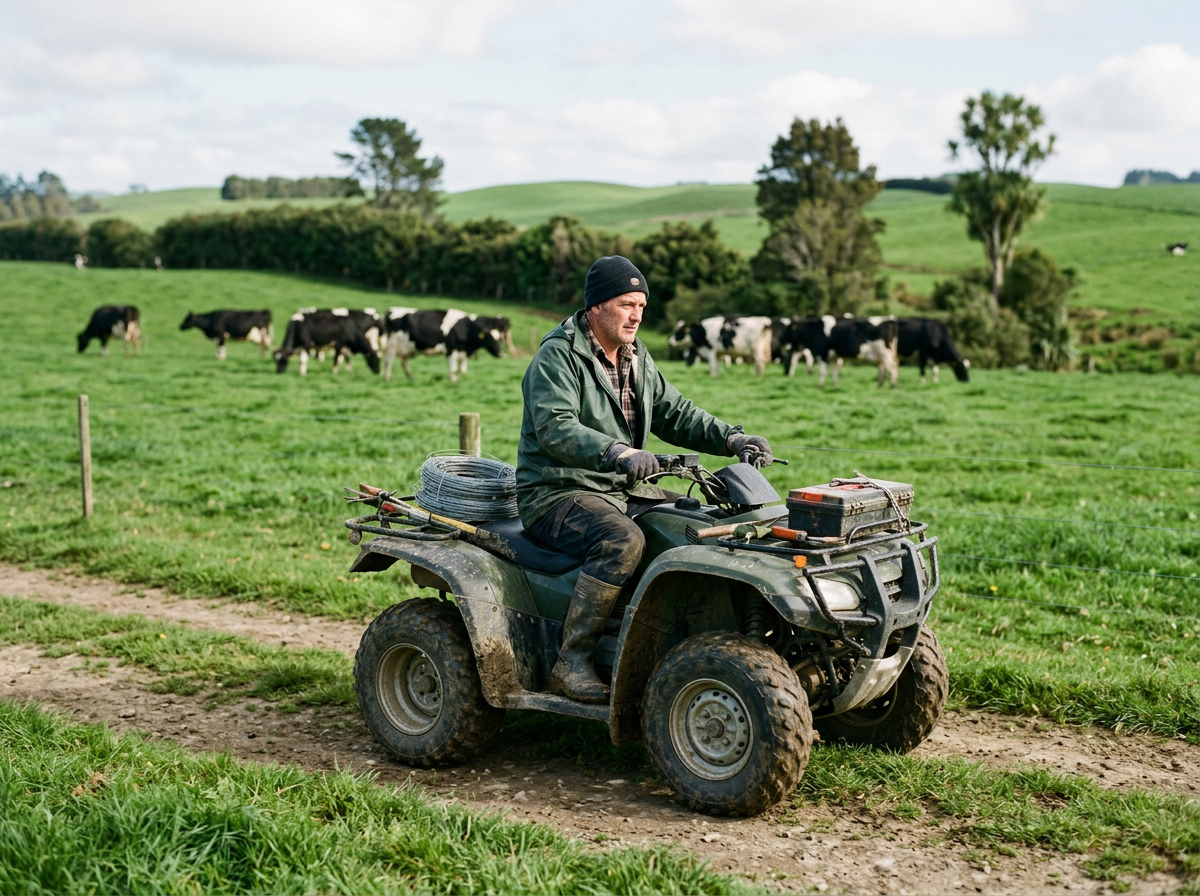
The industry needs a pathway, not just an invitation
New Zealand dairy farming has no shortage of talented young people who are interested in agriculture.
The challenge is showing them that there is a future for them within the industry.
It is not enough to say that dairy farming is a rewarding career if the next step appears financially impossible.
The industry needs to demonstrate how people can progress.
That may involve traditional sharemilking arrangements, but it could also include staged equity, partnerships, family succession and other forms of gradual ownership.
The precise model will depend on the farm and the people involved.
What matters is that there are multiple pathways available.
If a young farmer cannot afford to purchase an entire farm, perhaps there is an opportunity for them to purchase part of a farming business and build from there.
That approach could benefit both generations.
The younger farmer gains a genuine financial stake and a pathway towards greater ownership. The existing owner gains a committed person with an interest in the long-term success of the business.
The farm retains valuable experience while developing new leadership.
A changing guard does not mean losing the past
There can sometimes be concern that bringing a new generation into farming means abandoning traditional knowledge.
It does not need to.
The future of dairy farming will still depend on the knowledge built through generations of farming in New Zealand.
Young farmers need to understand cows, pasture, weather, soils and the realities of running a business.
At the same time, they may bring skills that were not available to previous generations.
They may be more comfortable with automation, digital technology, artificial intelligence, data analysis and new approaches to environmental management.
The strongest farming businesses may be those that combine these strengths.
Traditional stockmanship can work alongside automated monitoring. Generational knowledge can sit alongside new technology. Established pasture systems can incorporate new species and management approaches.
Future-proofing is not about deciding that one generation has all the answers.
It is about combining the best of what has been learned with the possibilities of what is coming next.
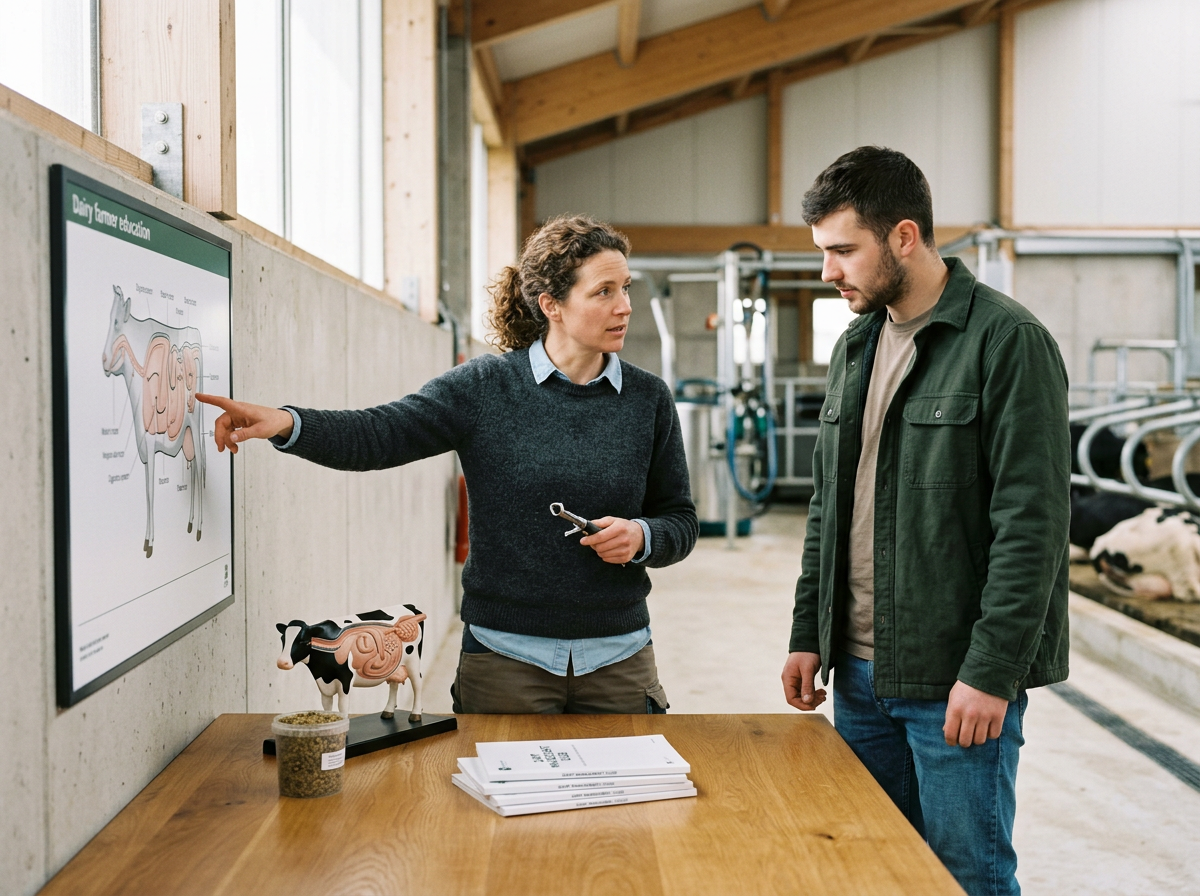
Ownership does not have to happen all at once
Perhaps one of the most important ideas for the future is that ownership can be built gradually.
A person can begin by owning livestock and building their own asset base. They can take on greater responsibility and eventually acquire an equity stake in a wider business.
That equity can then grow.
The journey may take many years, but the person is no longer simply working towards an abstract goal of someday owning a farm.
They are actively building ownership along the way.
This could be particularly important in an industry where the cost of entering full farm ownership is so significant.
It also changes the conversation around what success looks like.
The first goal does not necessarily need to be owning an entire property.
The first goal could be building enough equity to own part of one.
Over time, that part can become larger.
The future farmer may be a partner before an owner
The next generation may therefore enter dairy farming through a pathway that looks very different from the one followed by their parents or grandparents.
They may start as employees, progress into management, purchase livestock, enter a sharemilking arrangement, acquire an equity stake and eventually become a full farm owner.
Alternatively, they may become part of a partnership where ownership is shared between several people. There may be more than one route. What matters is that the industry continues creating opportunities for people to progress.
Dairy farming has always required commitment, resilience and hard work. Those qualities are not going away.
But the financial structure around farming may need to evolve so that hard work and capability have a clearer pathway towards ownership.
The future-proof dairy farm is built by people
After seven days of looking at genetics, technology, pasture, energy and new business opportunities, the final lesson is perhaps the simplest.
The future of dairy farming will be determined by the people who choose to remain in the industry and build its next chapter.
The future-proof dairy farm will not simply be the one with the most advanced technology or the highest production.
It will be a farm with people who have the skills, knowledge, resources and opportunity to keep adapting.
Creating pathways into ownership will be an important part of that.
Sharemilking has already demonstrated that people can build from employment towards ownership. The next challenge is finding ways to extend that opportunity through new equity structures, partnerships and gradual succession models.
The changing of the guard does not need to be a sudden event.
It can be a carefully managed process where responsibility, knowledge and ownership are transferred over time.
That gives the next generation a chance to build confidence and equity while giving the current generation an opportunity to pass on what they have learned.
The result could be stronger farming businesses, stronger rural communities and an industry that continues to attract capable people for generations to come.
Future-proofing dairy farming is ultimately about ensuring there is a future generation capable of taking the industry forward.
Traditional pathways such as sharemilking remain important, but changing land values and capital requirements mean the industry may need to consider additional ways for aspiring farmers to build equity and move towards ownership.
Staged ownership, partnerships and gradual succession could provide opportunities for people who have the skills and experience to farm but cannot immediately afford to purchase an entire dairy business.
For existing farmers, these models may also provide a way to transition out of the business gradually while retaining the knowledge and experience that has been built over decades.
The most important step may simply be to start the conversation early.
What could the next generation take responsibility for? How could they build equity? What knowledge needs to be transferred? What does the existing owner need from the next generation, and what does the next generation need from the existing owner?
There will not be one answer for every farm.
But if the industry can create more pathways into ownership, it can give more young people a reason to see dairy farming not simply as a job, but as a career in which they can eventually build something of their own.
Looking ahead
And with that, we reach the end of our Future-Proof Dairy seven-day series.
Over the past seven days, we have looked at a dairy industry that is changing from the genetics of the cow to the technology used in the paddock, the way pasture is managed, the resources produced on farm and the business structures that could shape ownership in the future.
None of these changes will happen overnight, and not every idea will suit every farm.
Future-proofing is not about chasing every new technology or completely changing a system that already works. It is about looking honestly at the challenges ahead and deciding which changes could make a farm stronger, more resilient and better prepared for what comes next.
The future of New Zealand dairy farming will be built through many individual decisions made by farmers across the country. Some will involve genetics. Others will involve pasture, technology, energy, business diversification or succession.
Some changes will be large, while others may be small. But collectively, they will shape the dairy farms of tomorrow.
The most important thing is that the industry continues to adapt while retaining the practical knowledge, resilience and connection to the land that have always been at the heart of New Zealand dairy farming.
The future is coming, whether we are ready for it or not. The opportunity is to make sure we are ready to make the most of it.