

Thanks for joining us for Day 6 of our seven-day series, Masterclass in pasture & feed management, and today we are getting right down to the bottom of the pasture plant.
Literally.
We have looked at the feed wedge, the habits of good pasture managers, managing the summer feed gap, strategic cropping and even the timing of feed push-ups. Now we are looking at what happens after the cows have finished grazing and why the amount of pasture left behind can have a significant influence on what happens next.
That is the job of the residual.
It can be tempting to think of the pasture left behind after grazing as wasted feed. After all, if the cows have not eaten it, surely the objective should be to get them to clean it up further?
Not necessarily.
The pasture plant is not finished just because the cows have left the paddock. In fact, what remains can be critical to how quickly and effectively that plant recovers.
Good residual management is therefore not simply about deciding how much the cows should eat.
It is about deciding how much of the plant needs to remain so it can get back to work.
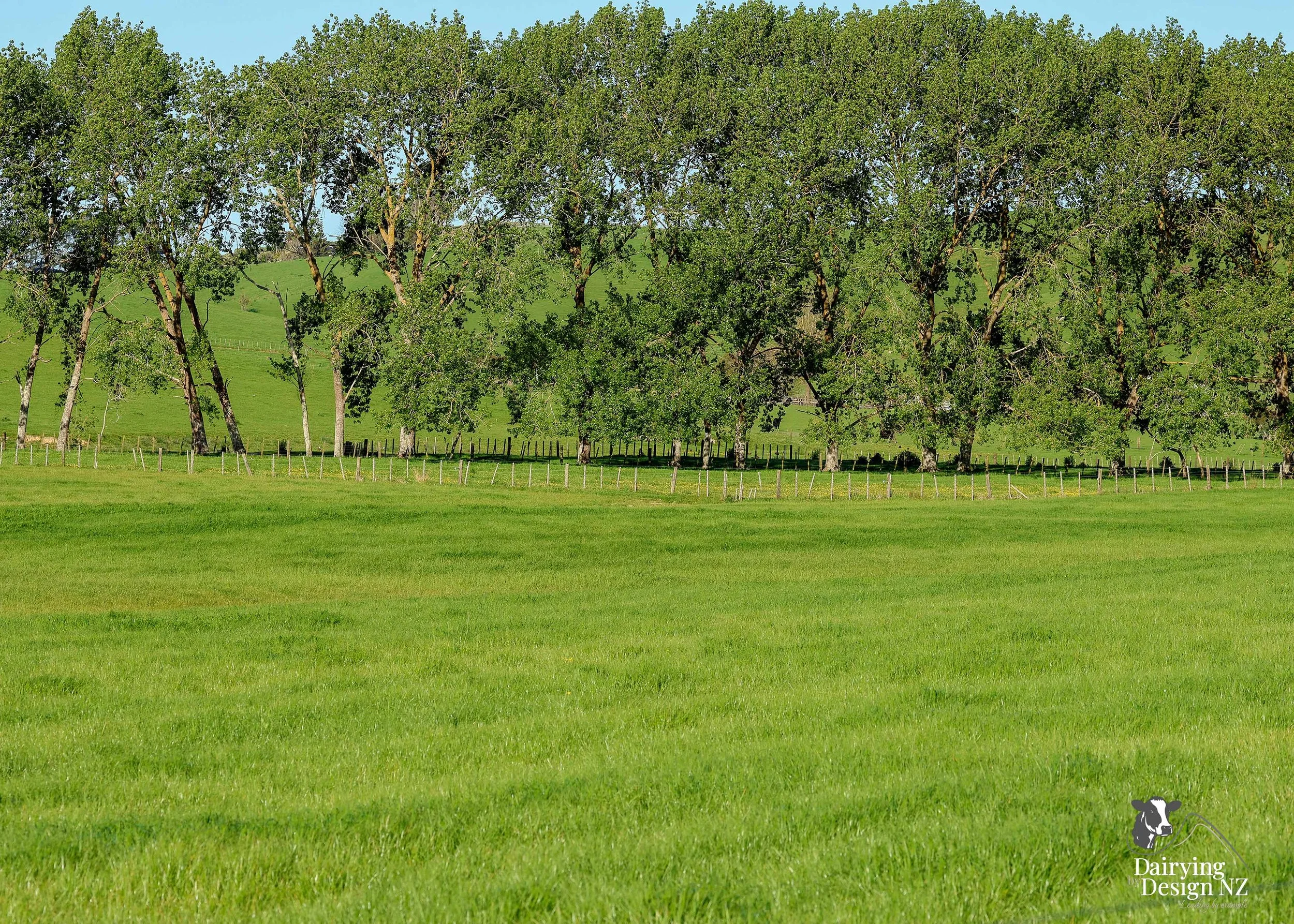
Photo by Dianna Malcolm
What is a residual?
A residual is the amount of pasture remaining after grazing.
It represents the material the cows have left behind, including leaf and plant material close to the soil surface. The exact target will vary depending on the pasture, season, grazing system and circumstances, but the underlying principle is consistent: there needs to be enough plant material remaining to support rapid recovery without leaving excessive mature pasture behind.
This is where pasture management becomes a balancing act.
Graze too lightly and pasture can become rank, mature and less efficient for the cow to harvest. Graze too hard and the plant can be left with insufficient leaf area and energy reserves to recover quickly.
The aim is to find the sweet spot between harvesting enough feed today and protecting the ability to grow feed tomorrow.
“A cow can harvest today’s grass, but the farmer still has to manage tomorrow’s.”
Why the bottom of the plant matters”
The lower part of a pasture plant does not always look particularly impressive.
It may not be the lush green material that attracts the eye when looking across a paddock. But that does not mean it is unimportant.
When cows repeatedly graze pasture right down, they remove a large proportion of the plant's leaf area. This reduces the plant's ability to capture sunlight and produce energy through photosynthesis.
The plant then has to rebuild its leaf area before it can return to strong growth.
That recovery takes time.
If the same paddock is repeatedly grazed too hard, the problem can become cumulative. The pasture has less opportunity to rebuild, regrowth slows and the grazing rotation may need to become longer simply because the paddock is taking longer to recover.
What looked like efficient grazing can therefore become an inefficient feed-production system.
The danger of chasing a clean paddock
There is something satisfying about looking back at a paddock and seeing that the cows have cleaned it up beautifully.
But “clean” and “efficient” are not always the same thing.
A very tidy-looking paddock may have been grazed too hard. If cows have been encouraged to remove almost every available leaf, the paddock may take longer to recover.
This can be particularly noticeable during periods when pasture growth is already under pressure.
In summer, for example, plants dealing with heat and limited moisture may already be growing more slowly. Pushing them harder can make recovery even more difficult.
The same principle applies when pasture is recovering from wet conditions, cold temperatures or other environmental stresses.
The farmer needs to consider what the plant requires after the cows have gone.
Residuals and the next grazing
One of the easiest ways to understand residual management is to think about the next grazing rather than the last one.
If a paddock is grazed appropriately and leaves enough active plant material behind, it has a better opportunity to begin rebuilding immediately.
New leaf emerges. The plant captures sunlight. Root activity continues. Pasture cover gradually increases and the paddock becomes ready for the next grazing.
If the paddock is grazed excessively hard, the starting point for that recovery is much lower.
That means the next grazing may arrive later.
A few extra bites today can therefore potentially become several extra days waiting for the paddock to recover.
This is why residuals are closely linked to rotation length.
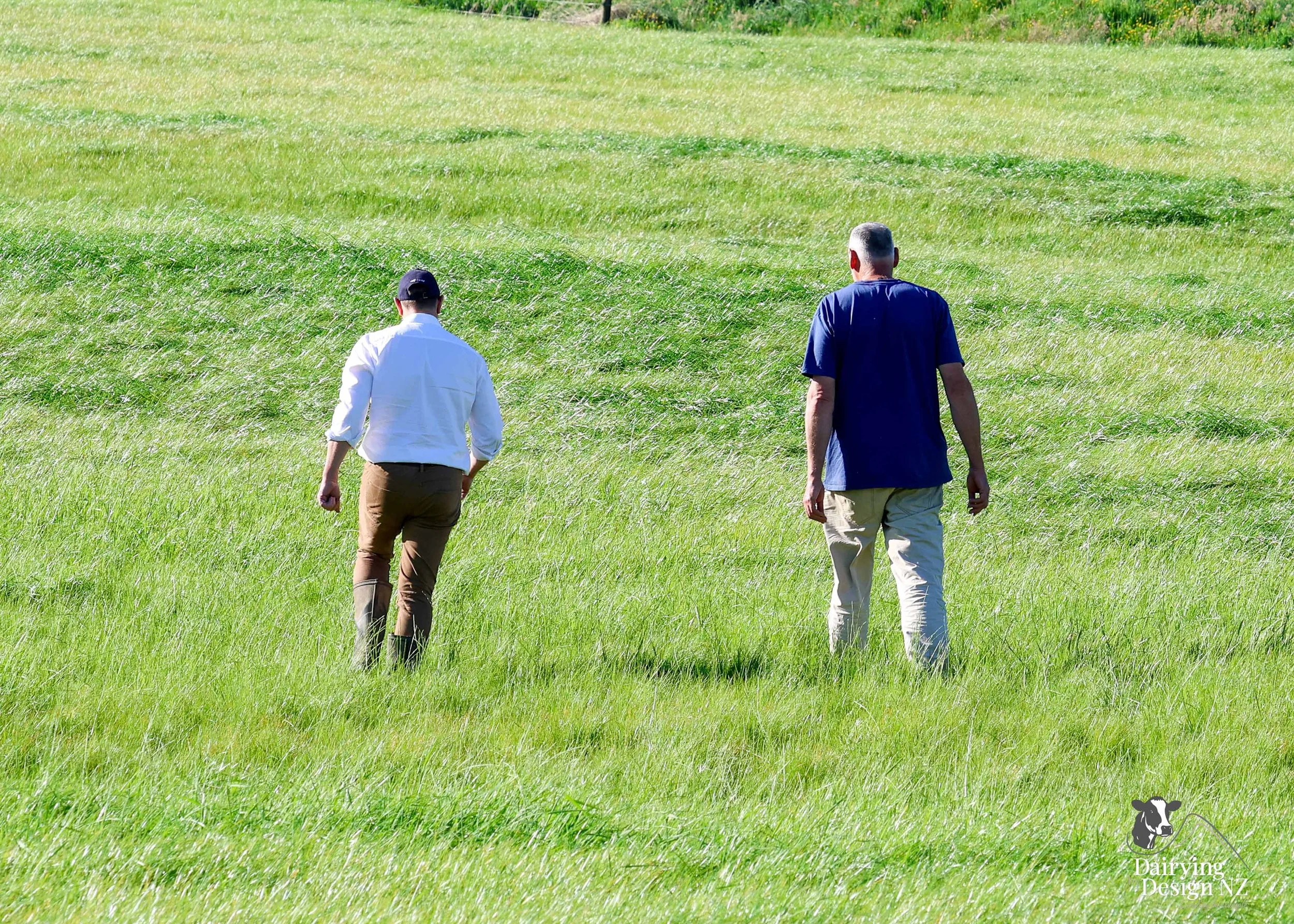
Photo by Dianna Malcolm
The four-centimetre question
The bottom 4cm of the pasture plant is often discussed because maintaining an appropriate residual helps protect the plant's ability to recover.
It is important, however, not to treat 4cm as a magical number that applies identically to every pasture, every farm and every grazing situation.
Pasture height is only one part of the picture.
Plant species, pasture density, season, dry matter content and grazing conditions all influence what the cows are actually leaving behind. A pasture can have the same measured height but very different amounts of dry matter depending on its structure and composition.
The practical lesson is not simply to get the ruler out and obsess over one number.
It is to recognise that repeatedly grazing pasture down too far can compromise regrowth.
The farmer's eye, pasture measurement and knowledge of the farm all need to work together.
Residuals influence pasture quality
There is another side to residual management.
Leaving excessive pasture behind can also create problems.
If cows consistently leave large amounts of mature material, the paddock may become increasingly stemmy and less leafy. Pasture quality can decline, and the cows may become more selective about what they eat.
That can lead to further uneven grazing.
The objective is therefore not to leave as much pasture as possible.
It is to leave the right amount.
Good residual management is about achieving an appropriate level of pasture utilisation while allowing the plant enough material to recover.
That is why experienced pasture managers pay attention to both sides of the equation.
Residuals should not be managed in isolation
The amount of pasture left behind is influenced by what happened before the cows entered the paddock.
If pre-grazing cover is too high, cows may struggle to harvest the paddock efficiently and pasture may become more mature. If pre-grazing cover is too low, the cows may be asked to graze pasture that has not developed enough.
This is another reason the feed wedge is so important.
The wedge provides a picture of how paddocks are developing. Residuals then tell you what happened when the cows went through.
Put the two together and the farmer gets a much better understanding of the grazing system.
If pre-grazing covers are appropriate but residuals are consistently too low, grazing pressure or allocation may need attention.
If residuals are consistently too high, there may be too much pasture being offered or the paddock may need to be managed differently.
The information becomes useful when it is connected.
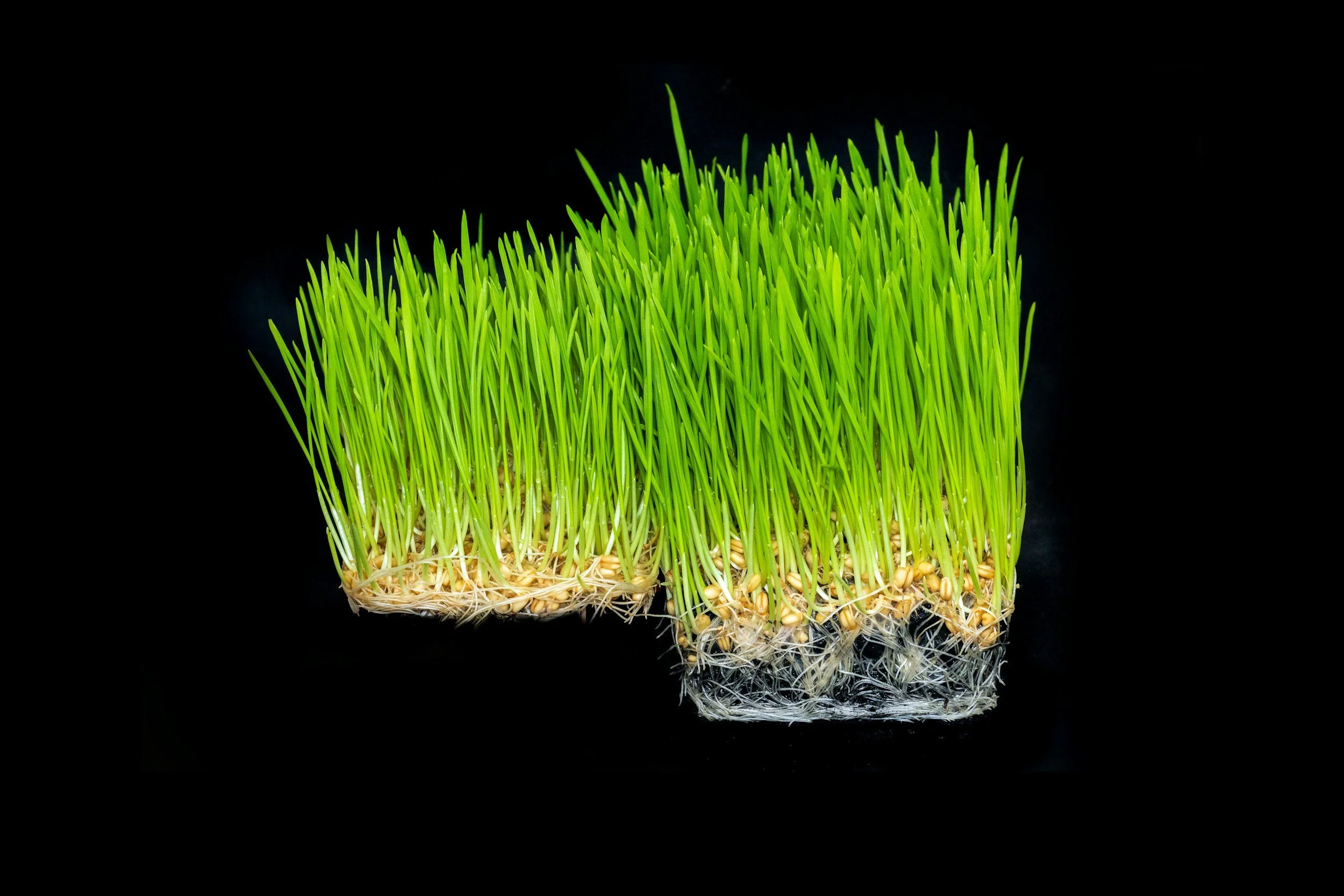
Don't forget root growth
What happens above the soil can also affect what happens below it.
Pasture plants are constantly balancing their resources between leaves, stems, roots and other plant structures. Severe defoliation changes that balance because the plant suddenly has much less leaf area available to produce energy.
The plant has to recover.
That does not mean every hard grazing will destroy a pasture. Pasture plants are remarkably resilient. The concern is repeated pressure without enough opportunity to recover.
A paddock that is occasionally grazed harder is very different from a paddock that is routinely taken too low.
Consistency is the important issue.
Dry conditions make residual management even more important
When moisture is limited, pasture plants are already working under pressure.
Growth slows because the plant has less access to water and may struggle to maintain the same rate of leaf production.
This is when grazing decisions can have particularly long-lasting consequences.
If pasture is grazed excessively hard during a dry period, there may be very little left to drive recovery when conditions remain difficult.
Protecting residuals can help maintain the plant's ability to respond when moisture becomes available again.
This is one reason summer grazing strategies should not be based solely on how much feed the cows need today.
The condition of the pasture platform needs to be considered as well.
Residuals and pasture persistence
A productive dairy farm needs pasture that keeps producing year after year.
Pasture persistence is influenced by many factors, including species selection, fertility, soil conditions, pests, disease, weather and grazing management.
Residual management is part of that wider picture.
Repeated severe grazing can place pressure on desirable pasture species and may create opportunities for less desirable species to establish or increase.
That does not happen overnight.
But pasture deterioration rarely does either.
It is often the result of many small pressures accumulating over time.
Good residual management is therefore an investment in the future productivity of the grazing platform.
The cows will always eat a little more
One of the challenges for farmers is that cows are very good at finding another mouthful.
If they are given enough time and sufficient motivation, they will continue harvesting pasture.
That does not necessarily mean they should.
The farmer's job is to manage the allocation so that the herd gets the required amount of feed while the pasture is left in a condition that supports the next growth cycle.
This is where fencing, break sizes, grazing duration and stock movement can all play a role.
The objective is to create a controlled grazing event rather than simply allowing cows to decide when they have had enough.
Residuals can reveal what is happening
Walking a paddock after grazing can be extremely informative.
Look across the paddock rather than at one small area. Is the residual reasonably even? Are there obvious areas that have been grazed much harder? Are cows consistently avoiding certain patches? Is there a concentration of dung, poor-quality pasture or weeds?
An uneven residual can tell a story.
Perhaps the allocation was not quite right. Perhaps the paddock contains different pasture types. Perhaps cows were forced to clean up an area because the next paddock was not ready.
Those observations can help improve the next grazing decision.
Good residuals are about balance
The goal is not maximum utilisation at any cost.
Nor is it maximum residual at the expense of pasture utilisation.
The goal is balance.
The farmer wants cows to harvest pasture efficiently while leaving enough active plant material to support rapid regrowth. That balance will change according to the season and the conditions.
In periods of strong growth, there may be greater opportunity to capture surplus. During a dry period, protecting the pasture base may become more important.
The grazing plan should respond accordingly.
Don't sacrifice tomorrow's grass for today's intake
This is perhaps the simplest way to think about residual management.
Every grazing decision has a consequence.
If the cows are allowed to graze a paddock harder today, that may provide a little more feed immediately. But if the plant then takes longer to recover, the farm may lose more feed later.
Conversely, leaving excessive pasture behind wastes potential cow intake and can reduce pasture quality.
The skill is finding the point where the cow gets what she needs and the plant is left in good enough condition to keep producing.
That is pasture management at its most fundamental.
Residuals are not simply leftovers.
They are the starting point for the next round of pasture growth.
Avoid the temptation to judge grazing efficiency by how bare a paddock looks after the cows leave. Instead, consider whether the residual is appropriate for the pasture, season and grazing system, and whether the plant has enough leaf area left to recover strongly.
Keep an eye on the relationship between pre-grazing cover, grazing duration and post-grazing residual. If paddocks are consistently being grazed too hard, the cost may not be obvious today, but slower regrowth, longer rotations and declining pasture performance can show up later.
The best pasture managers are harvesting grass with the cow while still protecting the grass factory underneath her.
Because the paddock is never really finished when the cows walk out.
It is only starting its next job.
See you tomorrow for Day 7, the final day of our Masterclass in pasture & feed management, when we look at slurry and muck optimisation and how well-managed farm effluent can become another useful resource in the pasture system.