

Pull up a pew and join us for Day 5 of our seven-day series, Masterclass in pasture & feed management, and today we are moving from the paddock into the feedpad and asking a deceptively simple question: when should you push the feed up?
For many dairy farmers, pushing feed up is such a routine part of the day that it barely gets a second thought. The tractor, loader or feed trolley goes past, the feed is pushed closer to the cows and the job is ticked off.
But there is more to it than simply moving feed closer to the animals.
The timing of feed push-ups can influence how easily cows can access the ration, how much time they spend eating and whether feed remains within comfortable reach throughout the period when cows are motivated to eat. In a well-designed feeding system, the humble feed push-up is another small management tool that can help make better use of the feed already sitting in front of the herd.
And when feed costs are significant, wasting less and harvesting more of the available ration makes sense.
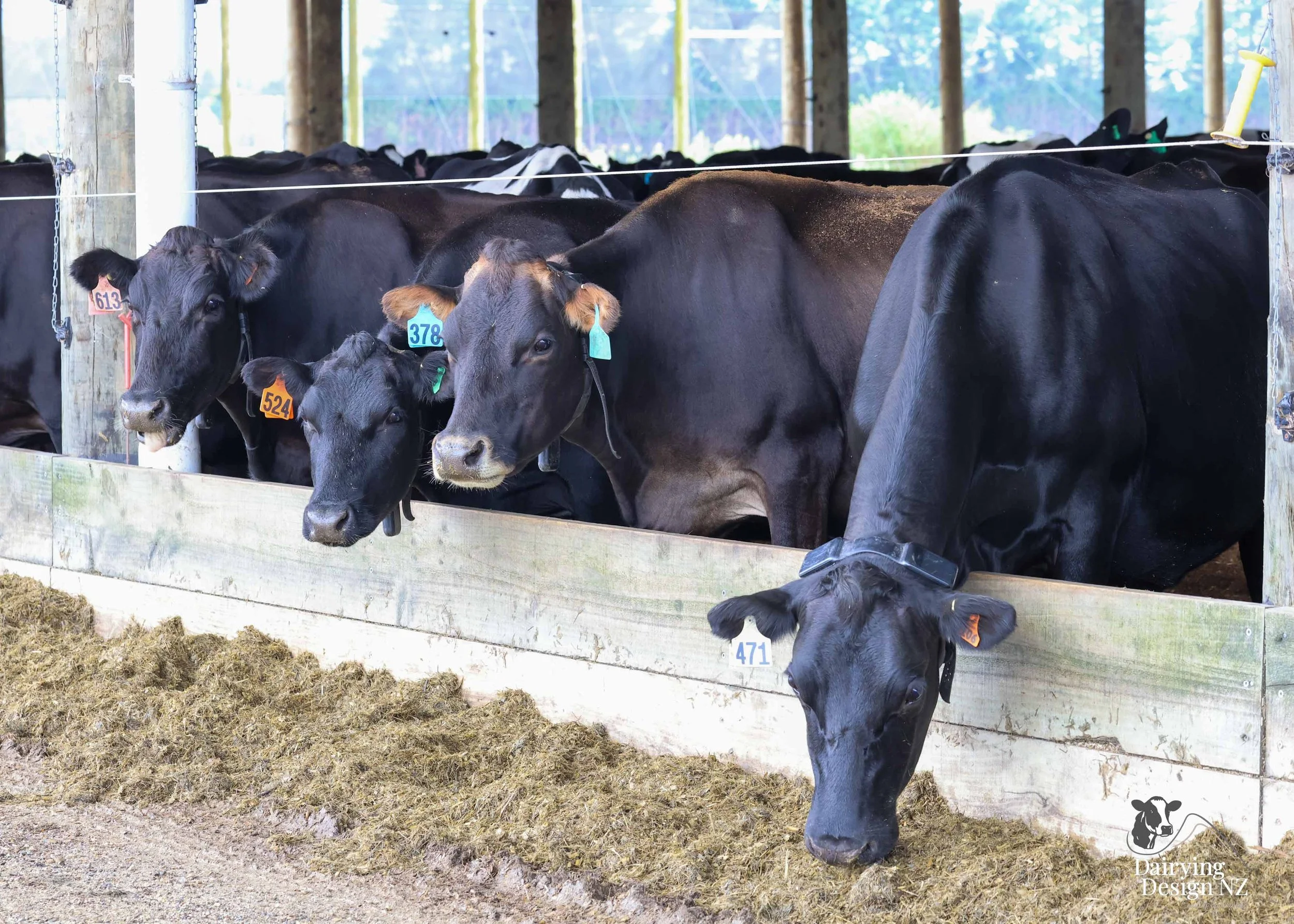
Photo by Dianna Malcolm
Cows don't eat to the clock
Dairy cows have their own daily rhythm.
Their behaviour changes throughout the day, with periods of eating, resting, ruminating, drinking and social activity. Those patterns are influenced by milking times, weather, feeding, lighting, cow comfort and the physical layout of the farm or dairy facility.
This means that feeding management works best when it considers what the cows are doing rather than simply what time it is.
A feed push-up immediately after cows have been milked, for example, may be particularly useful if cows naturally return to the feed area and begin eating. If the feed has been pushed away from the barrier during the previous period, bringing it back within easy reach can make that fresh opportunity to eat much easier.
The objective is not to make cows eat on demand.
It is to make sure the feed is accessible when they want to eat.
“The feed that matters is not the feed sitting somewhere on the feedpad. It is the feed the cow can comfortably reach and actually eat.”
Watch the cows, not just the feed
One of the easiest ways to improve feed-push-up timing is to spend some time watching what the cows actually do.
Are cows gathering around the feed area after milking? Are they actively eating? Is the feed pushed away from the barrier by the time they arrive? Are some cows having to stretch considerably to reach it? Are the more dominant cows getting the best access while quieter cows are pushed back?
These observations can tell you more than a timetable alone.
The ideal schedule on one farm may not suit another because feeding systems, herd behaviour, shed layout and milking routines all differ.
Rather than asking, “What is the correct time to push feed up?” the better question is, “When does this herd need the feed brought back within easy reach?”
That answer can be found by observing the cows.
The post-milking opportunity
For many dairy systems, the period after milking creates an important opportunity for cows to access feed.
Cows are already moving through the dairy, and once milking is complete they may naturally return to the feeding area. If the available feed has been pushed away from the barrier during the previous feeding period, bringing it forward before or around that return period can make better use of the cows' motivation to eat.
This does not mean every farm needs to adopt exactly the same timing.
The important thing is to connect feed availability with the herd's daily routine.
Milking times, grazing movements, supplementary feeding and cow flow should all be considered together. A feeding programme that looks sensible on paper can become less effective if the cows are somewhere else when the feed is most accessible.
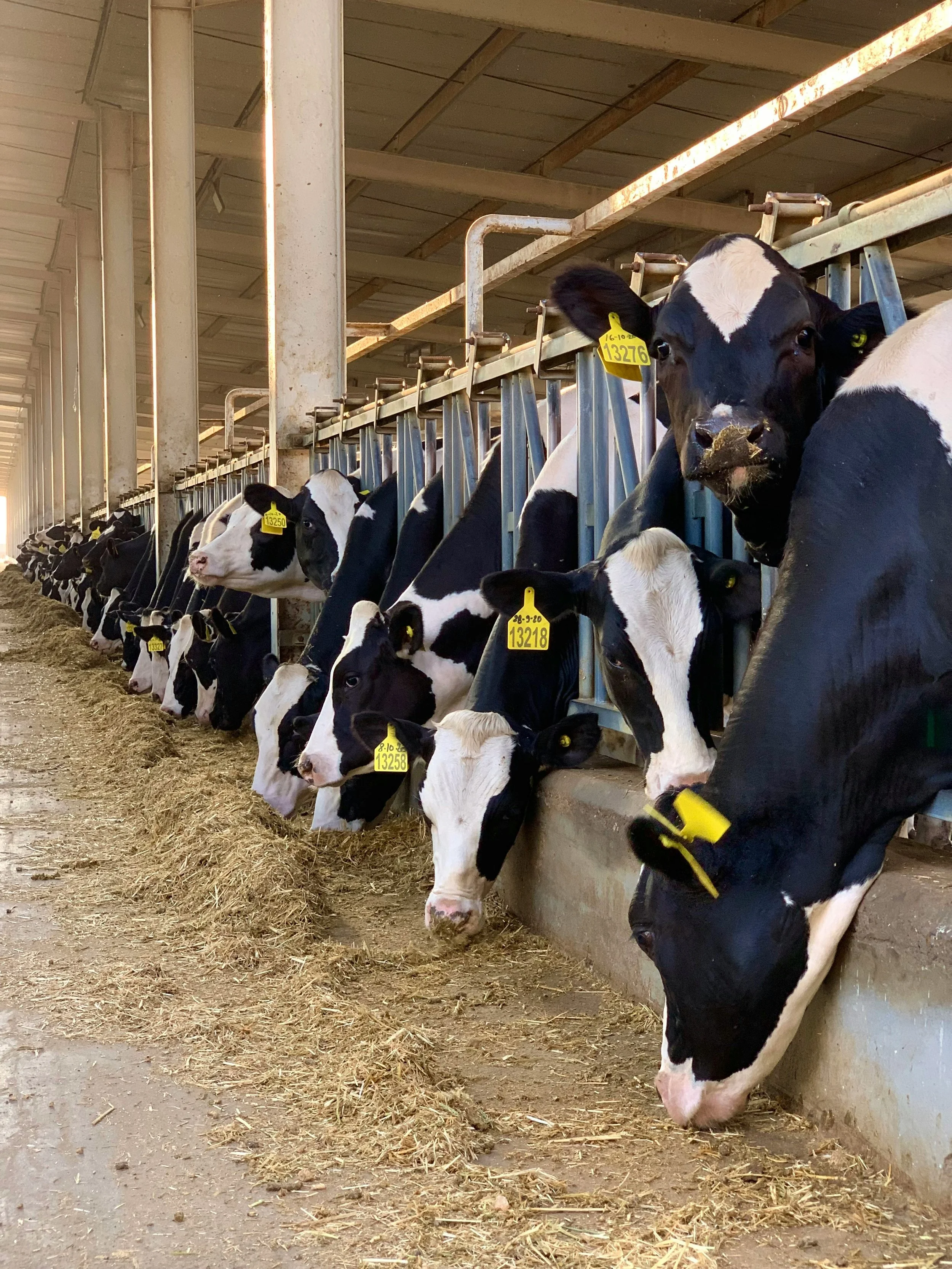
Feed accessibility matters
A cow can only eat what she can reach.
That sounds obvious, but feed can gradually move away from the feeding face as cows eat, sort and push through it. What started as a well-presented ration can end up scattered, pushed back or sitting beyond comfortable reach.
As the feed moves away, the cows have to work harder to access it.
That can encourage them to spend less time eating or favour the feed that remains easiest to reach. It can also increase competition around the feed barrier.
Regular push-ups help keep the ration accessible.
The aim is not necessarily to have feed piled directly against the barrier all day. It is to maintain a practical feeding face where cows can eat comfortably without unnecessary effort.
More than one push-up may make sense
Some farms may find that one carefully timed push-up is sufficient. Others may benefit from several smaller adjustments throughout the day.
The right approach depends on the feeding system.
Where cows have prolonged access to a feedpad, frequent small push-ups can help keep feed within reach. In other systems, the feeding pattern may be closely linked to milking and grazing movements.
There is no prize for the farm doing the most push-ups.
The objective is to achieve good feed access without creating unnecessary machinery hours, fuel use and labour.
That is particularly relevant on farms where labour is already under pressure.
Think about the whole feeding area
Feed push-ups are only one part of feed accessibility.
The physical design of the feeding area also matters.
The distance from the cow to the feed, the height and design of the barrier, the surface cows are standing on and the amount of space available can all affect how easily cows can access the ration.
A beautifully formulated ration cannot overcome a feeding system that makes eating unnecessarily difficult.
This is where infrastructure and feeding management meet.
If cows consistently have difficulty reaching feed, the solution may not be to push it up more often. It may be worth looking at whether the feeding area itself is creating the problem.
Sorting can change what is available
Another reason to watch the feed rather than simply the clock is feed sorting.
Cows can sort a mixed ration to varying degrees, depending on the ration, particle size, moisture, presentation and feeding environment. What remains at the feed face later in the day may therefore not be identical to what was originally offered.
A push-up can redistribute the remaining feed and bring it back within reach, but it does not necessarily eliminate sorting.
The goal should be to present a consistent ration and manage the feeding system so that cows have good access to it throughout the intended feeding period.
If the feed face is showing obvious separation between different components, it is worth considering why.
Timing and cow comfort
Cow comfort should also be part of the equation.
Cows are more likely to make use of feeding opportunities when they are comfortable and have sufficient access to the feeding area. Heat, mud, crowding and poor surfaces can all alter normal behaviour.
During hot weather, for example, cows may change when and how they eat. They may spend more time resting during the hottest part of the day and shift some feeding activity towards cooler periods.
That means feeding management may need to respond to the season.
The same principle applies throughout the year: watch what the herd is doing and adjust the management around it.
Don't confuse more feed with more intake
It is tempting to think that keeping the feed pushed right up against the barrier will automatically mean cows eat more.
It does not work quite that simply.
Dry matter intake is influenced by many factors, including diet quality, cow demand, stage of lactation, health, body condition, environmental conditions and feeding management.
A feed push-up is therefore not a magic switch for increasing milk production.
Its role is much more practical.
It helps make the feed that has already been offered easier for cows to access. When combined with good ration formulation, appropriate allocation and comfortable feeding conditions, that can support efficient feed utilisation.
The small details matter because they happen every day.
The cost of a missed feeding opportunity
It can be easy to dismiss a little feed sitting just out of reach as insignificant.
Multiply that small inefficiency across a large herd and many days, however, and the numbers can become meaningful.
If cows are regularly leaving feed because it is difficult to access, if feed is being wasted because it has been pushed too far away or if the herd is not eating consistently throughout the feeding period, the farm may be paying for feed that is not being converted into useful production.
That is why feed management should be considered from the cow's perspective.
The question is not simply how much feed was delivered.
It is how much feed the cow had the opportunity to consume.
Use the tractor time wisely
There is also a labour and machinery consideration.
Every trip along the feed face takes time. On farms where labour is tight, unnecessary feed push-ups can become another task competing for attention.
This makes timing particularly important.
Rather than automatically pushing feed every time the operator happens to be near the feeding area, consider whether the cows actually need it moved.
A well-timed push-up can achieve more than several poorly timed trips.
That is where observation becomes valuable. If cows are actively eating and the feed remains comfortably within reach, another push may achieve very little. If the feed has moved away and cows are clearly trying to reach it, the timing becomes much more useful.
Technology can help, but eyes still matter
Modern feeding systems can provide useful information about feed allocation, refusals and feeding behaviour. This can help farmers understand patterns that may otherwise be difficult to see.
But technology does not remove the need to observe the herd.
Spend five minutes watching cows eat and you can often learn something useful.
Look at which cows are eating, how they are positioned, whether there is crowding, how quickly the feed is moving and what the feed face looks like several hours after feeding.
The combination of measurement and observation is powerful.
Make feed management part of the daily rhythm
The most effective feeding routines tend to become part of the farm's normal rhythm.
Milking finishes. Cows return. Feed is available. Feed is pushed as required. Cows eat, rest and ruminate. The feed face is monitored and adjusted again when necessary.
The routine should fit the cows rather than creating unnecessary work for the people.
That is an important distinction.
Good infrastructure should make the right thing easier to do. A feeding system that requires constant manual intervention to keep feed accessible may be telling you something about the design of the system itself.
Sometimes the best feed push-up is the one that does not need to happen because the feeding area has been designed properly in the first place.
Small management changes can add up
Feed push-ups may seem like a minor detail compared with ration formulation, pasture management or herd genetics.
But dairy farming is full of small details.
A few minutes saved here, a little less feed wasted there, better access for a quieter cow, a more consistent feeding face and a routine that better matches cow behaviour can all contribute to a more efficient system.
The value is not necessarily found in one dramatic improvement.
It is found in doing the small things well, every day.
There is no universal clock time that makes a feed push-up perfect for every dairy farm. The best timing is closely connected to the cows' daily routine, feeding system, milking times and how quickly the feed moves away from the feeding face.
Watch the herd. Look at the feed. Notice when cows are most motivated to eat and make sure the ration is within comfortable reach at those times.
Then consider whether your current routine is achieving that without creating unnecessary labour and machinery costs.
A feed push-up should have a purpose. It should make feed more accessible, support consistent eating and help the farm get better value from the ration already being provided.
Sometimes the biggest gains in feed management are not about finding more feed at all.
They are about helping the cow make better use of the feed you already have.
See you tomorrow for Day 6 of our Masterclass in pasture & feed management, when we get down to the bottom of the pasture plant and look at residuals – and why repeatedly grazing too hard can cost much more than it appears to at the time.