Milk From the Desert
How Egypt's Camel Dairies Are Thriving Where Most Dairy Cows Can't
Where water is scarce and temperatures soar, one remarkable animal is quietly producing one of the world's most valuable milks.
Welcome to the fourth in our 7-day series on How the World Produces Milk
Most New Zealand dairy farmers would struggle to imagine milking animals in temperatures above 40°C with little rainfall, sparse vegetation and endless stretches of desert.
Yet across Egypt, that is exactly what happens every day.
While cows still play an important role in Egypt's dairy industry, the country's harsh climate has also created a growing interest in one of the world's most extraordinary dairy animals—the camel. Long regarded as the "ship of the desert", camels are now being recognised as efficient milk producers capable of thriving where traditional dairy cattle simply cannot survive.
For many communities across North Africa and the Middle East, camel milk has been a staple food for centuries. Today, modern camel dairies are combining ancient traditions with advanced technology to supply supermarkets, export markets and health-conscious consumers around the world.
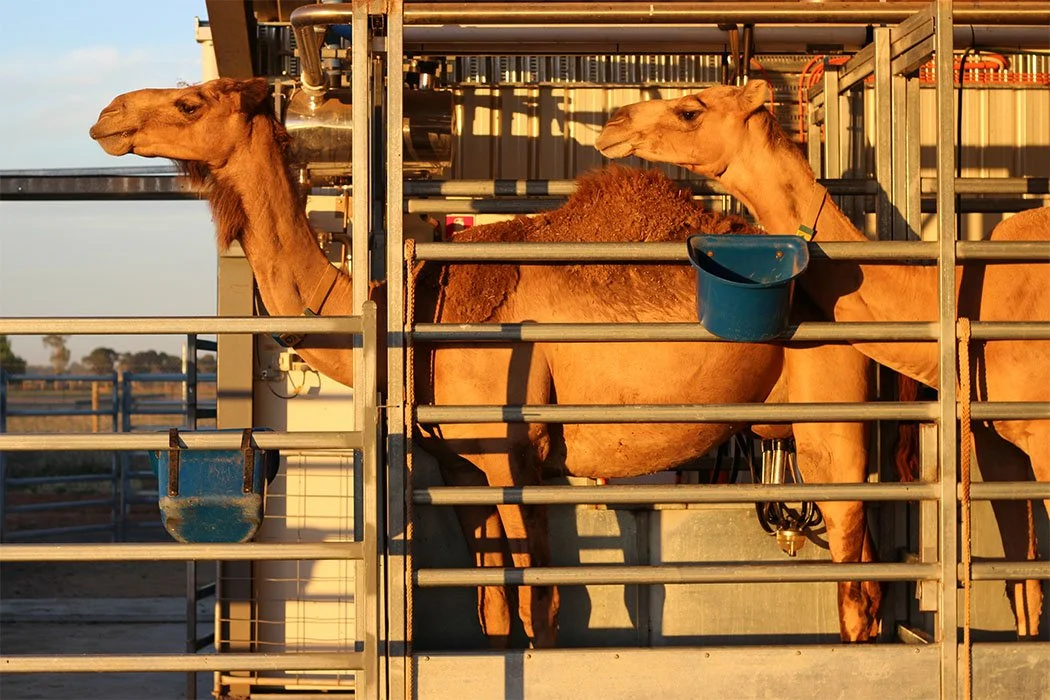
Photo by Stu Modra
Built for the Desert
Unlike dairy cows, camels are perfectly adapted to life in extreme environments.
Their bodies can tolerate large fluctuations in temperature, allowing them to remain productive during intense daytime heat without suffering the same level of heat stress experienced by cattle.
Camels also lose far less water through sweating and can comfortably withstand long periods between drinking. When water is available, they are capable of consuming large quantities in a single sitting before returning to grazing.
These remarkable adaptations make them ideal livestock for countries like Egypt, where annual rainfall is minimal and fresh water is one of agriculture's greatest challenges.
Producing Milk Where Others Cannot
While a high-performing Holstein cow in New Zealand might produce 30–40 litres of milk per day, dairy camels generally average between 5 and 12 litres daily, with elite animals producing considerably more under intensive management.
Although daily production is lower, camels often continue milking for much longer lactations—sometimes exceeding 12 to 18 months.
Importantly, they maintain production during periods when cattle would experience significant declines due to heat stress or limited feed availability.
For desert communities, reliability is often more valuable than sheer volume.
Every Drop Counts
Perhaps the greatest advantage of camel dairying is its incredible water efficiency.
Camels require significantly less water than dairy cattle relative to the harsh environments in which they live. They also utilise vegetation that many other livestock species cannot digest, including thorny shrubs, dry grasses and salt-tolerant plants.
Rather than relying on irrigated pasture, camel farmers often make use of native desert vegetation supplemented with hay, grains and mineral nutrition where required.
This ability to convert otherwise unusable feed into highly nutritious milk is becoming increasingly important as climate change places greater pressure on agricultural systems worldwide.
“Camels don’t simply survive the desert—they produce valuable food from landscapes where most dairy cattle could never operate.”
Why Camel Milk Commands Premium Prices
Camel milk has attracted worldwide attention for both its nutritional profile and potential health benefits.
It contains high levels of vitamin C, iron and several important minerals while typically being lower in saturated fat than cow's milk.
Many consumers also find camel milk easier to digest due to differences in its protein structure. Research continues into its potential benefits for people with certain dietary sensitivities, although scientists stress that further clinical studies are still ongoing.
Because production volumes remain relatively small and demand continues to grow, camel milk often sells for several times the price of conventional cow's milk.
This premium has encouraged investment in modern camel dairies throughout Egypt and neighbouring countries.
Modern Camel Dairies
Today's commercial camel farms look surprisingly familiar to dairy farmers.
Modern milking parlours, electronic identification systems, veterinary monitoring and strict hygiene standards have transformed what was once entirely traditional production.
However, camels still retain some unique behaviours.
Many females require their calf to be nearby before milk let-down occurs, making milking routines quite different from conventional dairy cattle.
Handling also requires patience and experienced stockmanship, as camels have very different temperaments and social behaviours.
Feeding in Harsh Climates
Feed management presents one of the greatest challenges.
Egyptian dairy producers make extensive use of drought-tolerant forage crops where irrigation is available, along with conserved fodder, cereal grains and by-products from local agriculture.
Nutritionists carefully balance rations to maintain body condition while supporting milk production under extremely hot conditions.
Shade structures, cooling systems and strategic watering points also play important roles in maintaining animal welfare.
Lessons for New Zealand
New Zealand is unlikely to replace dairy cows with camels anytime soon.
However, Egypt's dairy industry demonstrates how livestock systems can evolve to suit their environment rather than forcing unsuitable animals into challenging climates.
As global temperatures rise and water availability becomes increasingly uncertain in many regions, researchers worldwide are studying camel production for valuable insights into heat tolerance, water efficiency and resilient farming systems.
For New Zealand dairy farmers, the lesson is clear.
Innovation doesn't always mean producing more milk.
Sometimes it means finding smarter ways to produce milk under whatever conditions nature provides.
Join us tomorrow as we travel to Israel — where every drop of milk is backed by science, technology and decades of research.