
A dairy farm is full of numbers that seem ordinary until somebody multiplies them. A tiny percentage can represent thousands of litres, a gate can swing thousands of times in a season, and a short walk to the cowshed can become a remarkable journey when hundreds of cows make it twice a day.
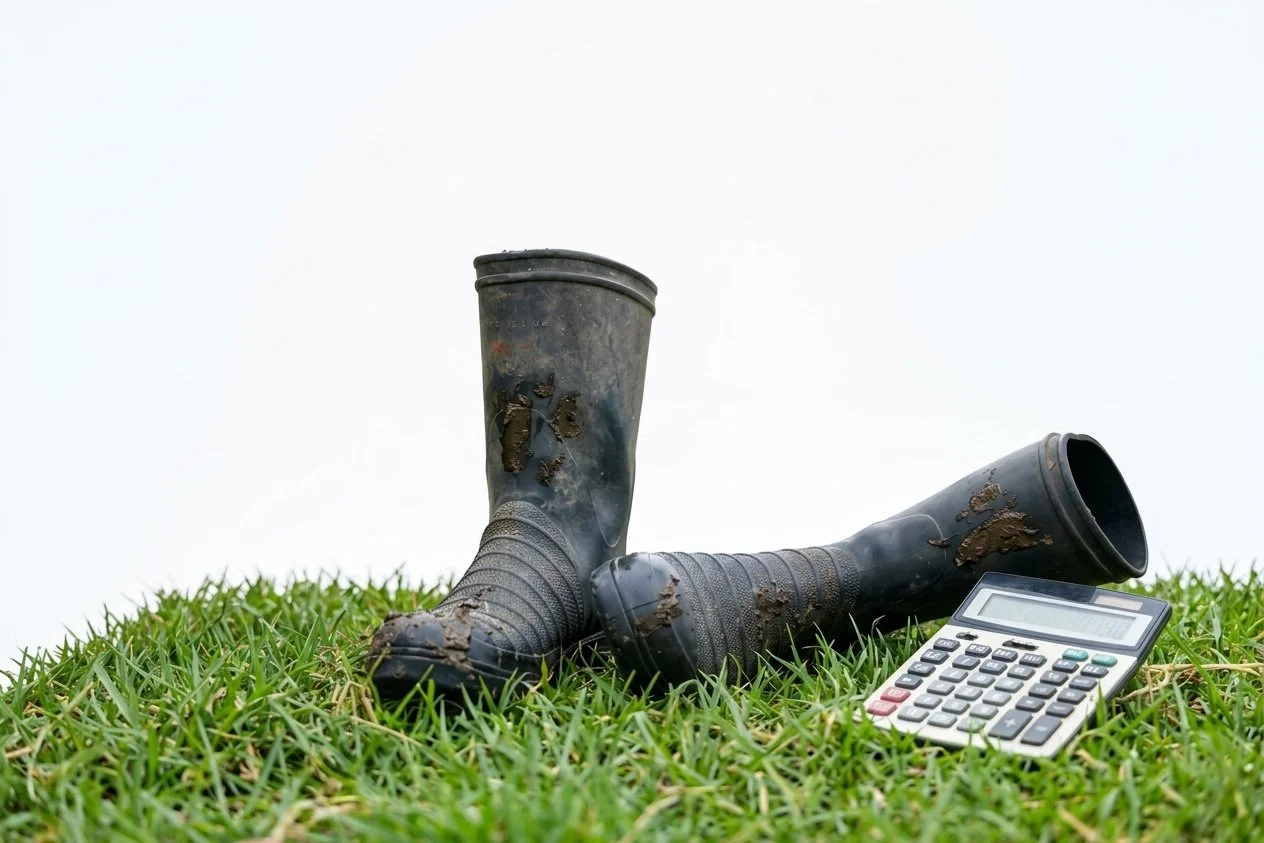
The numbers hiding in plain sight
There are farms where nobody would dream of sitting down with a calculator before breakfast, yet the whole operation runs on mathematics. Not the sort involving complicated equations written across a classroom whiteboard, but the everyday arithmetic of moving cows, shifting water, measuring feed, collecting milk and keeping everything working on time.
It is mathematics with muddy boots.
A dairy farmer might notice a small change in production, a gate that needs repairing or a water trough that never seems to stop filling. Each looks like a relatively minor detail. But multiply that detail across hundreds of cows, several milkings a day or an entire season, and the numbers can become surprisingly large.
The interesting part is that these calculations are happening whether anyone bothers to write them down or not.
When one per cent becomes a lot of milk
Percentages have a reputation for being small, polite numbers that sit quietly in reports. On a dairy farm, they can have rather more presence.
Imagine a hypothetical herd producing 20,000 litres of milk a day. A change of just one per cent represents 200 litres. That is not an abstract percentage any more. It is 200 litres of actual milk, every day that the difference persists.
Over a 30-day period, that same daily difference adds up to 6,000 litres. If it continued for 100 days, it would amount to 20,000 litres.
Nothing about the percentage itself has changed. The multiplication simply reveals what it means on a working farm.
The same thinking applies in the other direction. A small percentage reduction in feed wastage, water loss or time spent on a repeated task can represent a substantial amount when the calculation is repeated across an entire operation.
Of course, not every change in production is something a farmer can control, and milk production naturally varies with factors such as stage of lactation, feed availability, weather and herd performance. The point is not that every one-per-cent change is achievable or desirable. It is that percentages become much easier to understand when they are translated into the real quantities they represent.
Sometimes the smallest number in a report is the one worth looking at twice.
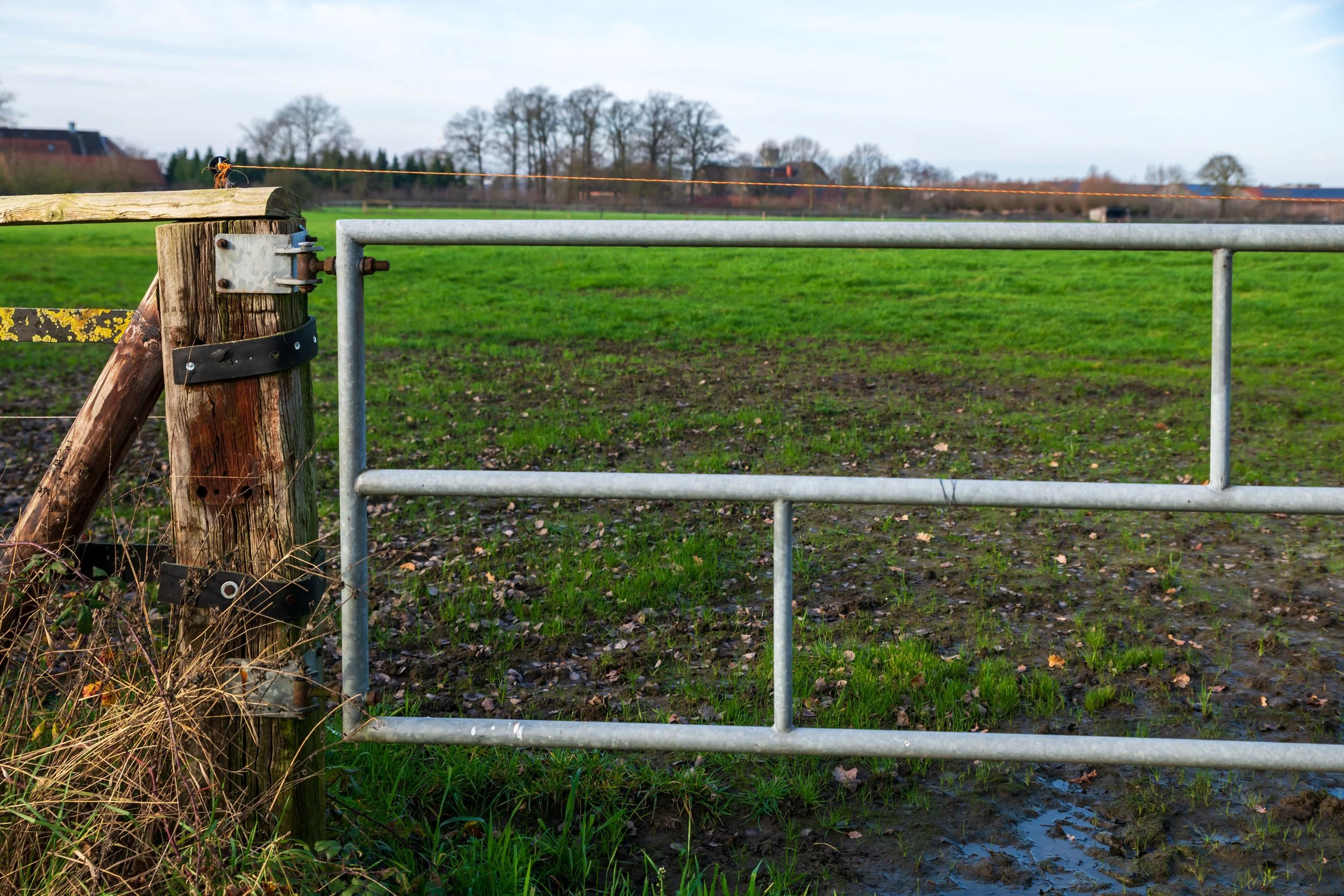
A gate has a busier life than you think
A farm gate looks like a remarkably uncomplicated object. It hangs on its hinges, keeps stock where they belong and waits for somebody to come along with a hand, a quad bike or a tractor.
But consider a gate used regularly for moving cows between paddocks and the milking area. If it is opened 20 times a day, that adds up to 600 openings over 30 days. Over a 180-day period, it becomes 3,600 openings.
That is just one gate, using a deliberately simple example. A busy gate may be opened more often, while another might barely move for days. Gates used for shifting groups of cows, machinery access and farm traffic all have different workloads.
There is another little complication. Opening a gate is only half the story. Someone must close it, secure it and occasionally persuade it to behave when the ground has shifted, a hinge has sagged or the latch has decided that today is not its day.
If a gate is opened and closed 20 times daily, that represents 40 separate opening and closing actions. Repeated over a season, those movements explain why a hinge can develop a squeak, a latch can wear and a seemingly insignificant gate can become a regular maintenance job.
It also helps explain why gate placement matters. A well-positioned gate can make routine stock movements smoother, while an awkward one can create unnecessary stopping, turning and handling. The difference may be only a few seconds each time, but repeated tasks have a habit of making those seconds add up.
The humble gate is not just a piece of fencing hardware. On a busy dairy farm, it is a small mechanical component with a surprisingly full working calendar.
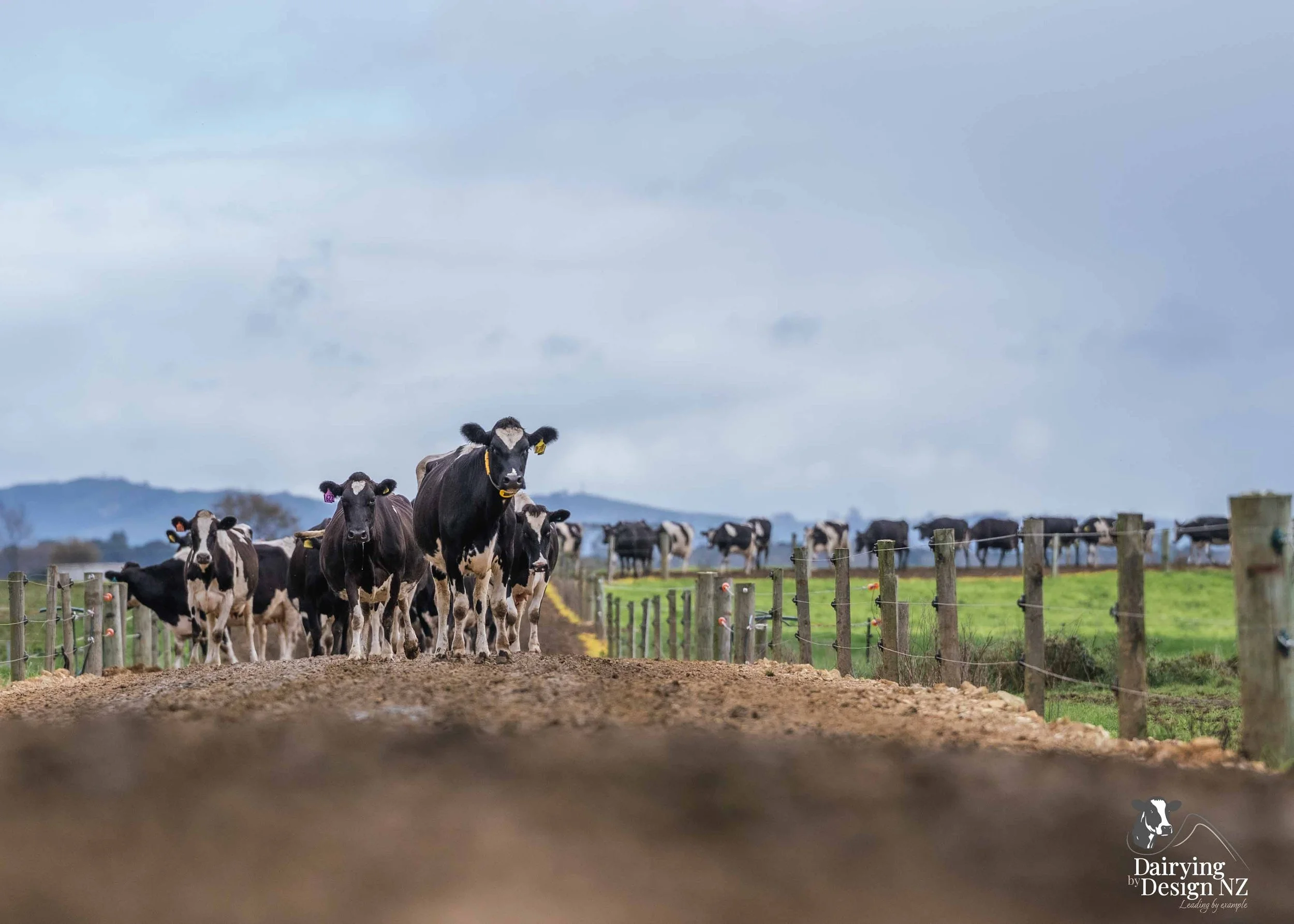
Photo by Ella Pirie Photography
The cows' daily walking club
People often describe a cow's trip to the cowshed as a short walk. That may be perfectly accurate when looking at one journey, but the total distance over a day can be another matter.
The distance cows walk depends on the farm's layout, paddock locations, race design, milking frequency and the way stock are managed. A herd on a compact farm may travel considerably less than one grazing distant paddocks across a larger property.
For an illustration, suppose a cow walks one kilometre each way between a paddock and the milking area. That is two kilometres for a return trip. If the journey happens twice daily, the total is four kilometres a day.
Over a 30-day month, that hypothetical cow would cover 120 kilometres just making those journeys. Over a 180-day period, it would be 720 kilometres.
That is before counting the distance she walks while grazing, moving around the paddock, visiting water or changing position within the herd.
Multiply the same example by 400 cows and the herd collectively covers 1,600 kilometres a day in those return journeys. Over 30 days, that becomes 48,000 kilometres.
No individual cow has walked that distance, of course. It is the combined distance covered by the herd. But it gives a different perspective on the amount of movement involved in getting cows from pasture to the milking plant and back again.
These figures are illustrations rather than a prediction for every farm. They show why race placement, surface condition, gradients and access to water can matter. A distance that seems modest on a farm map is repeated by animal after animal, day after day.
The cows may not be training for a marathon, but their daily routine certainly involves more kilometres than a casual observer might expect.
Water has a remarkable talent for adding up
Water is one of those farm resources that can be easy to overlook precisely because it is so familiar. It runs through troughs, pipes, wash-down systems and cleaning equipment, often without attracting much attention until a supply fails.
The volumes involved can be substantial.
Imagine a hypothetical herd of 500 lactating cows, with each animal drinking an average of 80 litres a day. That calculation gives 40,000 litres of drinking water daily. Over seven days, it becomes 280,000 litres.
The assumed intake is simply an example. Actual drinking requirements vary with weather, diet, milk production, body size and other conditions, so the figure should not be treated as a standard for every herd.
And drinking is only part of the water story. A dairy operation also needs to consider water used in plant cleaning, yard washing and other activities, depending on its system and operating practices. The total demand can therefore be substantially different from the drinking-water figure alone.
This is where the mathematics becomes useful for practical farm planning. A supply that appears generous during mild weather may come under greater pressure during hot conditions or periods of peak demand. Pipe capacity, pump performance, storage volume and trough refill rates all affect whether water is available when and where it is needed.
A leak can also become more significant when it runs continuously. A small loss repeated every minute of every hour is no longer quite so small by the end of the day.
Water management is not about making farmers suspicious of every dripping tap. It is about recognising that continuous flows and repeated uses can add up to volumes that deserve attention.
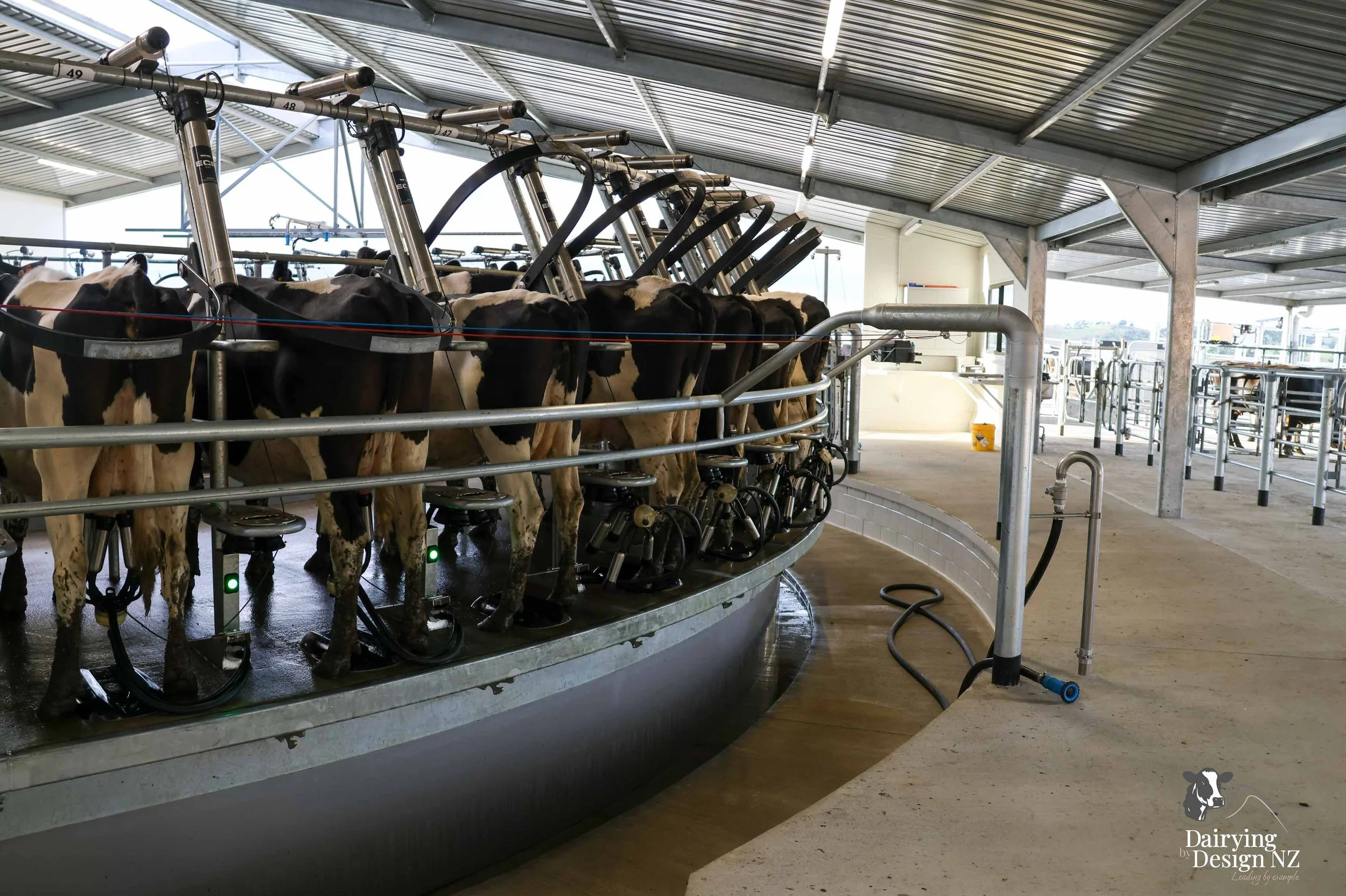
Photo by Dianna Malcolm
A milking involves more movements than the clock shows
A milking can be described by its start time, finish time and total duration. Yet the clock does not capture all the individual movements taking place within that period.
Cows move into position, enter the milking area, stand for milking, leave and return to their paddocks or holding areas. People and equipment are also moving, with each system requiring its own sequence of tasks.
Consider a hypothetical herd of 500 cows milked twice a day. That represents 1,000 cow-milkings every day. If each cow enters and leaves the milking area once per milking, there are 2,000 entry and exit movements daily.
Over 30 days, that becomes 60,000 such movements. Over 180 days, it reaches 360,000.
Those numbers describe cow entries and exits, not every step taken by the cows or every action performed by the people operating the plant. The full number of individual movements would be much higher, and the exact total would depend on the milking system and the way the work is organised.
The same principle applies to repetitive human tasks. Opening and closing gates, attaching and removing equipment, checking animals, operating controls and moving between work areas all involve actions that can seem insignificant when considered individually.
A well-designed system can reduce unnecessary movement and make the working sequence more straightforward. Good layout does not eliminate the work, but it can help ensure that the work follows a logical path.
The remarkable thing is that even a routine milking contains thousands of small decisions and actions when the whole operation is considered. What looks like one job from a distance is actually a carefully repeated sequence.
The feed numbers that quietly multiply
Feed is another part of dairy farming where a small daily figure can become substantial when applied to a whole herd.
Suppose a hypothetical group of 400 cows receives an additional two kilograms of a particular feed each day. That amounts to 800 kilograms daily, or 5.6 tonnes over a week if the same amount is supplied every day.
The calculation does not tell us whether the feeding rate is appropriate. That depends on the feed's nutritional value, the cows' requirements, the existing diet, pasture conditions and the farm's production objectives. It simply demonstrates the scale of material involved in a seemingly modest daily adjustment.
The same multiplication works when looking at wastage. A small amount left uneaten or lost during handling can become a significant quantity when repeated across a large group of animals and a long feeding period.
Storage, delivery equipment, feed-pad management and the way feed is offered all influence how efficiently the material is used. The figures are not always easy to observe in a single feeding, but the cumulative result can be worth understanding.
There is also a practical lesson in measuring quantities consistently. A scoop, bucket or loader that is assumed to hold a particular amount may not always deliver the same weight, particularly when the material varies in density or moisture content.
Farm mathematics is often less about complicated calculations and more about knowing what is actually being measured.
Time is the number nobody can manufacture
The final calculation is perhaps the most familiar to anyone working on a farm. Time.
A task that takes five minutes may not seem particularly important. But if it happens 12 times a day, it occupies an hour. Repeat that routine over 180 days and the total reaches 180 hours.
That is the equivalent of more than seven full days spent on the same repeated task, assuming a continuous 24-hour day for the comparison. In working terms, it is a substantial amount of time that could otherwise be used elsewhere.
Not every repeated task can or should be eliminated. Many are essential to good stock management, hygiene, safety and farm performance. The useful question is whether the task needs to take as long as it does, whether the layout helps or hinders it, and whether a change would genuinely improve the operation.
A few seconds saved at one point may be insignificant in isolation. Across hundreds of cows, repeated milkings and an entire season, those seconds can become meaningful.
That is why practical farm design, reliable equipment and sensible routines matter. Their value often appears not in one dramatic moment, but in the steady accumulation of small improvements.
A farm is one big multiplication exercise
The strange mathematics of a dairy farm is not really about numbers for their own sake. It is about scale.
One per cent becomes hundreds of litres. One gate movement becomes thousands over a season. A kilometre walked by one cow becomes a substantial collective distance when a herd makes the same journey. A daily water requirement becomes a large weekly volume, and a few minutes of repeated work become hours.
These calculations help explain why the details of farm design and management matter. A small change can have a surprisingly large effect when it is repeated often enough, while something that looks substantial in isolation may be relatively minor when considered across the whole operation.
The numbers also remind us that a dairy farm is a connected system. Cows, feed, water, infrastructure, machinery and people are all moving through their own routines, often at the same time.
Nobody needs to carry a calculator in their back pocket to recognise every opportunity. But occasionally doing the sums can reveal something that was hiding in plain sight.
And next time a farmer opens a gate, checks a trough or watches a herd heading towards the cowshed, it is worth remembering that the job may be simple. The mathematics behind repeating it, however, is anything but small.