
There is a surprising amount of engineering hiding in the shapes found around a New Zealand dairy farm. From round silage bales and cylindrical tanks to square buildings, rectangular feed bins and tyres that refuse to stay where you left them, every shape has a job to do.
The curious business of shapes on a farm
Spend a day looking around a dairy farm and you will find a rather entertaining collection of shapes. Round things, square things, long things, flat things and a few things that appear to have been designed by someone who had a very specific problem to solve on a Tuesday afternoon.
There are round silage bales sitting in a paddock, tyres stacked beside a feed pad, cylindrical tanks standing tall against the skyline and grain moving through equipment designed to keep it flowing. Then there are the square sheds, rectangular storage buildings, straight races and neatly arranged feed bins that make the whole operation function.
It is tempting to think these shapes are simply a matter of preference. Perhaps somebody likes round things, while somebody else prefers a good right angle. In reality, agricultural design is a practical business. Shape influences strength, storage capacity, transport, manufacturing costs, handling and how easily equipment fits into the space available.
On a dairy farm, where machinery, feed, stock and people must all work together, choosing the right shape can make the difference between a clever solution and an expensive nuisance.
And there is one particularly important rule of farm design. If something is round, it may be very good at its job, but there is always a chance it will decide to do that job somewhere else.
Why round bales make so much sense
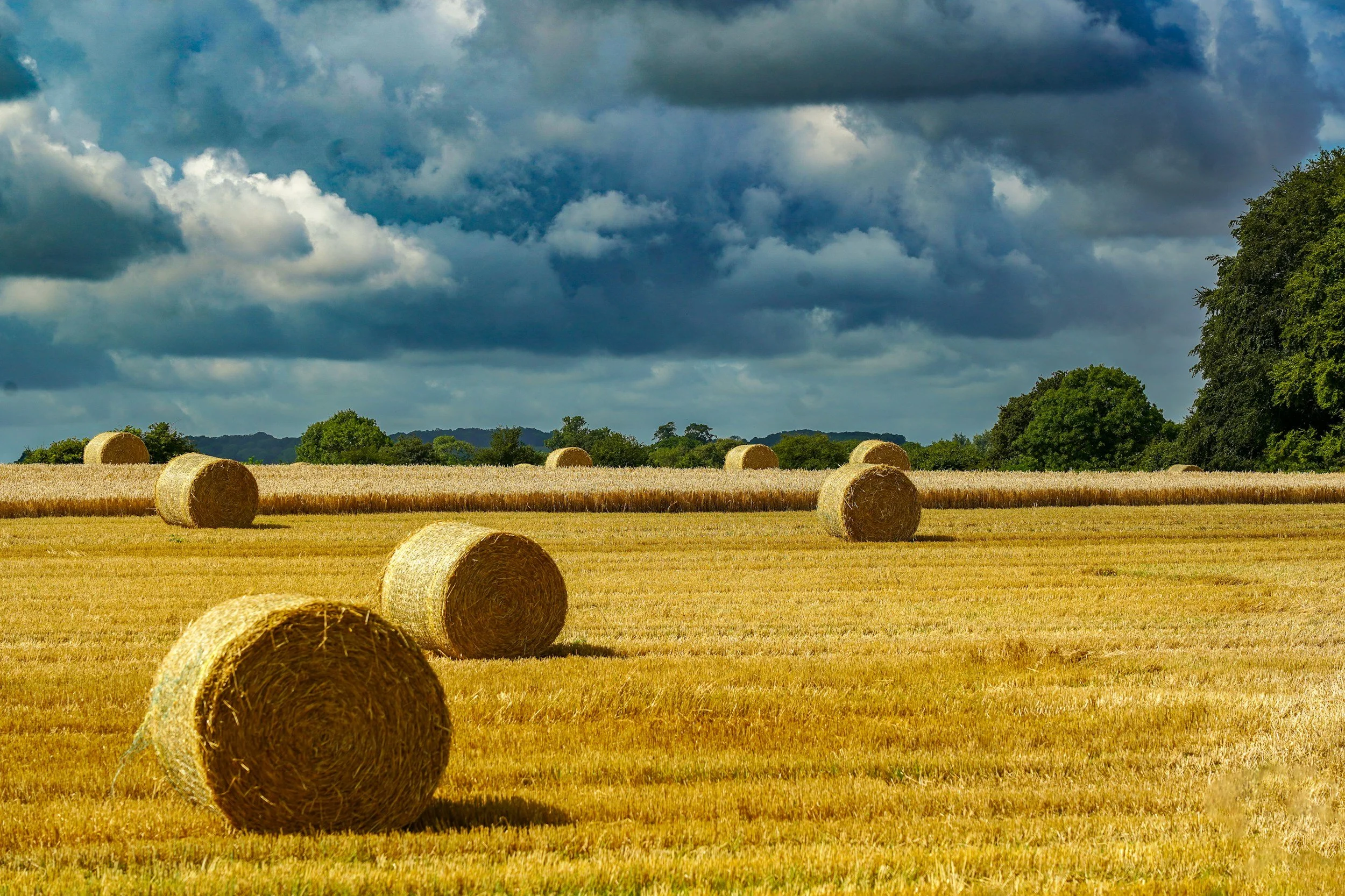
Round silage bales are one of the most recognisable sights of a New Zealand farming landscape. They appear in paddocks, along shelterbelts and in storage areas, often arranged with the sort of confidence that suggests they will remain exactly where they have been placed.
Their shape is no accident.
As a baler gathers and compresses grass or other forage, the material is formed into a cylinder. This shape allows the machine to collect material continuously and build a dense bale without having to stop and construct a rectangular block layer by layer. Once the bale reaches the required size, it can be tied or wrapped and discharged.
The result is a convenient package of conserved feed that can be handled with suitable machinery and transported around the farm.
The curved surface also helps a wrapped bale shed some rainwater, provided it is positioned correctly and the plastic remains intact. Its compact form makes it useful for storing feed in relatively small quantities, giving farmers flexibility when planning winter feed supplies or managing pasture surpluses.
However, the round shape comes with a catch. A bale is not particularly interested in staying put on a slope. Once it begins rolling, its considerable weight turns a simple geometric property into a serious safety concern.
This is why bale placement, stacking and transport need to be carefully managed. Ground conditions, gradients, handling equipment and the stability of stored bales all matter. A round bale may be an efficient way to package feed, but it is not a substitute for a sensible storage plan.
There is also a difference between the bale's shape and the shape of the space used to store it. Bales do not naturally fit together like square blocks. Gaps can form between them, so storage arrangements need to account for the available space, access for machinery and the need to protect the forage.
The round bale is a fine example of agricultural design doing one job extremely well while occasionally creating another job for the farmer.

Tyres are round for a reason, but they can still cause trouble
A tractor tyre has a rather demanding job. It must support a heavy machine, provide traction, absorb some unevenness in the ground and move through paddocks, races and farm tracks without turning every bump into a structural event.
Its circular shape allows it to roll continuously rather than repeatedly lifting the machine over a series of corners. The tyre's flexible construction also helps it adapt to the ground, while the tread provides the grip needed to transfer driving and braking forces.
On a dairy farm, tyre design matters well beyond whether a tractor can travel from the shed to the back paddock. Tyre pressure, tread pattern, tyre width and the weight carried by each wheel all influence traction and the risk of damaging soil.
A tyre that is poorly matched to the job can increase wheel slip, reduce efficiency and contribute to soil compaction. That matters particularly when travelling over softer paddocks or working during wetter periods.
Then there are old tyres used to hold down silage covers. Their weight makes them useful for keeping plastic in place, but their shape introduces an entirely different challenge. They can roll, tip, trap water or become awkward to handle, depending on how they are stored and used.
A tyre that is perfectly designed to move a tractor can become a nuisance when it is no longer attached to one. It is a reminder that a shape cannot be judged in isolation from the job it is being asked to perform.
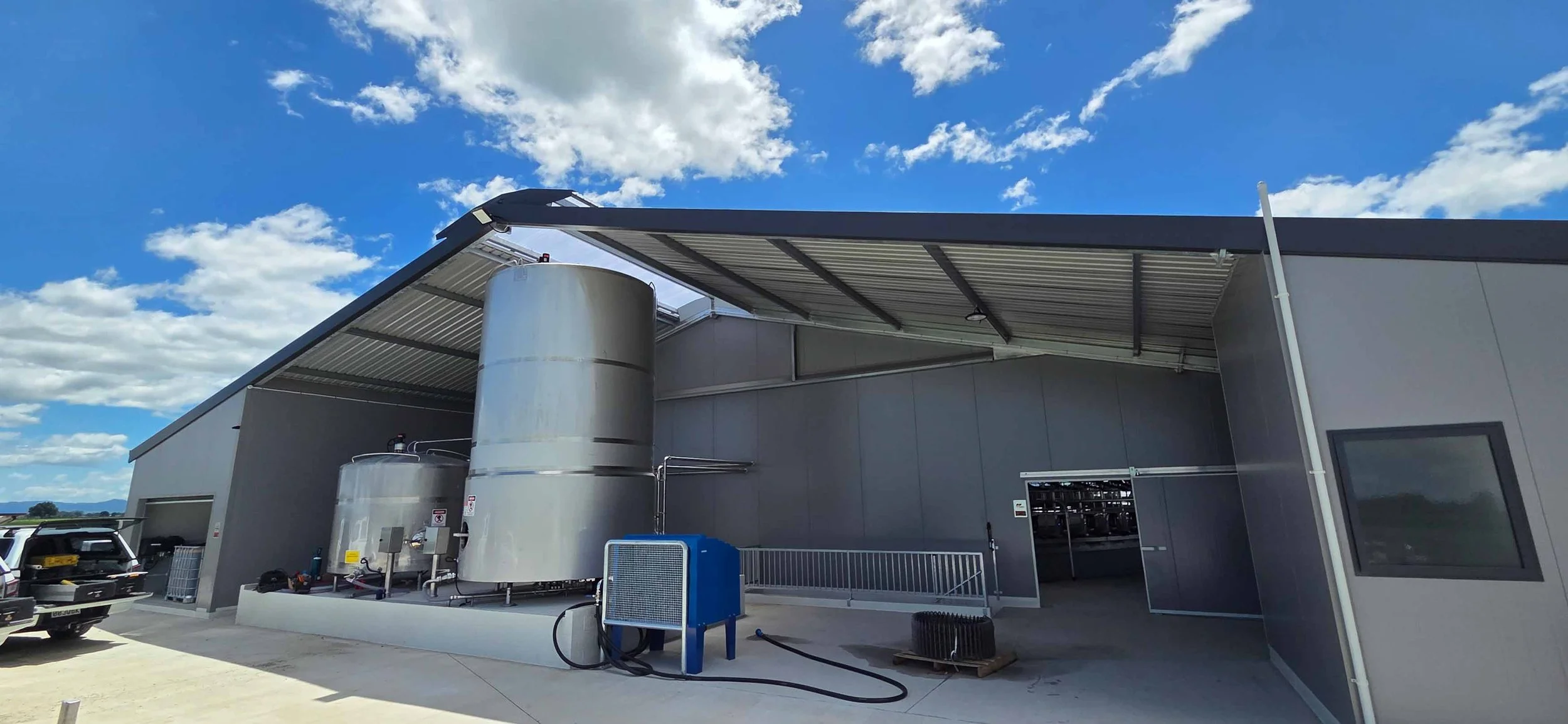
Image supplied by Shanan White from Don Chapman Waikato Ltd
Tanks prove that round can be remarkably strong
Large farm storage tanks are another excellent example of shape doing serious work.
Cylindrical tanks are widely used for water, liquid feed ingredients and other stored liquids because their geometry suits the pressures involved. The circular cross-section distributes liquid pressure around the wall, while a properly designed cylindrical shell can carry loads efficiently.
The details depend on the material, tank dimensions, contents, wall thickness, support arrangements and construction method. A tank intended for water has different requirements from one designed for a more demanding liquid or a particular effluent system.
Still, the basic principle is easy to appreciate. Liquids push against their containers in every direction, and a curved wall can distribute those forces without concentrating them at corners in the same way a poorly designed rectangular container might.
That does not mean every round tank is automatically stronger than every square one. Engineering, materials and construction quality still determine whether a tank is suitable for its intended purpose.
Round tanks can also be relatively straightforward to manufacture using rolled sheet material or moulded components. Their shape can make them efficient for storing large volumes, although the space around them may be harder to use neatly than the space inside a rectangular building.
This is where farm design becomes a balancing act. The tank may be an excellent shape for holding liquid, but the farmer still needs access for maintenance, suitable foundations, pipework, safe working areas and room for machinery to move around it.
A good shape solves the problem it was designed for. A good farm layout makes sure it does not create three new ones.
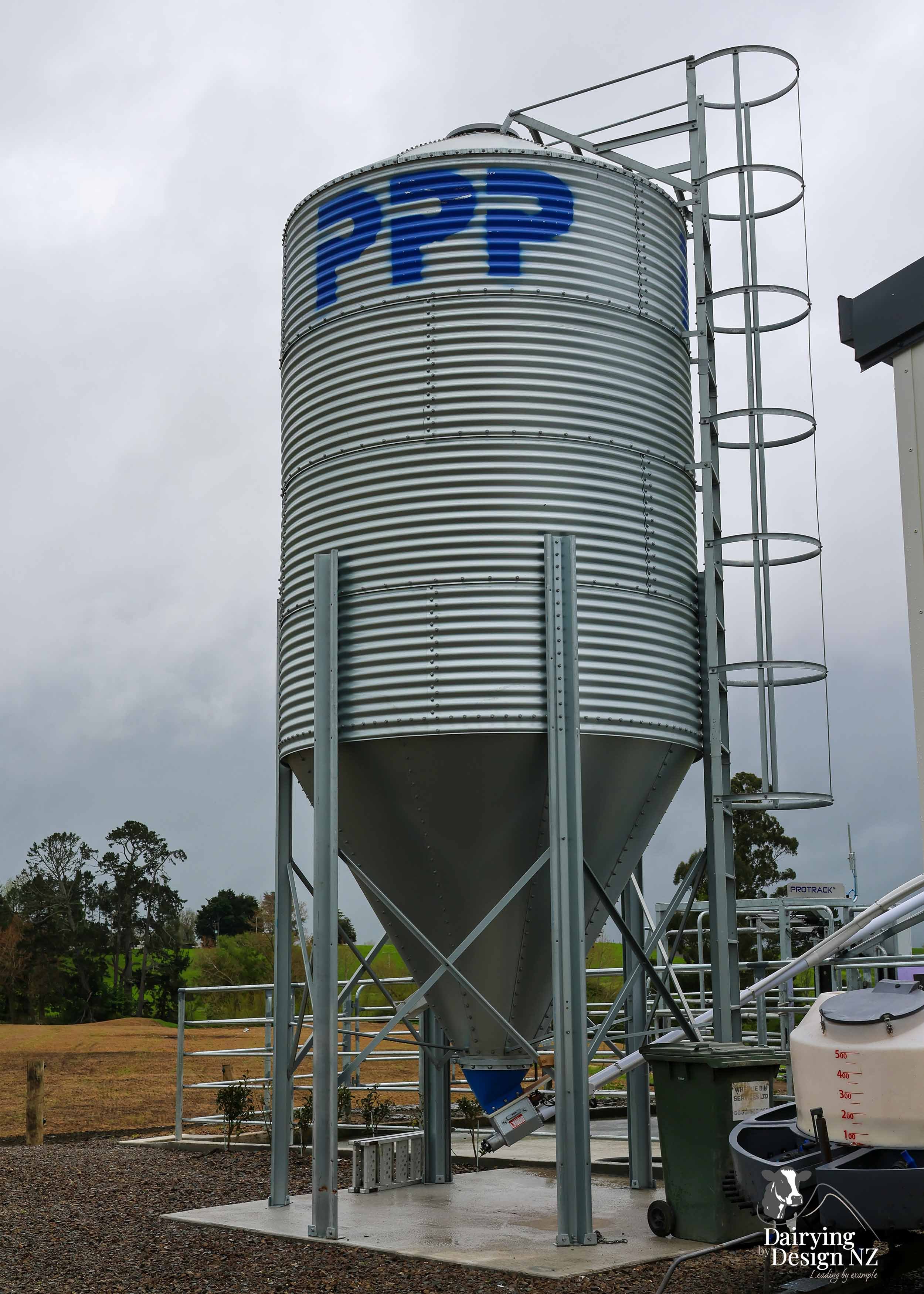
Photo by Dianna Malcolm
Why feed SILOS often stand tall and round
Feed silos have a job that sounds straightforward until something stops flowing.
They need to hold feed securely, protect it from the weather where required and release it in a controlled way. Their design must also suit the material being stored, because grain, meal, pellets and other feed ingredients do not all behave in the same manner.
Tall cylindrical bins are common because they can provide useful storage capacity without occupying an unnecessarily large footprint. Their walls can be designed to carry the stored material's pressure, while a sloping bottom or hopper directs feed towards an outlet.
Gravity then does much of the work.
At least, that is the plan.
Feed can bridge across an outlet, compact, absorb moisture or flow unevenly depending on its characteristics and the design of the silo. A container that looks wonderfully simple from the outside may need careful engineering to ensure its contents move as intended.
The round wall avoids internal corners where material might collect, although it does not eliminate every possible flow problem. Outlet dimensions, hopper angles, surface finish and the properties of the feed remain important.
For dairy farmers using automated feeding systems, reliable feed delivery is particularly valuable. A silo must work as part of a wider system that includes augers, conveyors, motors, controls and the equipment delivering feed to the cows.
Here, the shape of one component influences the performance of the whole arrangement. A feed silo that holds plenty but cannot discharge consistently is not especially useful, no matter how impressive it looks beside the shed.
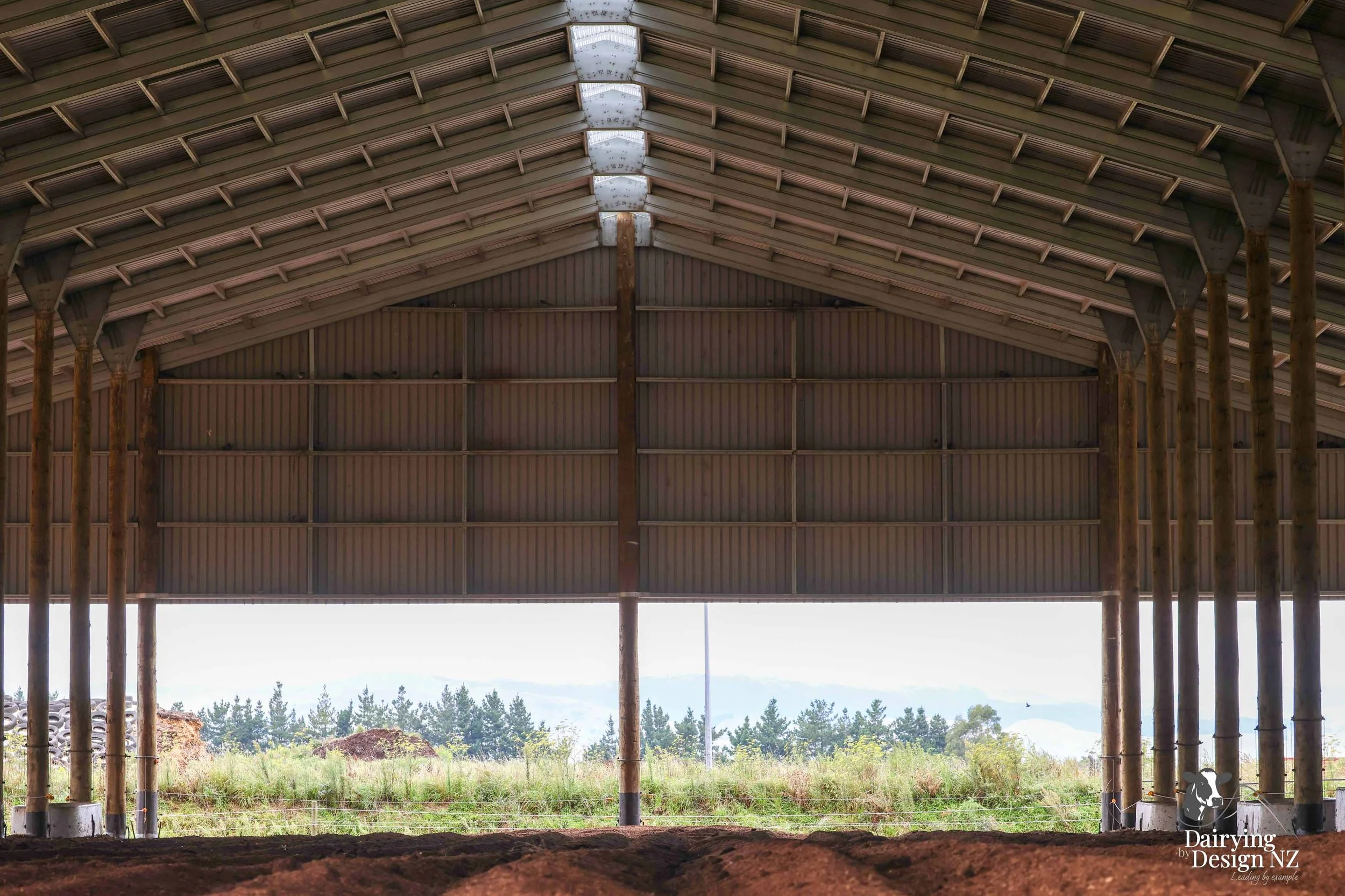
Photo by Dianna Malcolm
Buildings are square because farms need usable space
If round shapes are so useful, why are most farm buildings made from straight walls and right angles?
Because buildings are not just containers. They are working spaces.
A rectangular shed is generally straightforward to set out, manufacture, extend and fit with standard structural components. Straight walls make it easier to install doors, windows, pens, feed barriers, machinery bays and storage areas. Roof trusses and framing systems can be arranged in repeatable patterns, helping to control construction complexity and cost.
Inside a dairy shed, geometry has very practical consequences. Milking equipment, cow movement, operator access, wash-down facilities, electrical services and maintenance requirements all need to fit together. Straight lines can help organise these different functions without wasting valuable floor area.
A rectangular workshop or machinery shed also makes it easier to park vehicles, store equipment along walls and use the corners for shelving or workbenches. A circular building might look distinctive, but the curved edges could make ordinary storage arrangements more awkward.
There are situations where curved roofs, domes or other non-rectangular structures make excellent sense. Their suitability depends on the span, loads, materials, intended use and cost. But for many everyday agricultural buildings, the familiar rectangle remains a highly practical solution.
It is not that farmers have something against circles. They simply appreciate being able to put a bench, a toolbox or a tractor somewhere without having to negotiate a curve.
Hay, grain and the business of fitting more in
The shapes of stored crops are often determined by how they are harvested, processed and moved.
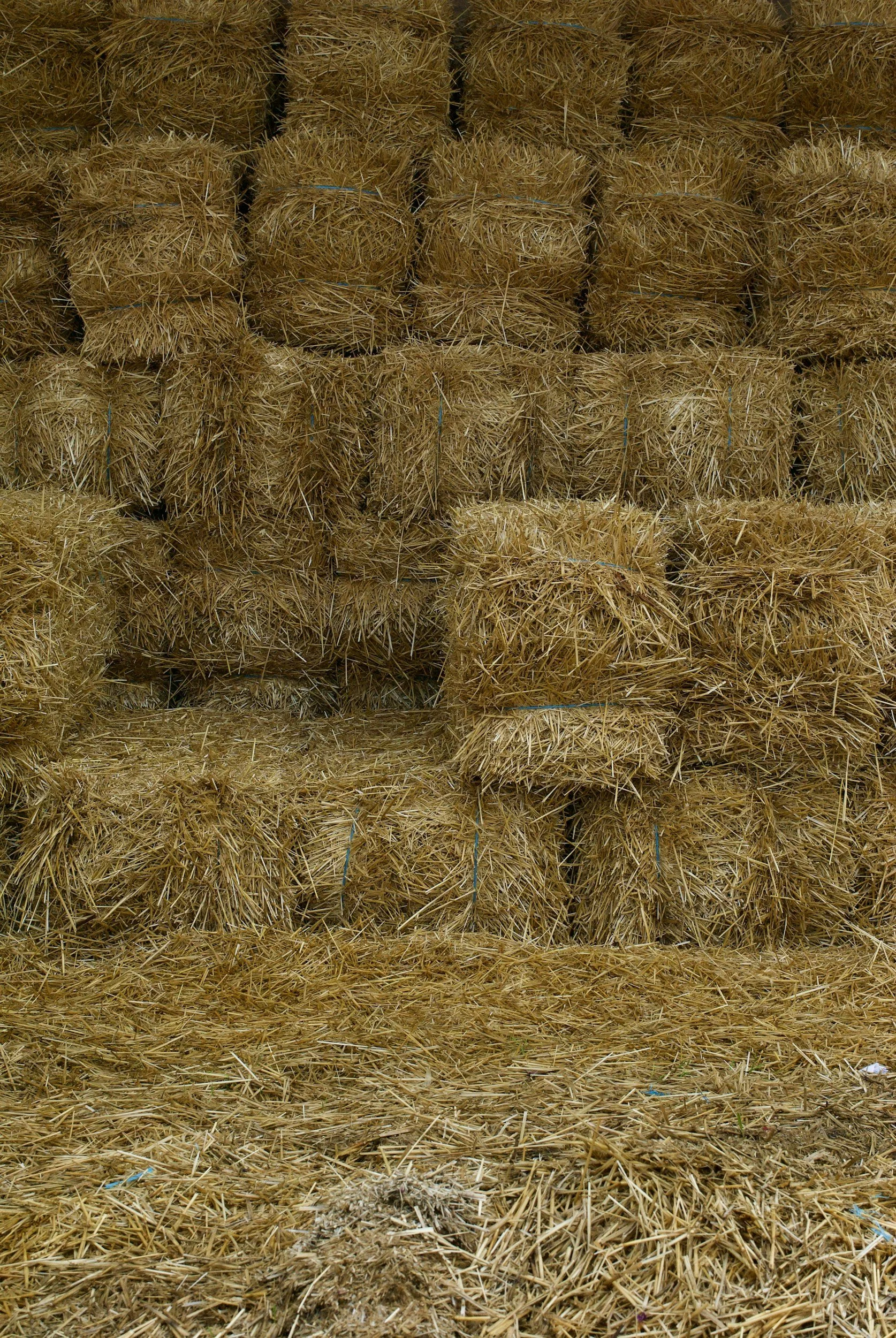
Hay can be packaged into small rectangular bales or larger round bales, depending on the equipment and intended use. Small square bales are convenient when individual portions need to be handled manually or stacked in manageable units. Their flat faces allow them to be packed closely together, creating relatively orderly stacks.
Large round bales suit mechanised handling and can be efficient for storing and moving substantial quantities of forage. Their cylindrical shape is convenient for the baling process, but stacking and transport require arrangements suited to their dimensions and stability.
Grain presents a different challenge. Loose grain naturally settles into a pile with sloping sides, rather than forming a tidy rectangular block. The shape of the pile depends on the grain, moisture content, handling method and the surface on which it rests.
Storage systems therefore have to accommodate the behaviour of the material itself. Flat floors, bins, silos and conveyors are designed around the need to contain, move and retrieve grain efficiently.
The useful question is not simply how much material a storage space can hold. It is how much can be stored safely, how easily it can be accessed and how much time and effort are required to get it back out again.
A beautifully packed store that cannot be unloaded efficiently is a bit like a pantry where the biscuits have been placed behind the freezer. Technically, everything is there. Practically, somebody has made life harder than it needs to be.
Machinery is a collection of shapes working together
Farm machinery may look like a jumble of metal, rubber, moving parts and hydraulic hoses, but each component has a particular role.
Wheels are round because they need to roll. Shafts are generally cylindrical because they rotate. Gears use carefully shaped teeth to transfer motion. Frames often use straight sections because they must support loads, connect components and provide mounting points.
Belts and chains transfer movement between parts, while pulleys and rollers guide them along defined paths. Hydraulic cylinders use a cylindrical barrel to guide a piston, converting fluid pressure into linear movement.
None of these shapes is decorative. Each has developed because it suits a particular mechanical task.
Even the humble bolt demonstrates the relationship between different shapes. Its shaft is cylindrical, its thread follows a spiral and its head is commonly hexagonal so a spanner can grip it. The shape allows the fastener to be tightened or loosened using a practical tool.
Farm machinery also shows why standardisation matters. A component must fit where it belongs, connect with other parts and remain serviceable over time. A wonderfully inventive shape is not much use if it cannot be manufactured economically, replaced when worn or maintained with the tools available.
Good agricultural design is rarely about finding one perfect shape. It is about making different shapes work together reliably under real operating conditions.
Why square things sometimes win
There is one important advantage that square and rectangular objects have over their round cousins: they tend to stay where they are put.
A square container can sit alongside another square container with little wasted space between them. Rectangular pallets, storage boxes, shipping crates and building materials can be arranged in orderly rows, making transport and storage easier to plan.
Straight edges also make it simpler to measure, cut and join many common construction materials. Sheet products, timber, panels and framing components are generally easier to use when their dimensions follow a regular grid.
For a farmer, this can mean more usable storage, simpler handling and fewer awkward gaps. It can also mean less wasted space in a workshop, machinery shed or feed storage area.
However, square is not automatically better. A square tank holding liquid may require a more complex structural design than a comparable cylindrical tank. A square wheel would make an extraordinary impression on the paddock but a rather poor contribution to a comfortable tractor ride.
The trick is knowing which inconvenience matters most. If the object needs to roll, a circle is hard to beat. If it needs to fit tightly against another object, a straight edge often has the advantage.
The next time you look around the farm
Agricultural design is full of these little compromises. A shape that works brilliantly for harvesting may be less convenient for storage. A structure that saves space may cost more to build. A container that holds