
Spend enough time watching a group of cows eating and something becomes surprisingly obvious: they do not all chew in exactly the same way. Some seem to get stuck into their feed with great enthusiasm, others take their time, and some appear to have a very deliberate, almost methodical rhythm. Even when several cows are eating the same feed at the same time, their mouths can be working slightly differently.
It is easy to assume that chewing is simply chewing. After all, a cow eats grass, grinds it up and swallows it. But there is considerably more variation in the way a cow uses her mouth than we might expect. The shape of her mouth, the movement of her jaw, the type of feed she is eating, the size and texture of that feed, and even what she is doing at the time can all influence how she chews.
A cow is not working from a fixed chewing instruction manual. Her mouth is constantly adjusting to what is in front of her.
The cow’s sideways chewing action
One of the first things to understand is that cows are built to chew differently from us. Humans can move the lower jaw up and down, but we can also make much more controlled side-to-side movements. A cow takes this sideways movement to another level because it is central to how she processes fibrous feed.
When a cow chews, her lower jaw moves in a sweeping sideways motion against the upper dental pad and teeth. This allows her to shear and grind plant material rather than simply crushing it between two rows of teeth in the way people might imagine.
The movement is particularly useful for dealing with pasture. Grass is made up of fibrous plant material that needs considerable mechanical processing. A cow's chewing action breaks that material down into smaller pieces and mixes it with saliva, making it easier to swallow and later process through the rumen.
The important point is that the movement is not identical every time. The cow adjusts what her jaw is doing according to the material she is working on.
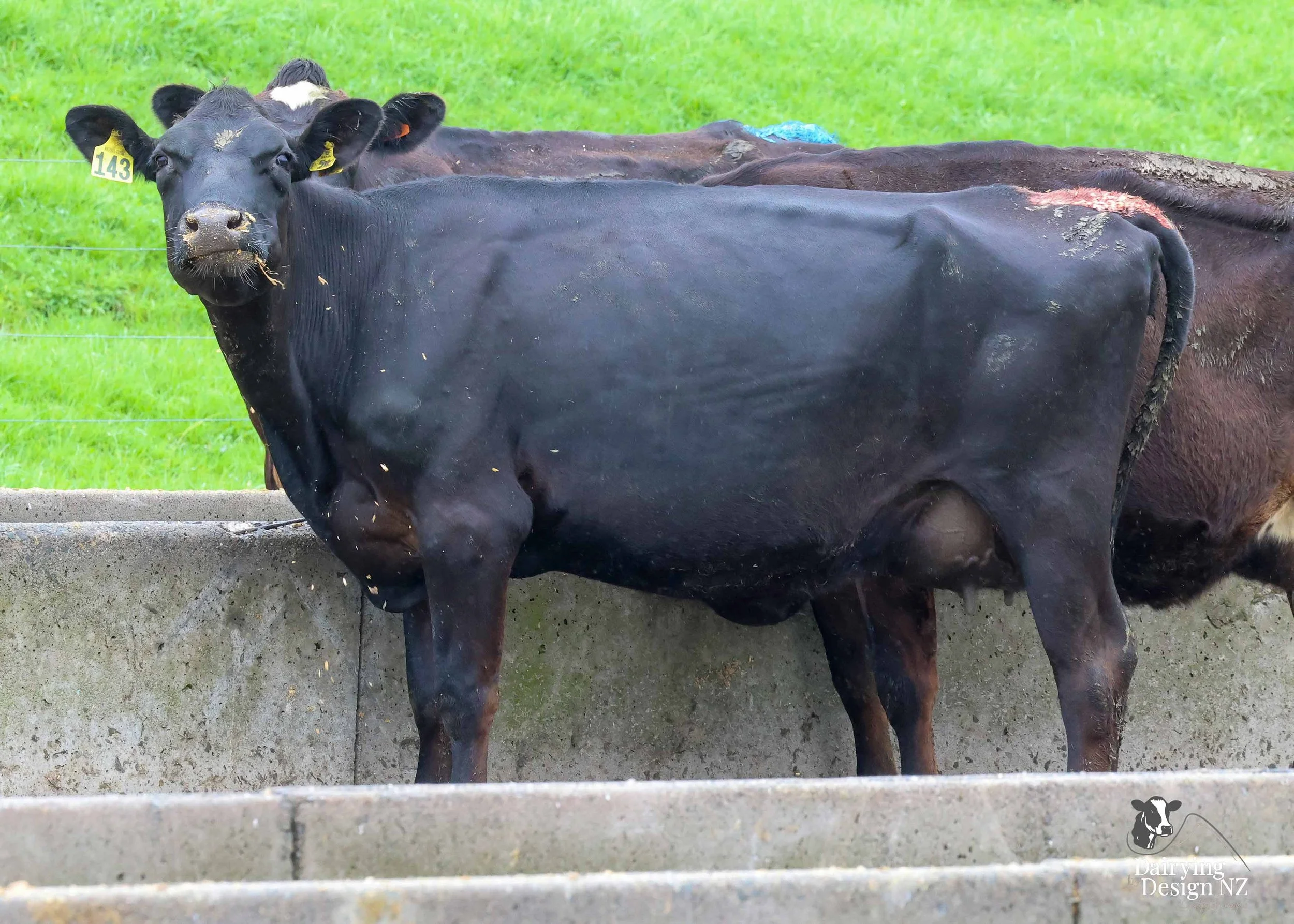
Photo by Dianna Malcolm
Not every mouthful is the same
A cow eating lush, leafy pasture is dealing with something very different from a cow chewing mature, stemmy grass. The same applies when comparing pasture with silage, hay or a mixed ration.
Soft, moist material does not require exactly the same chewing action as something coarse and fibrous. A cow can alter the speed and pattern of her jaw movements depending on what she has taken into her mouth.
This is one reason two cows standing beside each other can appear to have different chewing rhythms while eating the same general feed. They may not have exactly the same mouthful at that moment.
One cow might have gathered a mouthful containing mostly soft leaf, while another has picked up more stem. One may have a larger mouthful, while another has taken a smaller amount. Their mouths respond to those differences automatically.
It is a remarkably flexible system.
The teeth are not all doing the same job
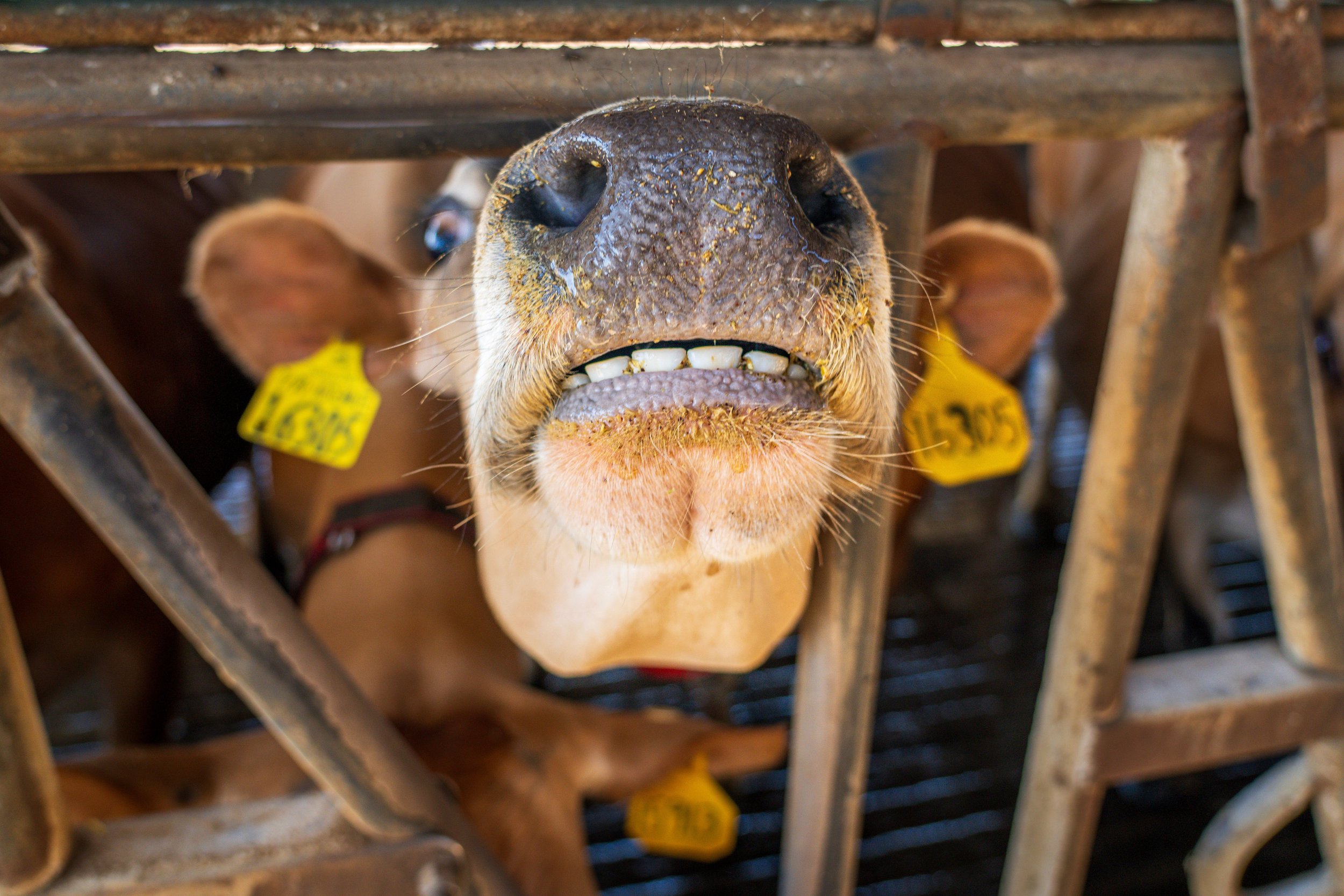
A cow's teeth are another reason chewing is not simply one repetitive movement. The front of the mouth is designed differently from the back.
Cattle do not have upper incisors. Instead, they have a tough dental pad against which the lower incisors press as the cow gathers pasture. The tongue and lips also play a major role in collecting feed before it reaches the back of the mouth.
Further back, the cheek teeth are designed for grinding. Their broad, ridged surfaces are particularly suited to processing fibrous plant material.
That means a mouthful goes through several stages of handling. The cow gathers it, positions it and then grinds it, with her tongue continually helping to move material around.
The jaw movement is therefore part of a much larger process. What looks like repetitive chewing from a distance is actually a carefully coordinated combination of tongue, jaw, teeth and facial muscles.
Why some cows look like they chew faster
Watch a herd closely and you will notice that some cows appear to chew at a faster rate than others. This does not necessarily mean one cow is a better or more efficient chewer.
Chewing speed can vary according to what the cow is eating and whether she is actively eating or ruminating. During normal feeding, a cow may take several bites and chew them before swallowing. During rumination, she brings previously swallowed feed back up from the rumen and chews it again.
The material being ruminated has already been through part of the digestive process, so the cow is working with something different from a fresh mouthful of pasture.
The rhythm can therefore change depending on the stage of eating. A cow quietly chewing her cud can look very different from a cow actively tearing into fresh pasture.
The cow does not chew every mouthful equally
It is tempting to imagine that a cow takes a mouthful of grass and gives it a standard number of chews before swallowing. Real life is not nearly so tidy.
The size of the mouthful matters. So does its texture, moisture content and fibre structure. A mouthful containing soft leafy material may be dealt with more quickly than one containing tougher stems.
The cow also has to position the feed correctly inside her mouth. Her tongue is constantly moving material around so that it can be processed by the teeth. That means the jaw is not simply going up, down or sideways on repeat. There is a continuous adjustment taking place.
If the feed changes, the chewing pattern can change with it.
Rumination brings another chewing style
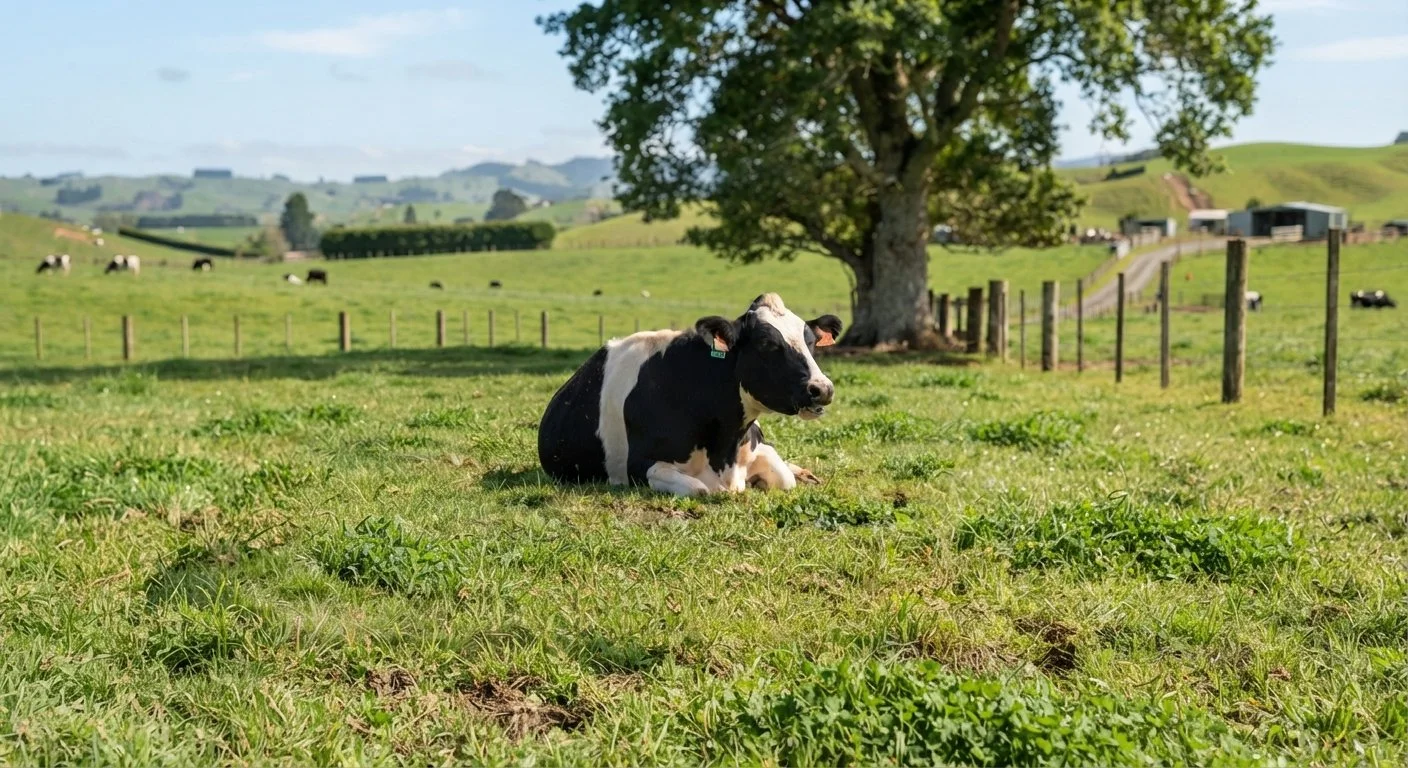
Rumination is where the differences become particularly interesting. A cow does not simply swallow grass once and leave it there until it magically disappears. Instead, she can bring partially digested feed back up from the rumen and chew it again.
This is where the familiar image of a cow lying quietly in a paddock, apparently doing nothing, becomes rather misleading. She may look relaxed, but her digestive system is busy and her mouth is doing some very deliberate work.
The cow regurgitates a portion of rumen contents as a bolus and then chews it again. This process breaks the material down further and adds saliva before the cow swallows it again.
The chewing pattern during rumination can be slower and more rhythmic than active feeding. The cow is not trying to grab another mouthful of grass. She is processing material she has already eaten.
It is one of the reasons experienced farmers can often tell when a cow is properly settled into rumination simply by watching her.
Cows are individuals too
There is also an individual element to chewing. Just as cows can differ in their eating behaviour, they can have slightly different ways of handling feed.
Dental condition can make a difference. A young cow with a healthy set of developing teeth is not necessarily going to process feed in exactly the same way as an older cow whose teeth have experienced years of wear.
Jaw shape and individual anatomy can also influence chewing mechanics. There are differences between animals in the size and shape of the mouth, the arrangement and condition of the teeth and the way the muscles of the jaw work.
These differences do not mean that every cow has a completely unique chewing technique. Rather, there is a normal range of variation, just as there is in many other behaviours.
Put a group of cows together and there will always be individuals that eat faster, slower, more enthusiastically or more methodically than their neighbours.
Feed changes can change the chewing pattern
One of the easiest ways to see chewing behaviour change is to change the feed.
A cow eating a fibrous, coarse feed has more mechanical work to do than a cow eating soft, easily broken-down material. The physical characteristics of the feed influence how much chewing is needed before it can be swallowed and how it behaves inside the mouth.
This is why the physical form of feed matters as well as its nutritional composition. Two feeds can contain similar nutrients but behave very differently when a cow actually has to eat them.
Length, fibre structure, moisture and texture can all affect how the cow handles the feed.
From the farmer's perspective, this makes the cow's mouth a surprisingly useful window into what is happening with the feed in front of her. Her chewing behaviour is responding to the physical job that feed requires.
The tongue is doing more than most people realise
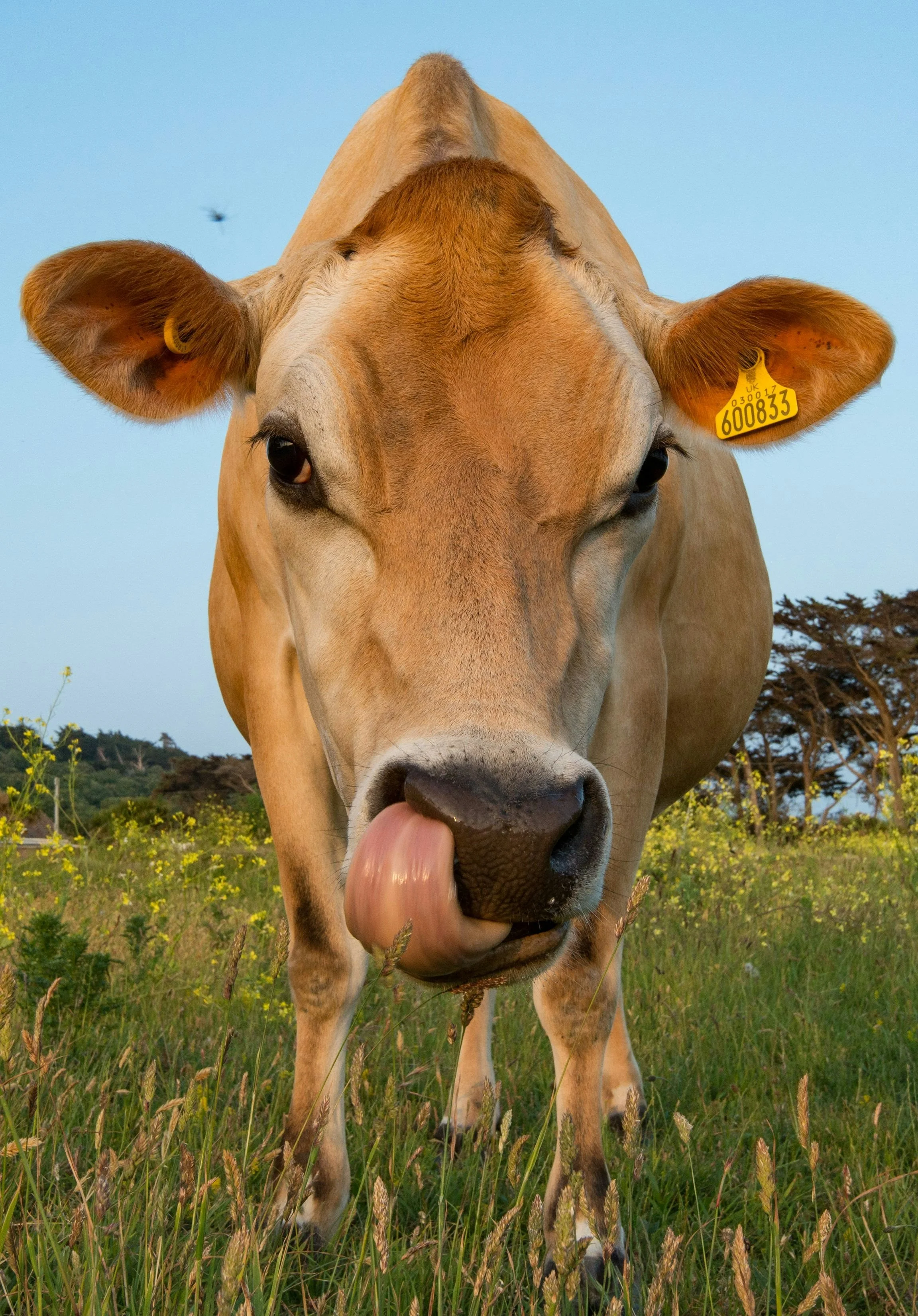
The tongue deserves more credit in this whole process. It is not simply sitting in the mouth while the teeth do all the work.
A cow's tongue is strong and highly mobile. It helps her gather pasture, move feed around her mouth and position material for chewing. When grazing, the tongue works closely with the lips and lower jaw to bring vegetation into the mouth.
Once the feed is inside, the tongue helps keep it moving into the right position for grinding. As the cow chews, the material is continually being repositioned.
That means the chewing process is a coordinated performance involving several parts of the mouth at once. The jaw may be the movement we notice, but the tongue is working away throughout the process.
Why chewing matters so much to a cow
For a dairy cow, chewing is not just preparation for swallowing. It is an important part of how she handles a diet based largely on plant material.
Breaking feed into smaller pieces increases the amount of surface area available for the digestive processes that follow. Saliva added during chewing also becomes an important part of the digestive system.
The cow's digestive system has evolved around this combination of eating, chewing, swallowing, regurgitating and chewing again. It is an ongoing cycle rather than a simple straight line from grass to stomach.
This is why the apparently ordinary sight of a cow chewing her cud tells us something quite significant about what is happening inside her.
There is more going on than meets the eye
The next time you stand beside a group of cows and notice that they do not all chew in exactly the same way, there is no need to assume one is doing it wrong. Their mouths are responding to the feed, the size and texture of each mouthful, their stage of digestion and their own individual anatomy.
One cow may have a fast, purposeful rhythm while another takes a slower approach. One may be working through coarse material while another has found a mouthful of soft leaf. Another may be quietly ruminating while the rest of the herd is still feeding.
From a distance, they all look as though they are simply chewing.
Up close, there is much more going on.
The cow's mouth is a highly coordinated piece of equipment, designed to handle a diet that humans would find remarkably difficult to process. Her lips, tongue, teeth, jaw and saliva all have their parts to play, and the chewing pattern can change depending on what she is eating and what stage of digestion she has reached.
So while a herd may appear to be carrying out exactly the same job, every cow is doing it in her own slightly different way. The next time you watch a row of cows chewing away, look beyond the movement itself. There is a great deal of individual adjustment hidden inside that familiar rhythm.