Working towards cooler cows
Courtesy DairyNZ
DairyNZ researchers have mapped the regions where cows are most at risk from rising temperatures – and are developing resources that will help farmers in those areas mitigate the effects of excessive heat load on their animals, which can impact their feed intake and milk production.
Key points:
* Heat stress is already affecting New Zealand cows and farms, and warmer, drier summers mean the risk is set to increase in the future.
* Cows can start feeling heat stress at temperatures above 20°C, which affects their comfort, wellbeing and milk production.
* DairyNZ is using digital tools, large datasets, and farmlet trials to test practical heat stress mitigation strategies and gain insights into the effects of heat stress on milk production and cow comfort.
* Farmers are actively involved in shaping the research, ensuring solutions are practical for on-farm implementation.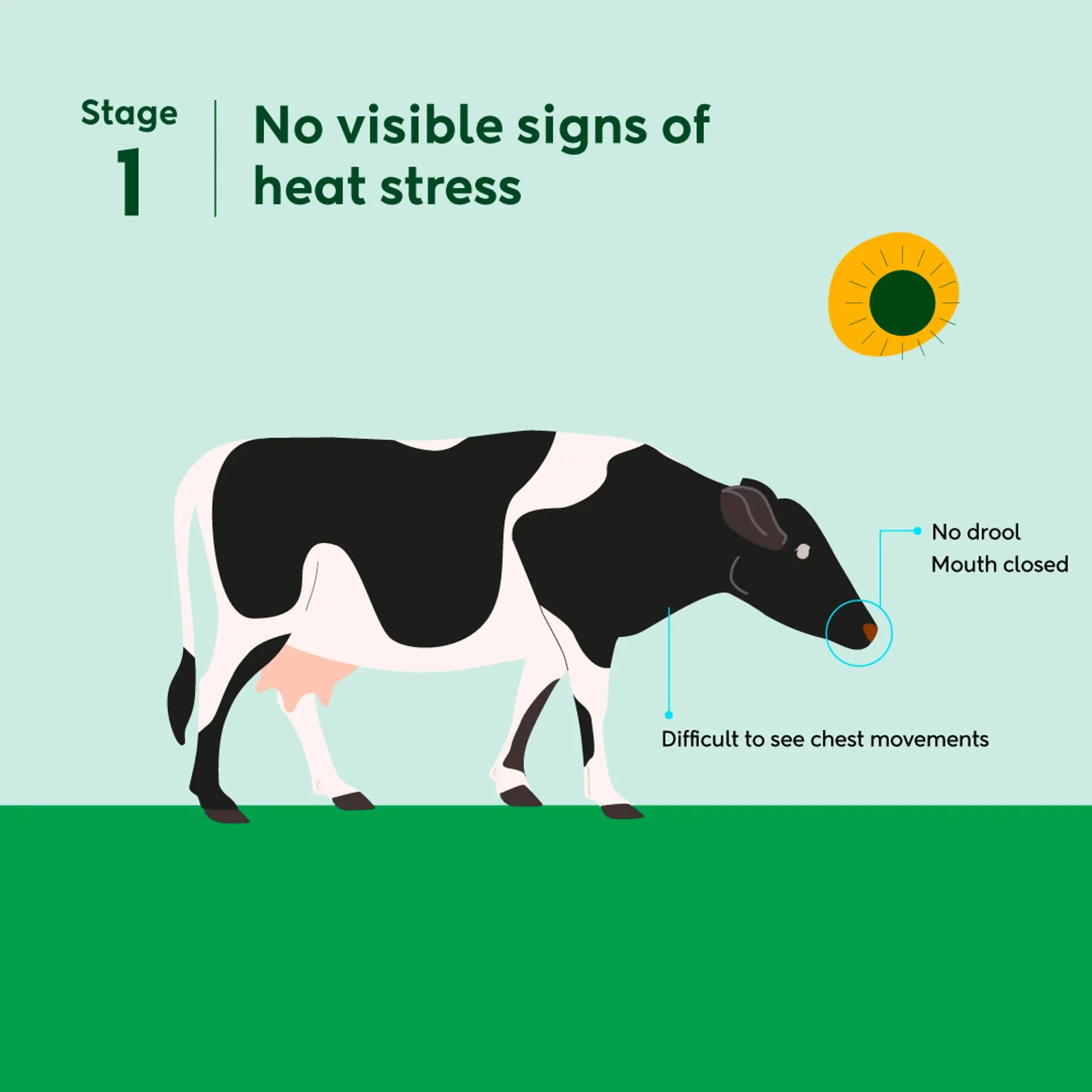
With New Zealand cows grazing outdoors and directly exposed to the sun, heat stress is a growing challenge. It affects cow comfort, productivity and wellbeing – and farmers are looking for practical, proven options to manage the risk.
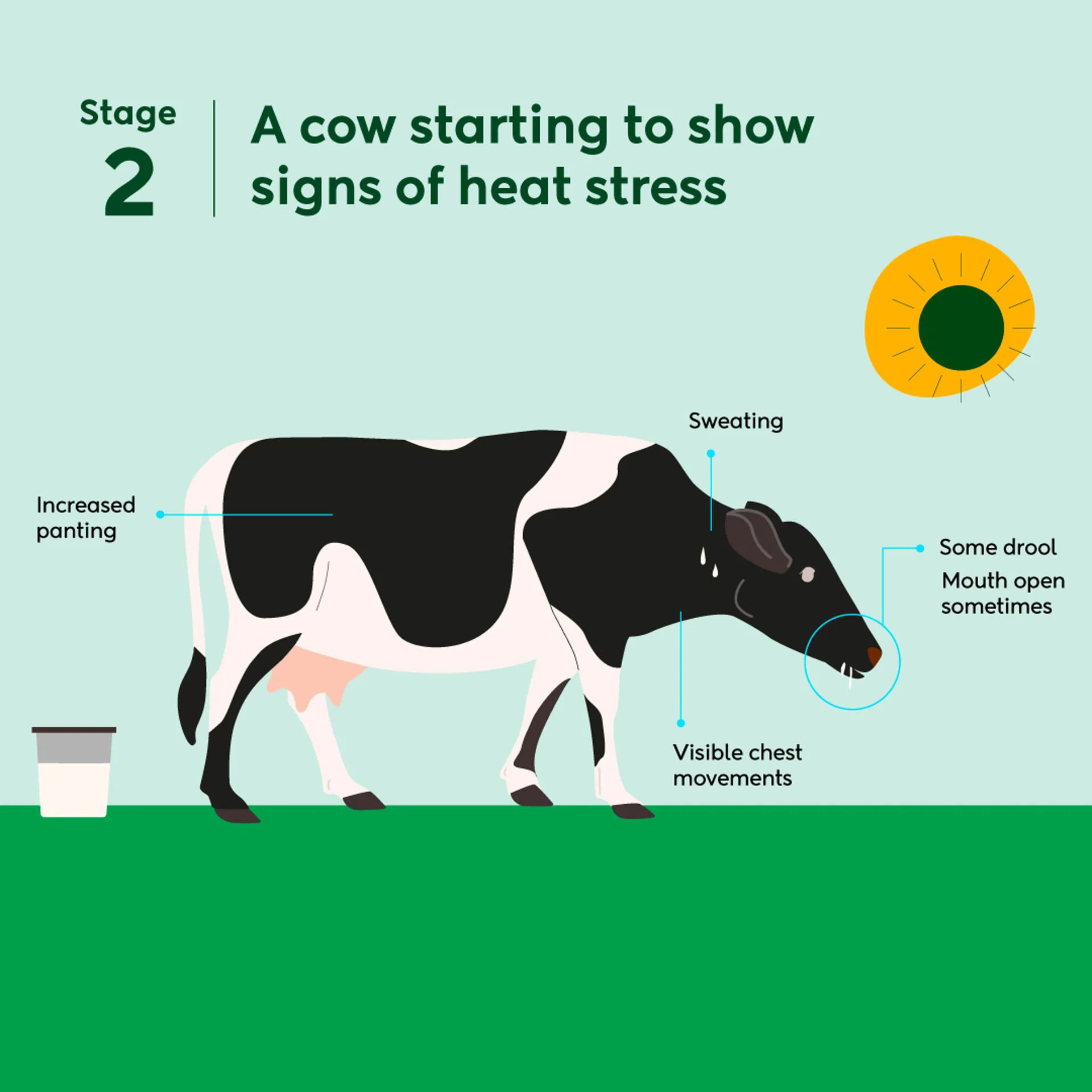
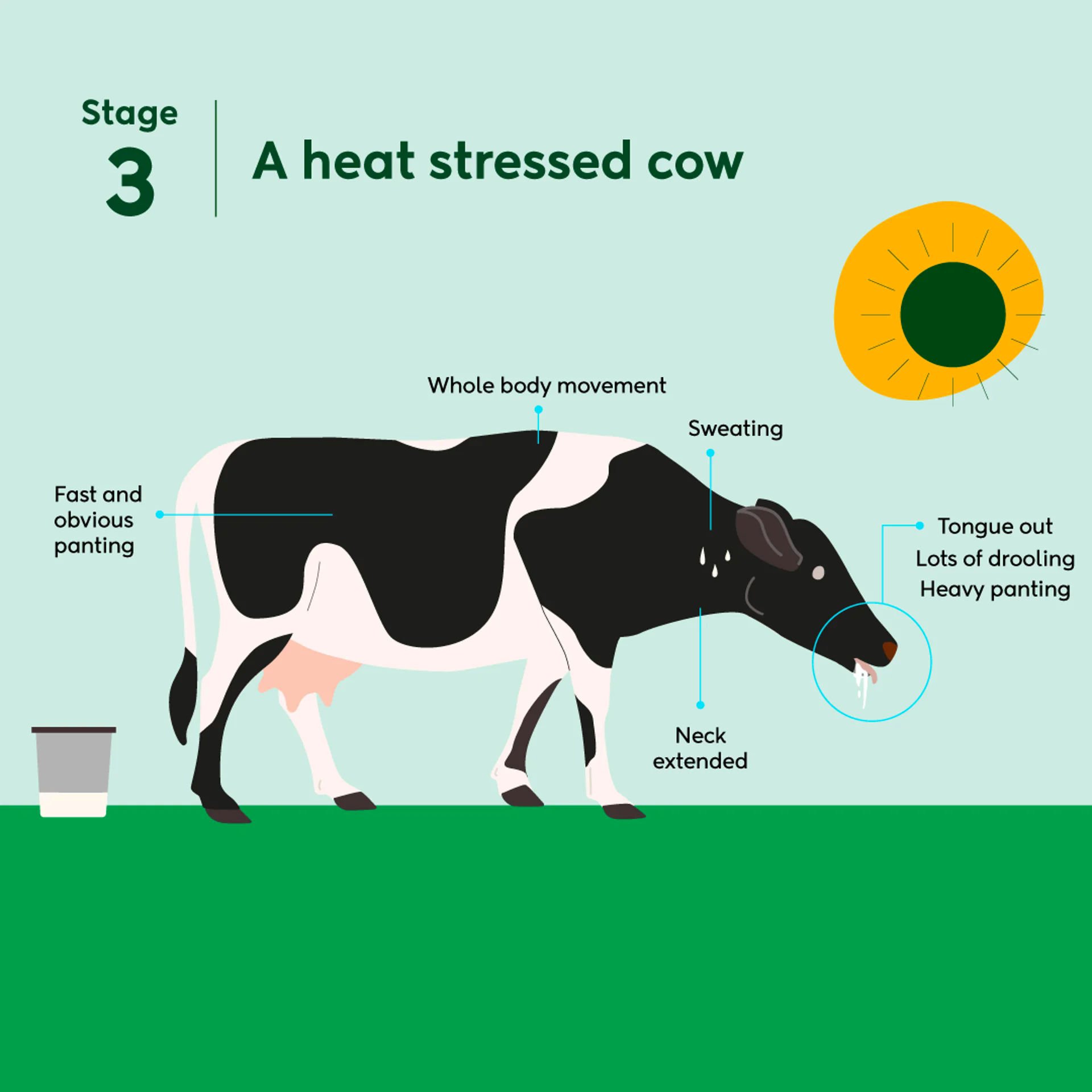
Heat stress occurs when cows can’t shed excess heat, leading to discomfort and reduced milk production and with warmer, drier summers, the risk of heat stress is set to rise across all dairy regions.
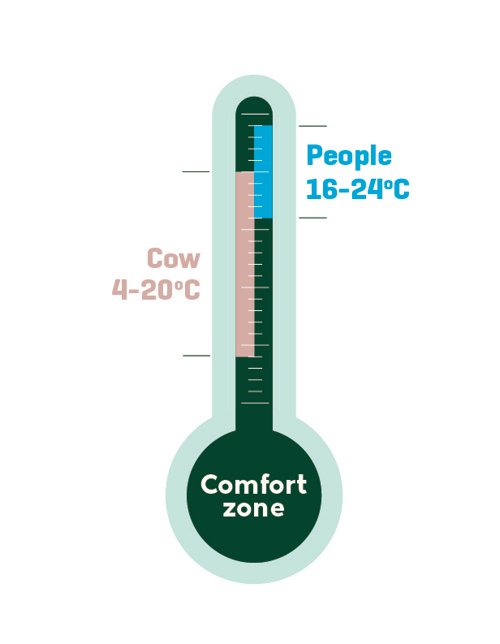
Unlike humans, who are comfortable between about 16 °C and 24 °C, cows start to experience heat stress at temperatures above 20 °C. Their comfort zone ranges from roughly 4 °C to 20 °C. They generate a lot of heat digesting feed and producing milk, and it makes it harder to maintain an ideal body temperature in summer, especially when they absorb extra heat from their surrounding environment.
Early heat stress research in New Zealand had its limitations, mainly because of the data available at the time. Most global studies use the temperature-humidity index (THI), which works well for indoor housing systems. But in New Zealand’s pasture-based systems, where cows are outdoors and exposed to changing weather, solar radiation and wind, THI is less suitable. This highlighted the need for a more tailored approach, leading to the development of the Grazing Heat Load Index (GHLI) (see breakout box for more information).
Over the past year, we’ve surveyed and held workshops with farmers to capture their views on heat stress risk and mitigation. Farmers told us they want to know whether the predicted risk matches what they see on-farm, particularly in Canterbury, and whether it’s the total heat over the day or short periods of intense heat that have the biggest impact.
Farmers are skilled at recognising when something isn’t right with their animals, but they can’t be in the paddock 24/7. Digital tools, such as wearable sensors and milk vat monitoring systems, are starting to capture near real-time changes in cow temperature, activity and production.
This gives researchers access to more precise datasets for analysis. Just 10 years ago, a scientist observing a cow’s respiration rate in the paddock might have assessed one cow per minute. Today, rumen temperature can be measured continuously in every cow using boluses, vastly increasing the data available to inform better solutions.
The DairyNZ ‘Comfortable Cows Outdoors’ research project is using data to help identify when heat stress happens, how severe it is, and which interventions make the biggest difference.
A smarter way to spot heat stress in cows
The Grazing Heat Load Index (GHLI) predicts the likelihood of heat stress occurring in grazing cows using temperature, solar radiation and wind speed.
Developed through the New Zealand Bioeconomy in a Digital Age (NZBIDA) programme with AgResearch, DairyNZ and Fonterra, it’s been refined using farm data from across New Zealand to be regionally relevant.
Heat stress impacts vs the cost of mitigations
Many farmers are asking the same questions: we know heat stress affects cows, but what does that mean for milk production and composition – and how do those losses compare to the cost of mitigation?
Previous studies have struggled to pin down the real impact, as it hasn’t always been clear whether drops in milk yield were from heat stress or simply changes in herd numbers or feed quality at the time.
A new study is being proposed to close that gap by pairing on-farm technology and/or sensor data, and milk yield data with on-farm weather records. This would help show when heat stress affects milk yield, and by how much.
Workshop discussions also showed farmers want to understand the costs and benefits of different mitigation options – both on their own and in combination – and which strategies manage heat stress risks most effectively with minimal disruption to the business.
Farmers are helping design farmlet trials for the DairyNZ research farm. The aim would be to test and compare a range of practical and relatively easy to implement heat stress mitigation strategies New Zealand farms are already using.
For example, 65% of surveyed farmers in Waikato/Bay of Plenty and 40% in Canterbury are reported to have a misting or sprinkler system installed in the yard.
This trial may also look at the effect of adjusting milking frequency or shifting the timing of afternoon milkings to avoid walking and having cows standing in the yard during the hottest part of the day, and whether there is any variation in heat stress risk for different breeds. We aim to begin these trials this summer.
As consumer expectations around ethical and sustainable food production continue to grow, animal wellbeing is under increasing focus. In pasture-based systems, cows face climatic extremes, and heat stress can affect their comfort, health, and productivity. Current on-farm options are limited and many rely on shade or shelter.
DairyNZ research will help create resources and cost-effective strategies for managing heat stress and help farmers make informed decisions to improve cow wellbeing and farm performance.
This research is part of DairyNZ’s Enhanced Animal Care Programme, funded by New Zealand dairy farmers through the DairyNZ levy.
Find out more about the research and stay up to date at dairynz.co.nz/heat-stress-research
Find more information on managing heat stress at dairynz.co.nz/heat-stress