7 Days Around the World: How the World Produces Milk
Farming Below Sea Level
How Dutch dairy farmers produce exceptional milk from some of the world's most valuable farmland
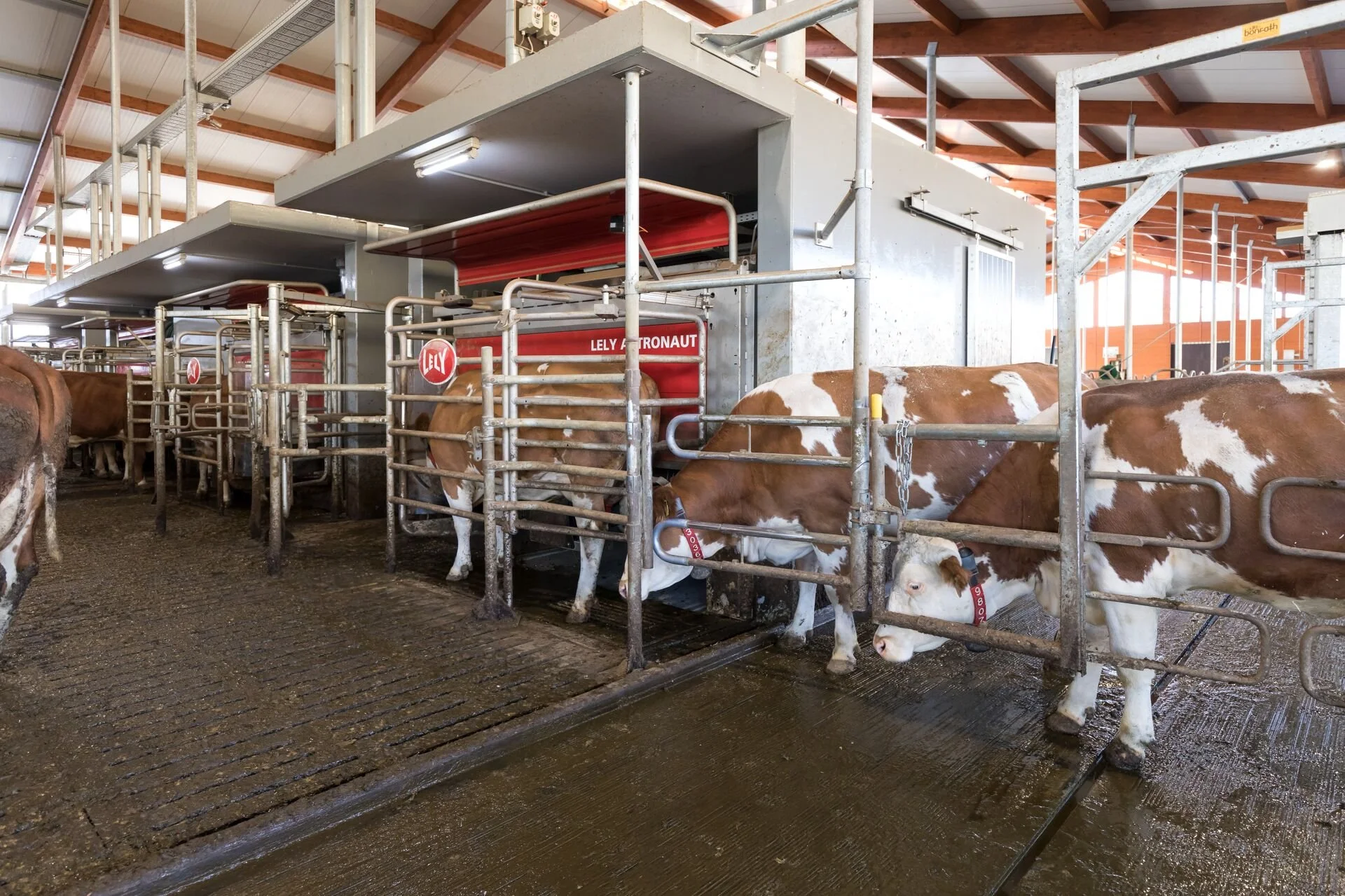
Developed in the Netherlands, the Lely Astronaut combines decades of innovation with a cow-centric approach to automated milking. Photo supplied By Lely NZ
When people think of the Netherlands, they often picture windmills, canals, tulips and bicycles. Yet beyond the postcard images lies one of the most remarkable dairy industries in the world.
Despite being a country smaller than New Zealand's South Island, the Netherlands has become one of the world's leading exporters of dairy products. Every hectare of land is precious, every kilogram of feed is carefully measured and every farming decision is made with efficiency in mind.
Unlike New Zealand's expansive pasture-based systems, Dutch dairy farming has evolved under very different circumstances. With a growing population, limited land availability and some of Europe's strictest environmental regulations, Dutch farmers have had little choice but to maximise every square metre of productive land.
The result is a dairy industry that combines generations of farming knowledge with cutting-edge technology, producing some of the highest milk yields per cow in the world.
Much of the Netherlands sits at or below sea level. For centuries, Dutch engineers have reclaimed land from the sea using an intricate network of dykes, canals and pumping stations. These reclaimed areas, known as polders, now support thriving dairy farms where rich, fertile soils provide ideal growing conditions for high-quality grass and forage crops.
Farming below sea level brings unique challenges. Water levels must be carefully managed throughout the year to prevent flooding while maintaining healthy soils for pasture production. Drainage systems require constant monitoring and maintenance, making water management almost as important as livestock management itself.
The pressure on land has shaped the way Dutch dairy farmers operate. Average farm sizes are considerably smaller than many New Zealand dairy businesses, yet they often support relatively large herds through highly efficient management systems.
Every paddock, every crop and every kilogram of feed has a purpose.
Rather than relying almost entirely on grazed pasture, Dutch farmers typically combine grazing with conserved forages such as maize silage and grass silage, carefully balancing rations to maximise milk production while maintaining cow health. Sophisticated feed analysis allows nutritionists to formulate diets that meet each cow's requirements with remarkable accuracy.
The objective is not simply producing more milk—it is producing milk as efficiently as possible from limited land resources.
Technology has become an integral part of achieving that goal.
Across the Netherlands, robotic milking systems have transformed the way many dairy farms operate. Instead of gathering cows twice daily for conventional milking, cows voluntarily visit robotic milking units whenever they choose. Each cow is identified electronically, allowing the robot to record milk production, milking frequency, conductivity, rumination and numerous other health indicators.
For farmers, this creates an extraordinary level of information.
Rather than simply reacting to problems, they can identify subtle changes in behaviour or production long before clinical illness becomes obvious. Early intervention often reduces veterinary costs while improving both productivity and animal welfare.
The technology has also helped address one of agriculture's greatest challenges—labour availability. With fewer people entering farming, automation allows dairy businesses to maintain productivity while reducing the physical demands associated with traditional milking routines.
“Dutch dairy farming proves that when land is limited, knowledge becomes your greatest resource.”
Alongside technological innovation, Dutch farmers operate under some of the world's most comprehensive environmental regulations. Nutrient management, greenhouse gas emissions and water quality are closely monitored, reflecting both the country's high population density and the need to protect its natural environment.
Every application of fertiliser, every tonne of manure and every nutrient leaving the farm is carefully accounted for. Precision nutrient management has become essential rather than optional.
Modern software allows farmers to map paddocks, analyse soil fertility and apply nutrients only where they are required. Manure is viewed not as waste but as a valuable resource that must be managed efficiently to support crop growth while protecting waterways.
These regulations have challenged farmers, but they have also encouraged innovation. Dutch researchers, equipment manufacturers and dairy producers continue developing new technologies that improve nutrient efficiency, reduce emissions and enhance sustainability without compromising productivity.
One area where Dutch dairy farming consistently attracts international attention is milk production per cow. Through decades of genetic improvement, balanced nutrition and outstanding herd management, average milk yields rank among the highest anywhere in the world.
Yet experienced Dutch farmers recognise that production alone is not enough.
Increasingly, breeding programmes are placing greater emphasis on fertility, longevity, hoof health and feed efficiency. The objective is to produce cows capable of maintaining high production while remaining healthy and productive for many lactations.
It is a philosophy that mirrors a growing trend throughout the global dairy industry. High-performing cows must also be durable cows.
Although the Dutch and New Zealand systems differ significantly, there are valuable lessons both countries can learn from each other.
New Zealand continues to demonstrate the economic strength of pasture-based milk production, while the Netherlands showcases what can be achieved through precision management, technology and making every hectare count.
Together they highlight an important truth about modern dairying.
There is no single blueprint for success.
Some farmers have abundant land. Others have very little. Some rely almost entirely on grazed pasture, while others combine forage crops, supplements and advanced technology to achieve their goals. The most successful businesses understand their own environment and build farming systems that make the best possible use of the resources available.
That willingness to adapt has enabled Dutch dairy farmers to remain among the world's most productive despite operating under immense pressure from limited land, environmental regulation and changing consumer expectations.

Helping farmers improve efficiency while giving cows the freedom to follow their natural rhythm. The Lely Astronaut gives cows the freedom to choose when they are milked, supporting cow comfort and efficient farm management. Photo supplied by Lely NZ
Tomorrow, we swap the precision of the Netherlands for the colour, diversity and sheer scale of India. Home to the world's largest dairy industry, India's milk production is powered not by massive corporate farms, but by millions of small family-owned operations. It's a fascinating dairy success story where tradition, community and innovation combine to feed more than a billion people.