Alternative forage options
Welcome to Day 3 of our seven-day series looking at feed and nutrition management, herd health and reproduction on the dairy farm. So far, we have looked at the importance of making good-quality silage and the protein puzzle. Today, we are looking at another part of the feed equation: alternative forage options and whether there are crops that could give dairy farmers greater flexibility when conditions become challenging.
For generations, the New Zealand dairy system has relied heavily on pasture, particularly ryegrass-based systems, and for good reason. Pasture is familiar, productive and, when managed well, can provide a cost-effective source of feed. But changing weather patterns, dry summers, wet winters, rising input costs and pressure on feed supply can make it worthwhile to look at what else could have a place in the system.
The question is not necessarily whether an alternative crop should replace pasture. In many cases, the more useful question is whether it can fill a particular gap.
Look at the gap first
Choosing a forage crop should start with the problem the farmer is trying to solve. There is little point growing a crop simply because it produces an impressive yield if the feed arrives at the wrong time, does not suit the cows or costs more to produce than the feed it replaces.
A farm struggling with summer dry conditions may be looking for a forage option that can continue producing when pasture growth slows. Another farm may need additional winter feed, while another may be looking for a high-energy crop to complement lower-quality pasture.
These are very different requirements, and they may lead to very different crop choices.
“The best forage crop is not necessarily the one that grows the most. It is the one that solves a feed problem at a sensible cost.”
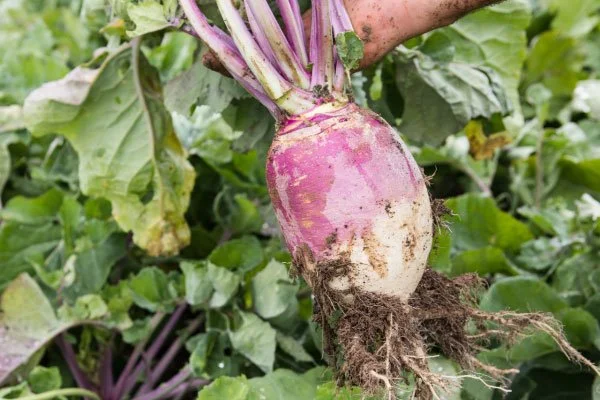
Image Courtesy of Cridge Seeds
Drought resilience is becoming part of the conversation
For many dairy farmers, summer feed supply is becoming an increasingly important consideration. When pasture growth slows during a dry period, the pressure on supplementary feed can increase quickly.
Some forage crops have characteristics that make them more suited to dry conditions than traditional pasture species. Crops such as chicory, plantain, forage brassicas, summer annuals and other alternative forages can potentially form part of a strategy to spread feed production across the season.
However, drought resistance should not be viewed in isolation. A crop that performs well under dry conditions still needs suitable soil, appropriate fertility and effective establishment. There is also the question of what happens when the weather changes again.
A crop that is useful during a dry summer may have a completely different role from one grown specifically for winter feed. Matching the crop to the conditions it is expected to handle is therefore critical.
More yield is not always more feed
One of the easiest traps when comparing forage crops is focusing on tonnes per hectare without looking at what those tonnes actually contain.
A crop producing a large amount of dry matter may sound impressive, but the nutritional value, digestibility, energy content and protein contribution all influence how useful that feed is to the cow.
The farmer needs to think in terms of usable feed rather than simply harvested weight.
There can also be significant variation between crops and growing conditions. Soil type, fertiliser, weather, maturity at harvest and grazing or harvesting management can all affect the final feed value.
This is why comparing forage options purely on yield can give a misleading picture of their real value in the dairy system.
The cost of growing the crop
Alternative forage crops are not free feed. There are costs associated with seed, cultivation, fertiliser, spraying, establishment, harvesting and grazing management.
Where a crop requires significant cultivation, the cost of establishing it can become particularly important. The farmer needs to consider not only the cost per hectare but also the cost per kilogram of useful dry matter produced.
There can also be an opportunity cost. A paddock used for a forage crop is not available for another purpose during that period. If a crop is replacing productive pasture, the value of the pasture that could otherwise have been grown needs to be part of the calculation.
This is where farm-specific figures become much more useful than generic claims about the cost of different crops.
Soil and paddock selection matter
Not every paddock is equally suitable for every forage option. Soil type, drainage, fertility, paddock history and access can all influence establishment and performance.
A crop that performs exceptionally well on one farm may be disappointing on another because the growing conditions are different.
Paddock selection can also influence how easily the crop can be grazed or harvested. A crop intended for summer grazing needs good access and suitable infrastructure, while one destined for silage may have different requirements.
The practicalities of getting cows onto the crop, controlling grazing and bringing them back into the main pasture system should be considered before the crop is planted, rather than once it is ready to feed.
Grazing management still matters
An alternative forage crop does not remove the need for good grazing management. In fact, some crops require particularly careful management to make sure cows receive the intended amount of feed without causing unnecessary wastage or damaging the paddock.
The way cows enter and leave the crop, the allocation of feed, the size of the grazing area and the timing of the next grazing can all influence how effectively the crop is used.
Water supply is another practical consideration. During hot and dry conditions, cows grazing a summer crop still need reliable access to good-quality drinking water.
Likewise, transitions between crops and pasture need to be managed sensibly. A sudden change in diet can affect rumen function and intake, so the nutritional characteristics of the crop and the rest of the ration need to be considered together.
Forage crops can spread risk
One of the biggest arguments for using a wider range of forage options is not necessarily that any one crop will outperform pasture. It is that spreading feed production across different crops can potentially spread risk.
A farm relying entirely on one feed source is exposed when conditions go against that particular system. If pasture growth falls away during a dry summer, the farmer may suddenly be competing for supplementary feed.
Having another source of forage already established can provide a degree of flexibility.
This does not mean every farm needs a paddock full of different crops. In fact, introducing too many different crops can create its own management headaches. The objective is to have a feeding system that is resilient without becoming unnecessarily complicated.
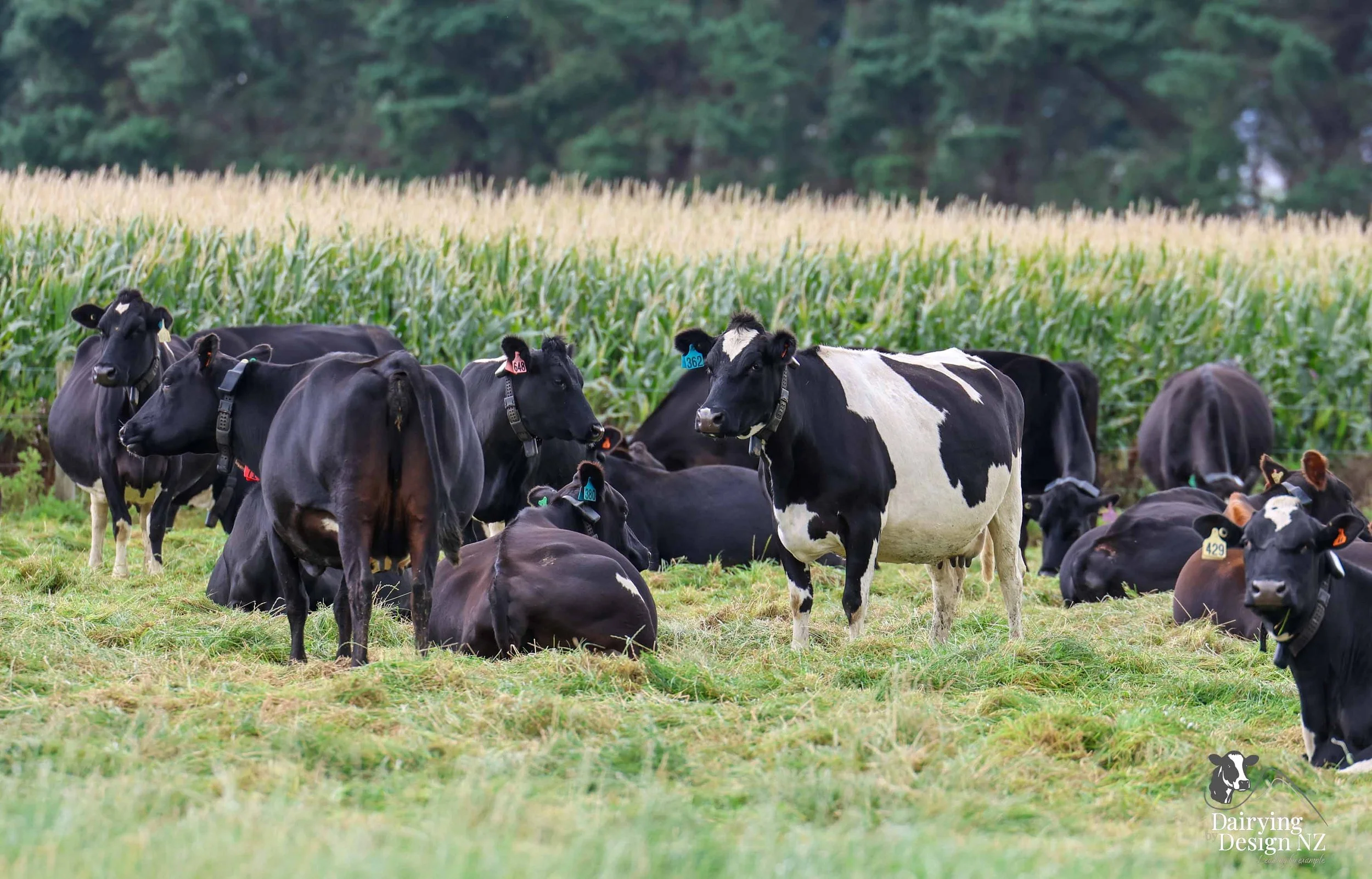
Photo by Dianna Malcolm
Think about the cow, not just the crop
Ultimately, every forage decision needs to come back to the cow.
A crop might be easy to grow but difficult to manage in the diet. Another might provide excellent energy but need to be balanced carefully with other feeds. Some forages may be particularly useful for certain groups of cows, while others may be better suited to young stock or dry cows.
This is where understanding the nutritional role of the crop becomes important.
The farmer should know what the forage is contributing to the diet and what it is not contributing. The rest of the ration can then be used to balance the overall nutritional requirements rather than treating the forage as a complete feed on its own.
Alternative does not mean complicated
There can sometimes be a perception that introducing alternative forages means creating a complicated feeding system. It does not have to.
A well-chosen crop with a clear purpose can actually make the system easier to manage by providing feed at a time when the usual pasture supply is under pressure.
The key is having a reason for growing it.
If a crop is being planted because everyone else is doing it, it may not be the right crop for that particular farm. If it is being planted because the farm has identified a predictable feed shortage and the crop can economically fill that gap, the decision becomes much easier to justify.
Know when to walk away
There is also nothing wrong with deciding that an alternative forage crop does not stack up.
Establishment may be too expensive, the soil may not be suitable, the crop may clash with the farm's rotation or the expected feed production may not justify the extra work.
Good feed management is not about growing the maximum number of different crops. It is about making the most efficient use of the land, labour, machinery and available growing conditions.
Sometimes the best decision is to improve the pasture system already in place rather than introduce something new.
Building a more flexible feed system
The New Zealand dairy system has always had an element of adaptability. Farmers have learned to work with their soils, climate and available pasture rather than trying to force every farm into exactly the same production model.
Alternative forages can be another tool in that toolbox.
Used strategically, they can provide additional feed during seasonal gaps, help manage dry conditions, spread the risk of relying on a single forage source and provide different nutritional options for different groups of stock.
But they need to earn their place.
The real question is not whether a particular crop is fashionable, drought tolerant or capable of producing a big yield. The question is whether it produces useful feed, at the right time, at a cost that makes sense for the individual dairy farm.
Start with the feed shortage you are trying to solve rather than starting with the crop. Consider when the feed is needed, what nutritional role it needs to play and whether the crop is suited to the soil, climate and infrastructure on the farm.
Look beyond dry matter yield and consider the actual feeding value and cost of producing the crop. Establishment, fertiliser, harvesting, grazing management and the value of the paddock itself all form part of the calculation.
Most importantly, keep the cow at the centre of the decision. An alternative forage only becomes valuable when it works as part of the overall feeding system and helps provide consistent, useful nutrition when the herd needs it.
A diverse feed system does not have to be complicated. Sometimes one well-chosen crop, grown for one very specific reason, can make a significant difference when the weather does not cooperate.
Tomorrow, Day 4 of our seven-day series will look at precision feeding technologies and how automated feeding systems and data can help tailor nutrition more closely to different groups of cows. See you tomorrow.