
Today we turn our attention to one of the most familiar sights around livestock, farm buildings and milking facilities: flies. While a few flies might seem like an unavoidable part of rural life, large populations can create significant challenges for animal comfort, farm hygiene and the working environment.
Flies are remarkably adaptable insects. They can exploit a wide range of breeding environments, reproduce rapidly when conditions are favourable and move between different parts of a farm in search of food and suitable places to lay their eggs. Their presence around dairy cattle is not simply a seasonal inconvenience. Certain species can irritate livestock, interfere with normal behaviour and contribute to the movement of disease-causing organisms.
Understanding the different types of flies found around dairy farms is the first step towards recognising why populations develop and what makes some areas particularly attractive to them. A few weeks back we did an article on the rat tailed maggot which is the offspring of the hover fly.
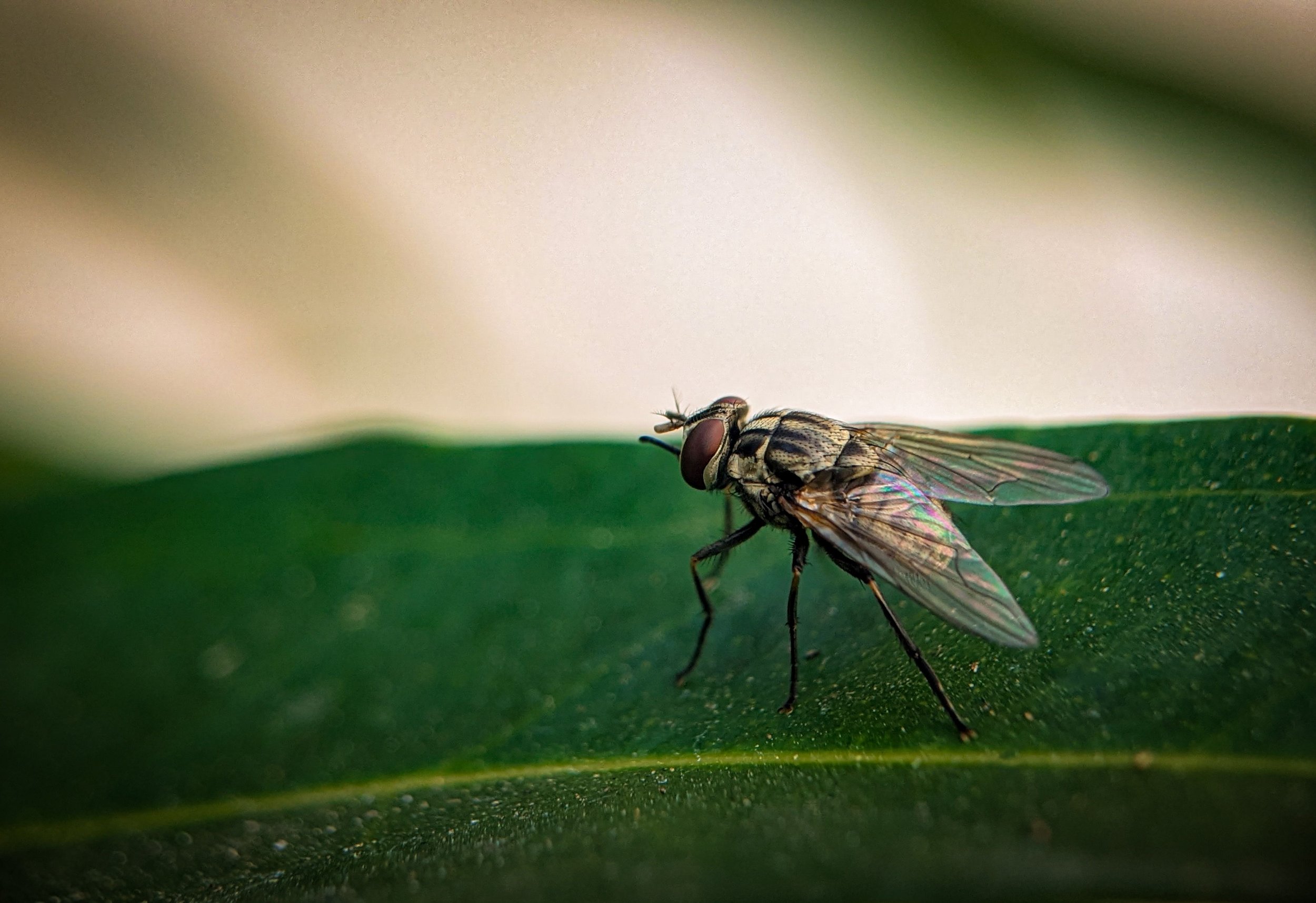
Not all flies are the same
Although farmers often refer to them collectively as flies, several different groups can be encountered around a dairy operation. Their feeding habits, breeding requirements and behaviour vary, meaning the problems they create are not necessarily identical.
House flies are among the most familiar. They are attracted to a range of organic materials, including manure, decaying feed, rubbish and other waste. They have a particular ability to exploit areas where organic material remains moist and undisturbed.
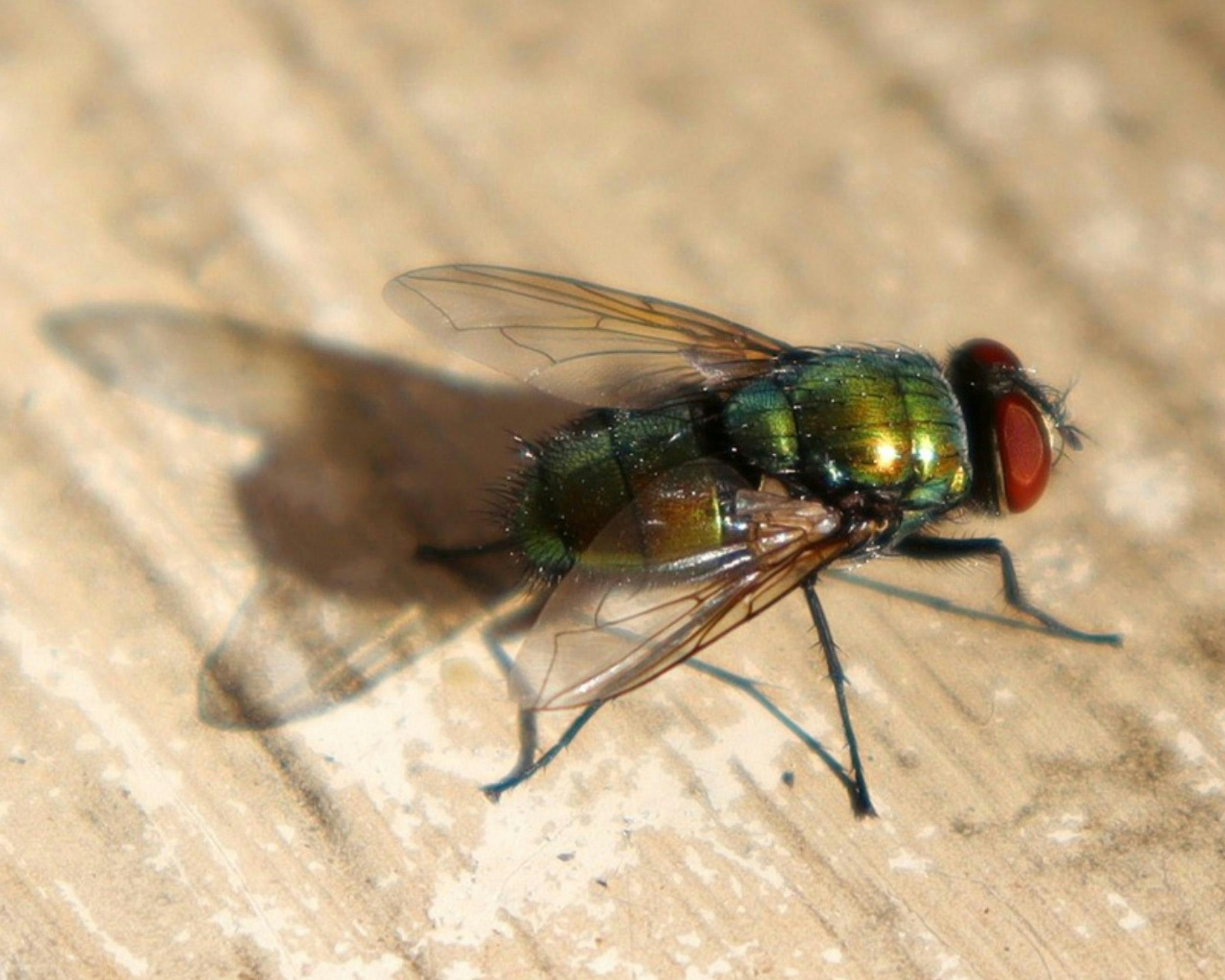
Blowflies are generally larger and often have a distinctive metallic appearance. Many species are associated with decomposing animal material and other organic matter. Their presence around farm buildings may indicate that an animal carcass, discarded material or another suitable breeding source is nearby.
Stable flies are particularly important in livestock environments because they are blood-feeding insects. Unlike house flies, which primarily feed on liquid and semi-liquid materials, stable flies use specialised mouthparts to pierce the skin and take blood meals. Their bites can be painful and irritating to cattle.
Other biting flies, including biting midges and mosquitoes, may also occur depending on the farm's location and surrounding environment. Their activity can be influenced by wet conditions, sheltered areas and the availability of suitable breeding habitats.
Recognising that different species have different requirements is important because a control approach that addresses one type of fly may have little effect on another.
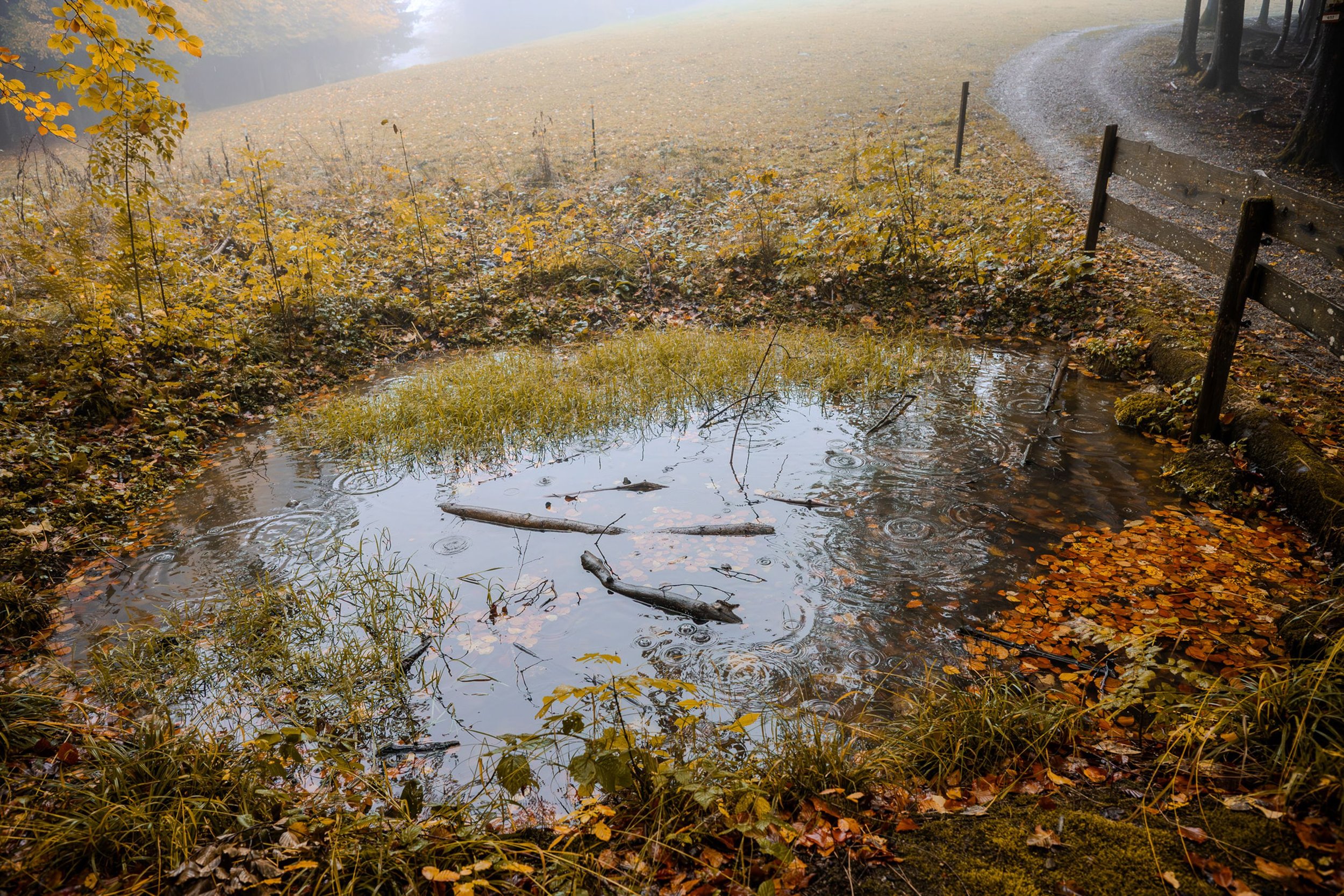
How flies establish themselves around farm buildings
A dairy farm can provide an extensive range of breeding opportunities for flies, particularly where organic waste and moisture accumulate.
Manure is one of the most significant materials associated with fly development. Depending on the species, fresh or ageing manure can provide suitable conditions for eggs and larvae. Areas where manure collects, remains moist and is not regularly disturbed can become productive breeding locations.
Feed residues can also contribute. Spilled silage, discarded meal, deteriorating supplements and organic material trapped around feed preparation areas may attract adult flies and provide suitable conditions for some species to develop.
Poorly maintained rubbish areas can become another source of activity. Food scraps, discarded packaging containing organic residues and decomposing material can attract flies from surrounding areas.
The relationship between moisture and organic waste is particularly important. Dry material is generally less attractive to many breeding fly species than moist, decomposing material. Where water collects around waste, the environment may remain suitable for larval development for longer periods.
Farm buildings can also provide sheltered locations where adult flies rest during cooler periods or avoid strong winds. Roof spaces, wall surfaces, sheltered corners and the undersides of structural beams may all be used as resting areas.
The result is that fly activity can be spread across several different parts of the farm, rather than originating from one obvious location.
The fly life cycle explains why numbers can increase so quickly
One of the reasons flies can become difficult to manage is the speed at which their populations develop under favourable conditions.
Most of the common farm nuisance flies pass through four main stages: egg, larva, pupa and adult. Although the timing varies between species, temperature and food availability, some flies can complete this development remarkably quickly during warm weather.
The female lays eggs in a suitable breeding material. Once hatched, the larvae feed and grow within that environment before moving into the pupal stage. An adult fly eventually emerges, ready to begin the cycle again.
House flies are particularly prolific breeders. A female can lay several batches of eggs during her lifetime, with each batch potentially containing well over 100 eggs. Under favourable conditions, development from egg to adult can occur in little more than a week.
This means a relatively small number of adult flies can give rise to a much larger population when breeding conditions remain suitable.
It also explains why simply killing the adult flies visible around a dairy shed may not resolve the problem. If the breeding material remains in place, another generation can emerge shortly afterwards.
The number of flies visible today may be only a small indication of the breeding activity occurring elsewhere on the farm.
What flies mean for dairy cattle
The impact of flies on dairy cattle depends largely on the species involved and the level of activity.
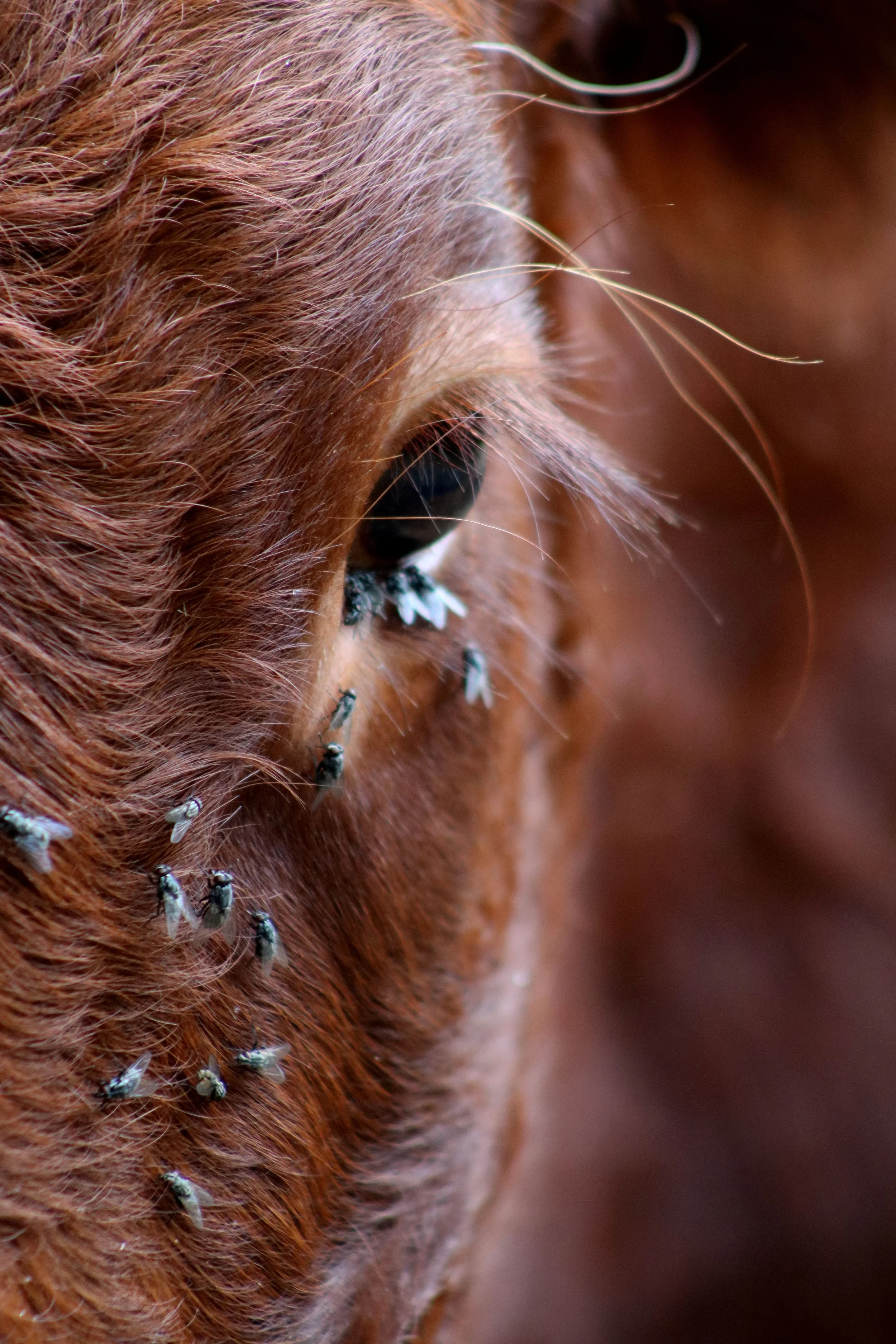
For non-biting species, the constant presence of insects around the eyes, muzzle and body can become an ongoing irritation. Cattle may repeatedly shake their heads, flick their tails, stamp their feet or move away from areas where flies are concentrated.
Biting flies create a more direct problem. Stable flies, for example, feed on blood and can cause considerable discomfort. Cattle may bunch together, stamp their legs or repeatedly shift their weight in an effort to avoid being bitten.
When biting activity becomes persistent, animals can spend more time responding to insects and less time resting or grazing comfortably. This disruption can be particularly undesirable during periods of high fly activity when cattle are already dealing with warm conditions.
Flies around the eyes can also contribute to irritation and may be involved in the transmission of certain infectious agents. Eye health should therefore be monitored when animals are experiencing heavy fly activity.
The effects are not always dramatic or immediately obvious. Repeated irritation can influence normal animal behaviour over time, making fly management part of maintaining a comfortable livestock environment.
Flies and the movement of unwanted organisms
One of the less obvious concerns associated with flies is their ability to move between different environments.
A house fly may visit manure, rubbish, decomposing material and animal feed during the same period. Organisms can be carried on its legs, body hairs and mouthparts as it moves between these locations.
This mechanical movement means flies can contribute to the transfer of bacteria and other microorganisms between contaminated material and surfaces where feed is handled or animals are housed.
The risk depends on the species, the organisms present and the conditions involved. Not every fly carries a harmful pathogen, and their presence should not automatically be interpreted as evidence of disease. However, large populations moving freely between waste and feed handling areas create an avoidable hygiene concern.
In dairy environments, this is particularly relevant around calf-rearing facilities, feed preparation areas, milk handling spaces and other locations where cleanliness is essential.
Flies can also be involved in the transmission of specific animal diseases. Their importance varies according to the species and the disease concerned, so it is useful to distinguish between general nuisance activity and insects that have a recognised role in disease transmission.
Why warm weather brings greater fly activity
Fly populations are strongly influenced by temperature, moisture and the availability of breeding material.
Warmer conditions generally allow many common fly species to develop more quickly. Eggs hatch sooner, larvae grow faster and adults may become active for longer periods during the day.
This is why fly numbers can increase noticeably during warmer months, particularly when rainfall or farm management conditions have created moist organic breeding areas.
However, fly activity is not limited to the height of summer. Buildings that provide sheltered, relatively warm conditions can support activity at other times of the year.
Dairy sheds, calf housing and enclosed waste areas may create environments that differ considerably from the surrounding paddocks. Even when outdoor temperatures fall, suitable conditions within sheltered structures can allow some flies to remain active.
The availability of breeding material is just as important as temperature. A warm season with little suitable organic waste may not produce the same level of fly activity as a period when moisture and decomposing material are readily available.
Understanding where fly populations originate
When flies become particularly noticeable around a dairy shed, it is tempting to concentrate on the area where they are causing the greatest nuisance. However, the source may be located elsewhere.
Adult flies are mobile and can travel between breeding areas and locations where food or shelter is available. A concentration of flies around a milking facility does not necessarily mean they have developed inside that building.
Manure storage areas, effluent collection points, discarded feed, rubbish facilities and poorly maintained drainage areas may all warrant inspection.
Different species also favour different breeding materials. Stable flies, for instance, are commonly associated with moist decomposing vegetation, including wet bedding and mixtures of plant material and manure. House flies are more broadly associated with organic waste.
Identifying the likely species can therefore help narrow down the search.
The condition of the surrounding environment often provides useful clues. Persistent fly activity in one location, particularly when it is accompanied by larvae or pupae in nearby organic material, can indicate an established breeding site.
Reducing the conditions that encourage fly breeding
Managing fly activity is most effective when attention is given to the places where flies develop rather than concentrating exclusively on adult insects.
Manure and organic waste should be managed so that suitable breeding material does not remain undisturbed for extended periods. Areas where wet organic matter accumulates deserve particular attention, especially during warmer weather.
Feed preparation areas should be kept free from old silage, spilled meal and deteriorating feed residues. Rubbish should be contained appropriately, and waste materials should not be left to accumulate around buildings.
Drainage is another important consideration. Water collecting around manure handling areas, rubbish facilities and feed storage locations can maintain the damp conditions that certain fly larvae require.
Physical barriers can also help reduce the movement of adult flies into particular buildings. Suitable screens, doors and other exclusion measures may be useful around enclosed areas where hygiene is especially important.
Where chemical fly control is being considered, the product needs to be appropriate for the particular species and intended location. Treatment should be undertaken in accordance with label directions, particularly around livestock, feed and milk handling facilities.
A targeted approach is preferable to treating every part of the farm without first understanding where the flies are developing.
A pest that deserves more attention
Flies are often accepted as an unavoidable feature of dairy farming, but persistent or unusually heavy activity should not simply be dismissed as part of rural life.
Their ability to reproduce quickly, move between different farm environments and affect livestock comfort makes them a pest worth understanding. Some species are primarily a nuisance, while others can bite cattle or contribute to the movement of unwanted microorganisms.
The most useful starting point is recognising that fly populations are supported by specific breeding conditions. Once those conditions are identified, farmers can make informed decisions about managing waste, maintaining buildings and reducing opportunities for further development.
Good fly management is not just about having fewer insects around the dairy shed. It is about creating an environment that is less attractive to breeding flies while maintaining suitable conditions for livestock, staff and everyday farm operations.
Tomorrow in our seven-day dairy farm pest series, we look at lice and mites, two very different external parasites that can live on cattle and create ongoing challenges for animal comfort, skin condition and herd management.