
Healthy udders start with healthy cows

There is nothing quite like the sight of a good line of cows walking into the dairy with full udders, bright eyes and an obvious determination to get on with the business of being milked. For the dairy farmer, a healthy udder is one of those things that can easily be taken for granted, right up until something goes wrong.
Udder health is much more than keeping mastitis numbers down. It is about keeping cows comfortable, keeping milk quality where it needs to be, protecting production and making sure the milking routine is working for both the cows and the people doing the milking.
The good news is that healthy udders are not achieved by one magic trick. They are the result of lots of small things being done consistently well. Clean cows, healthy teat skin, good milking equipment, careful teat preparation, effective teat spraying and early identification of problems all have a part to play.
And perhaps one of the most useful things a dairy farmer can do is simply look at the udders and teats.
“Udder health is not something you fix once a problem appears. It is something you build into every milking.”
Start with the teat
The teat is the udder's first line of defence, so it makes sense to start there.
A healthy teat should have smooth, supple skin without obvious cracks, scabs or excessive dryness. The teat end should be clean and relatively smooth rather than heavily thickened, rough or ringed. After milking, the teat should not be excessively swollen, hard, painful or obviously congested.
This is where spending a few minutes actually looking at teats can pay dividends.
It is easy to concentrate on whether the cups are attaching properly and whether the milk is flowing, while overlooking what is happening to the teat itself. Yet damaged teat skin and teat ends can create an environment where bacteria have a much easier opportunity to establish themselves.
A cracked, rough teat is also harder to keep clean. If the teat skin is in poor condition, it can become a hiding place for bacteria and may also make milking uncomfortable for the cow.
Healthy teats are therefore not just about appearance. They are part of the cow's natural defence against mastitis.
Mastitis is more than a swollen quarter
Most dairy farmers have experienced that sinking feeling when a cow walks into the dairy and something about her milk or udder does not look right.
Mastitis occurs when bacteria enter the udder through the teat canal and establish an infection. It can occur during milking, between milkings, around drying off or during the dry period. Dirty or damaged teats increase the opportunity for bacteria to get into the udder.
The obvious cases are usually the ones that get noticed quickly. A quarter may be swollen, hot or painful, and the milk may contain clots or appear watery or otherwise abnormal.
But not every case of mastitis announces itself quite so dramatically.
Subclinical mastitis can be present without obvious changes to the milk or udder. This is one reason why monitoring individual cow somatic cell counts and bulk milk somatic cell count trends is so valuable. A cow can look perfectly normal while still having an udder health problem that deserves attention.
This is where good records become an important part of good stockmanship.
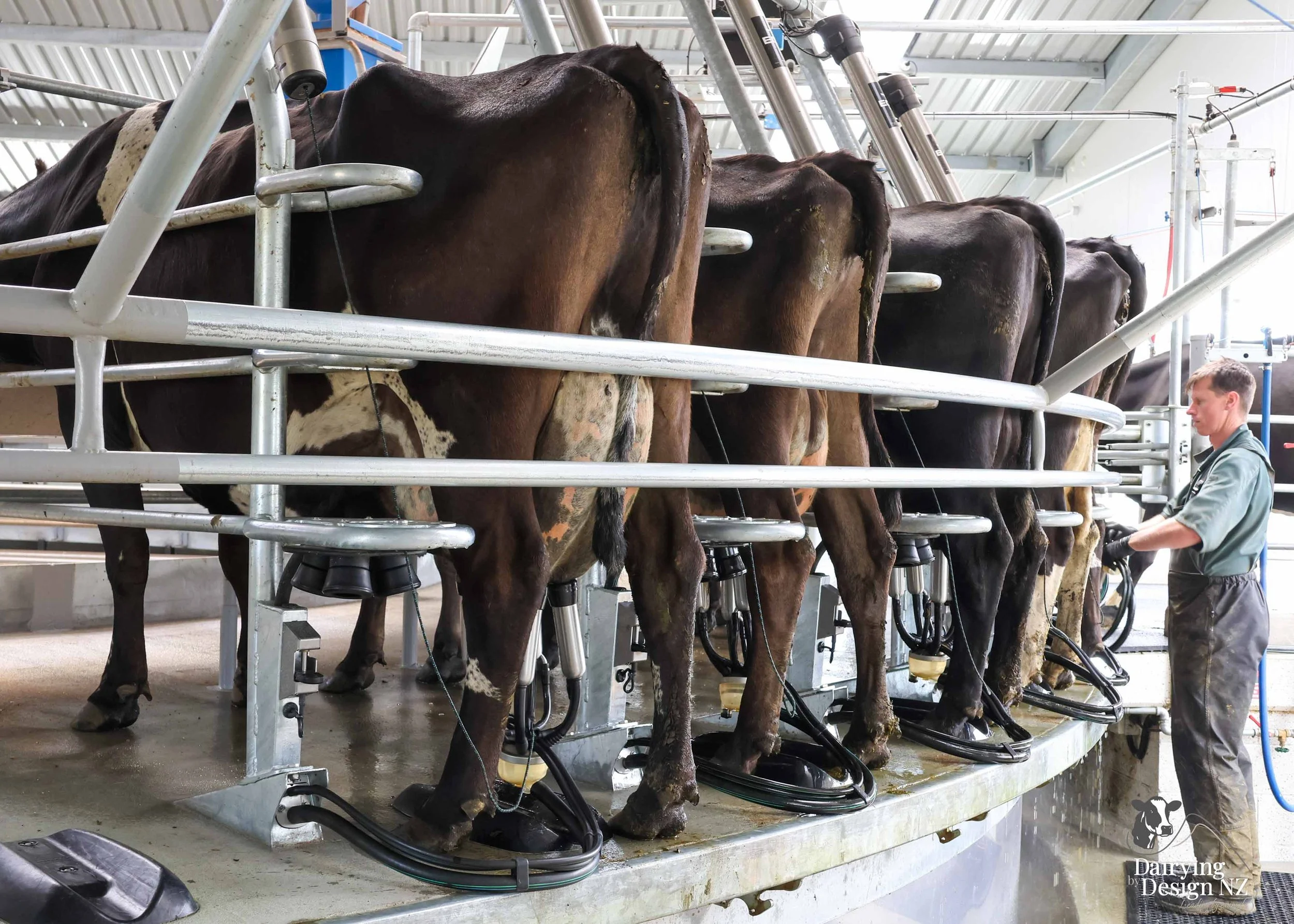
Photo by Dianna Malcolm
Learn what normal looks like
You cannot identify something unusual if you do not know what normal looks like.
Take the time to observe cows regularly. When a cow is in the shed, look at her udder. Watch how she stands. Notice whether she kicks at the cups, seems uncomfortable or is reluctant to let her milk down. Pay attention to cows whose udders look uneven or quarters that appear different from the others.
After milking, look at the teats. Are they soft and healthy-looking or are they showing signs of excessive swelling, roughness or damage?
You do not need to turn every milking into a formal udder inspection. It is simply about developing the habit of noticing.
A dairy farmer who knows the cows well can often spot that something is not quite right before the numbers on a report confirm it.
Teat spray is not just another job
Teat spraying can sometimes become one of those repetitive dairy shed jobs that is done almost automatically. Spray, move the cows, wash the plant, go home.
But effective teat spraying deserves more attention than that.
Post-milking teat disinfection is an important part of mastitis prevention, and its effectiveness depends heavily on getting complete coverage of the teat. Current New Zealand guidance recommends spraying all teats of all cows immediately after every milking throughout lactation.
The critical word is all.
A quick flick of spray across the front of the udder is not necessarily enough. The entire teat needs to be covered. Automated systems also need regular checking because a machine that worked perfectly when it was installed may not necessarily continue doing so if no one checks the coverage.
One simple way of checking coverage is to spray a teat and use a paper towel to see whether the disinfectant has reached the whole teat. Spray patterns and nozzle performance can also be checked regularly.
It is a small check that can tell you whether the system you believe is working is actually doing the job.
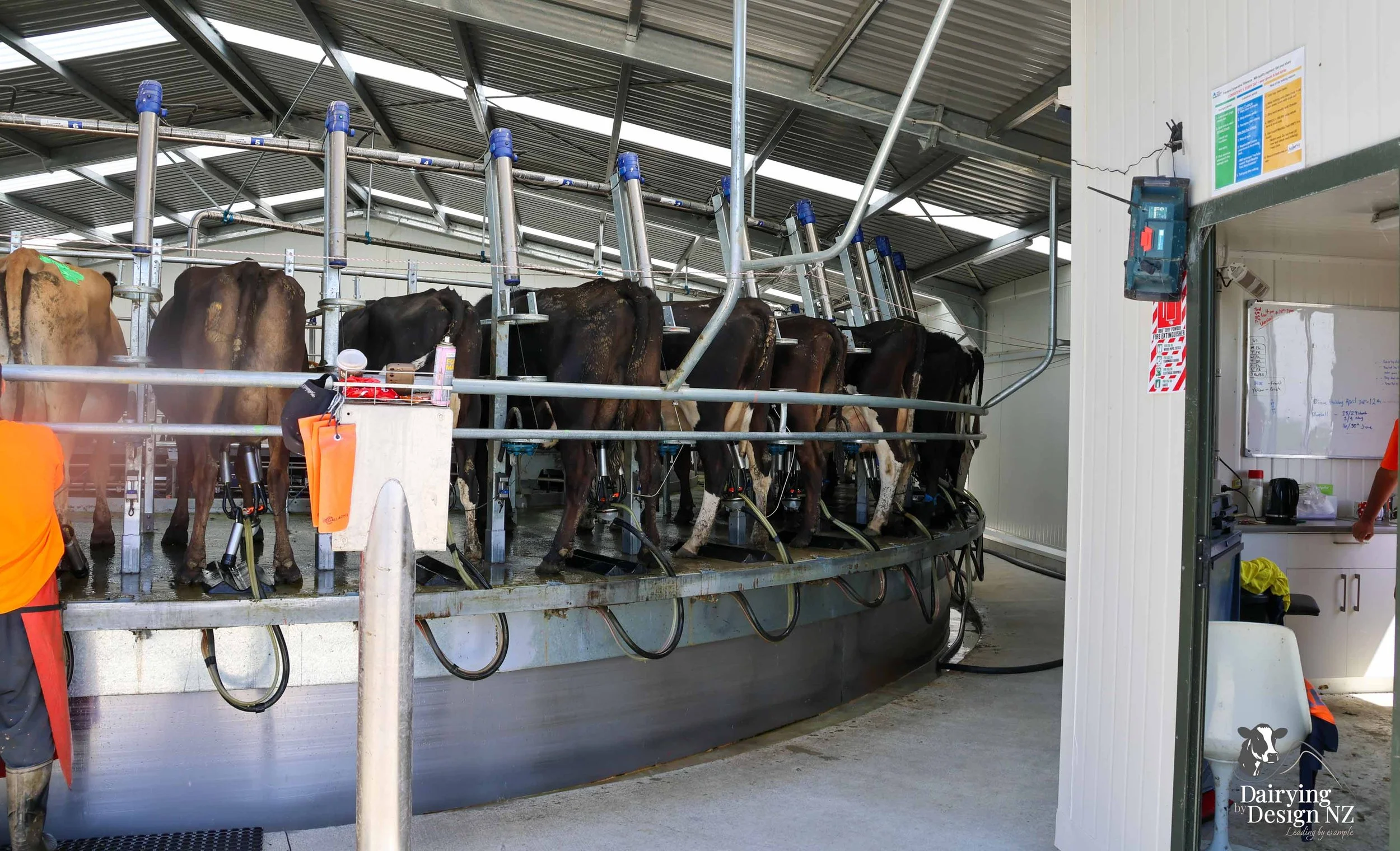
Photo by Dianna Malcolm
Clean teats make life easier
Nobody wants to spend half the milking scraping mud and manure off teats.
Keeping cows and their environment as clean as reasonably possible can make a major difference to the workload in the dairy shed as well as udder health.
Muddy races, wet areas around troughs, gateways, feed areas and places where cows regularly stand can all contribute to dirty teats. Preventing excessive contamination in the first place is considerably easier than trying to clean a mud-covered udder when the cows arrive at the cups.
There is an important distinction between cleaning dirty teats and washing everything in sight.
If teats need washing before cups are attached, they need to be properly cleaned and dried. Water left running down the teat towards the teat end can carry dirt and bacteria with it, while wet teats also do not interact with the liner as effectively.
In other words, wet is not the same as clean.

Photo by Dianna Malcolm
The milking machine matters
Sometimes the problem is not the cow, the pasture or the teat spray. Sometimes the equipment deserves a closer look.
Over-milking, poor vacuum conditions, incorrect pulsation, worn liners and poor cup alignment can all contribute to teat damage. A teat that is repeatedly subjected to excessive mechanical stress is unlikely to remain happy for long.
This is why teat condition can provide useful clues about what is happening in the dairy shed.
If a large proportion of the herd suddenly develops rough teat ends, swelling or other signs of damage, it is worth investigating the milking process rather than simply reaching for more teat spray.
The same applies if cows become increasingly restless during milking or the number of mastitis cases begins creeping upwards.
The milking machine should be working with the cow, not against her.
Good udder health is a team effort
It is tempting to think of mastitis prevention as the responsibility of whoever is standing in the pit, but udder health starts well before the cow reaches the dairy.
Clean and comfortable areas where cows stand and lie, sensible management of muddy areas, good teat condition and a consistent milking routine all contribute.
So does the person milking.
A rushed or inconsistent routine can create problems surprisingly quickly. Cups need to be attached correctly, dirty teats need appropriate attention, liners and equipment need to be maintained, and teat spray needs to be applied properly.
Everyone working in the dairy needs to understand the routine and follow it consistently.
That becomes particularly important when relief milkers or staff are involved. A brilliant system is only brilliant if everybody knows how it works.

Keep an eye on the numbers
The udder itself tells you plenty, but milk records can provide another layer of information.
Individual cow SCC information can help identify cows that may be carrying subclinical infections, while bulk milk SCC trends can provide a useful picture of what is happening across the herd.
If the numbers are heading in the wrong direction, do not simply wait for a few cows to develop obvious clinical mastitis.
Investigate.
Look at teat condition. Look at the milking routine. Consider environmental conditions. Review hygiene. Check the milking equipment. Look at which cows are affected and whether there is a pattern.
Mastitis bacteria are not all behaving in exactly the same way, so identifying the likely cause can help determine what needs to change. Milk sampling and veterinary advice can be particularly useful where recurring or difficult-to-control mastitis is occurring.
Dry off is not the finish line
It is easy to think that once the last milking has been completed, the udder health job is finished for the season.
Actually, what happens at dry off can influence the start of the next lactation.
The teat canal remains particularly vulnerable around dry off as it closes, which means careful hygiene when administering any intramammary treatments is essential. Introducing bacteria during treatment can create a very serious problem during the dry period.
This is another situation where taking a few extra moments to get the basics right can save a considerable amount of trouble later.
Good udder health is not a seasonal project. It is a continuous cycle that runs from one lactation into the next.
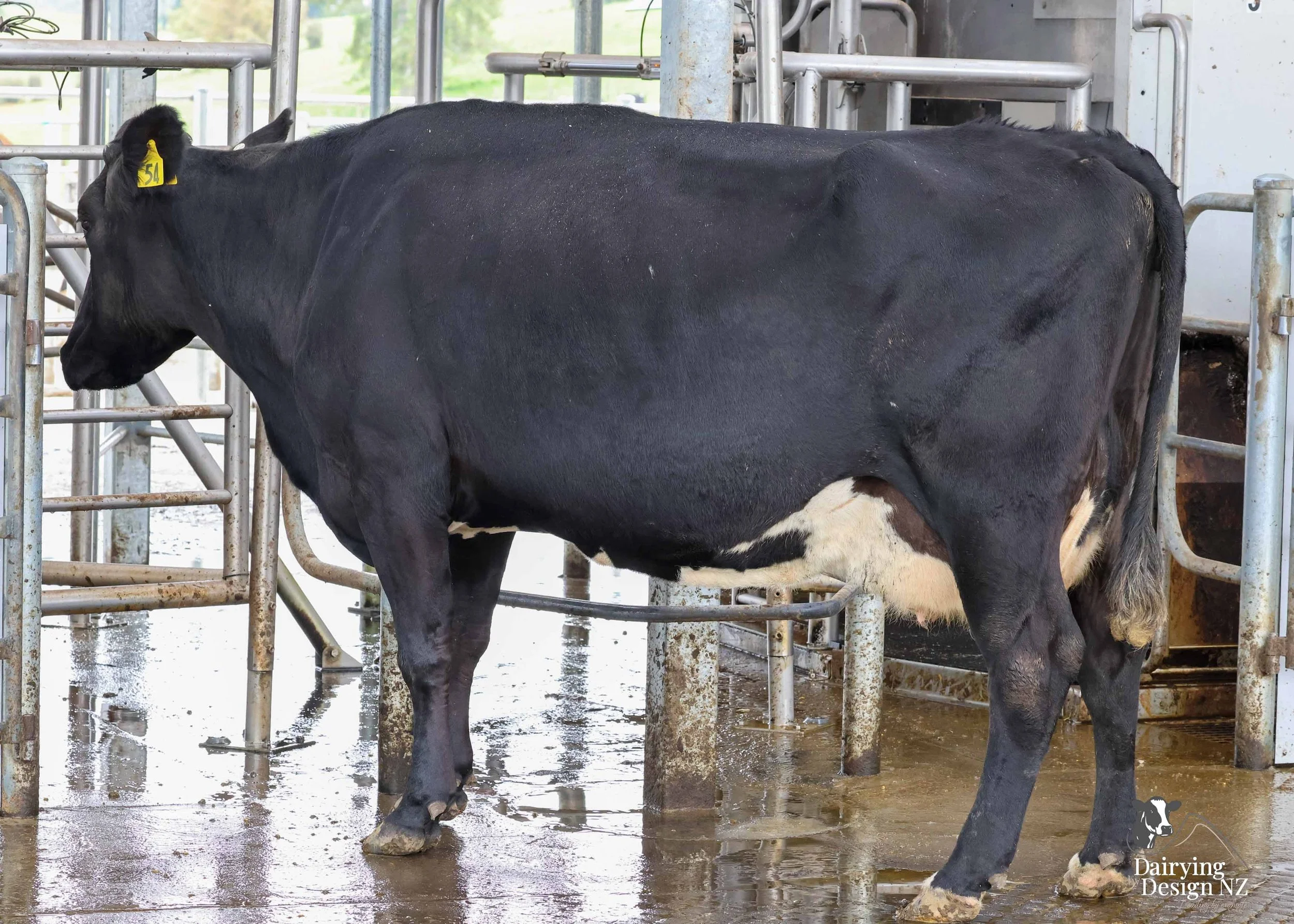
Photo by Dianna Malcolm
Watch the cow, not just the udder
Perhaps the most important point of all is that the udder belongs to a cow.
A cow with a painful udder may behave differently. She may kick, shuffle her feet or become difficult to milk. Her milk let-down may be affected. Her production may change. And if she is seriously unwell, there may be much more obvious signs of illness.
That is why udder health is ultimately about cow welfare as much as milk quality and farm performance.
Early detection gives the farmer the opportunity to act before a small problem becomes a much bigger one. Any cow showing obvious signs of clinical mastitis or systemic illness needs prompt attention and treatment according to the farm's veterinary plan.
“A healthy udder is quiet, comfortable and productive. When a cow starts telling you otherwise, listen.”
Healthy udders do not happen by accident. They are the result of consistent attention to the small details that surround every milking.
Look at the teats. Look at the udder. Watch the cow. Keep an eye on SCC trends. Make sure dirty teats are properly cleaned and dried before cups go on. Check that the milking equipment is not causing unnecessary teat damage. Make sure teat spray is mixed correctly and covering the whole teat after every milking. Keep the cows' environment as clean and comfortable as practical, and investigate changes rather than waiting for a major mastitis problem to announce itself.
Most importantly, do not underestimate the value of simply looking.
A few seconds spent observing cows during every milking can tell you an awful lot. Udder health is one of those areas of dairy farming where prevention is generally far easier than fixing a problem once it has taken hold.
And when the cows walk out of the dairy comfortable, clean and content, with healthy teats and four quarters doing exactly what they are supposed to do, that is a pretty good sign that the little things are being done right.