The Kiwi pasture advantage

This is day one of our seven-day series looking at pasture agronomy, soil health and weed management, and there is no better place to begin than with the foundation of New Zealand dairy farming: the pasture.
For generations, New Zealand dairy farmers have built productive systems around the ability to grow quality pasture and turn it into milk efficiently. While farming systems, technology and genetics have changed dramatically, perennial ryegrass and white clover remain at the heart of many successful dairy pastures.
The reason is fairly simple. When the right varieties are matched with the right soil, climate, fertility programme and grazing management, a well-managed ryegrass and white clover pasture can provide a remarkably efficient source of home-grown feed.
But having good pasture species in the paddock is only part of the equation. The real advantage comes from understanding how the plants grow, when they should be grazed and how hard they can be pushed without compromising their ability to recover.
That is where the three-leaf grazing principle becomes particularly useful.
Why ryegrass and white clover still matter
Perennial ryegrass has earned its place in New Zealand dairy systems because it can produce a large amount of quality feed, responds well to fertility and grazing management, and is capable of persisting for many years when conditions are right.
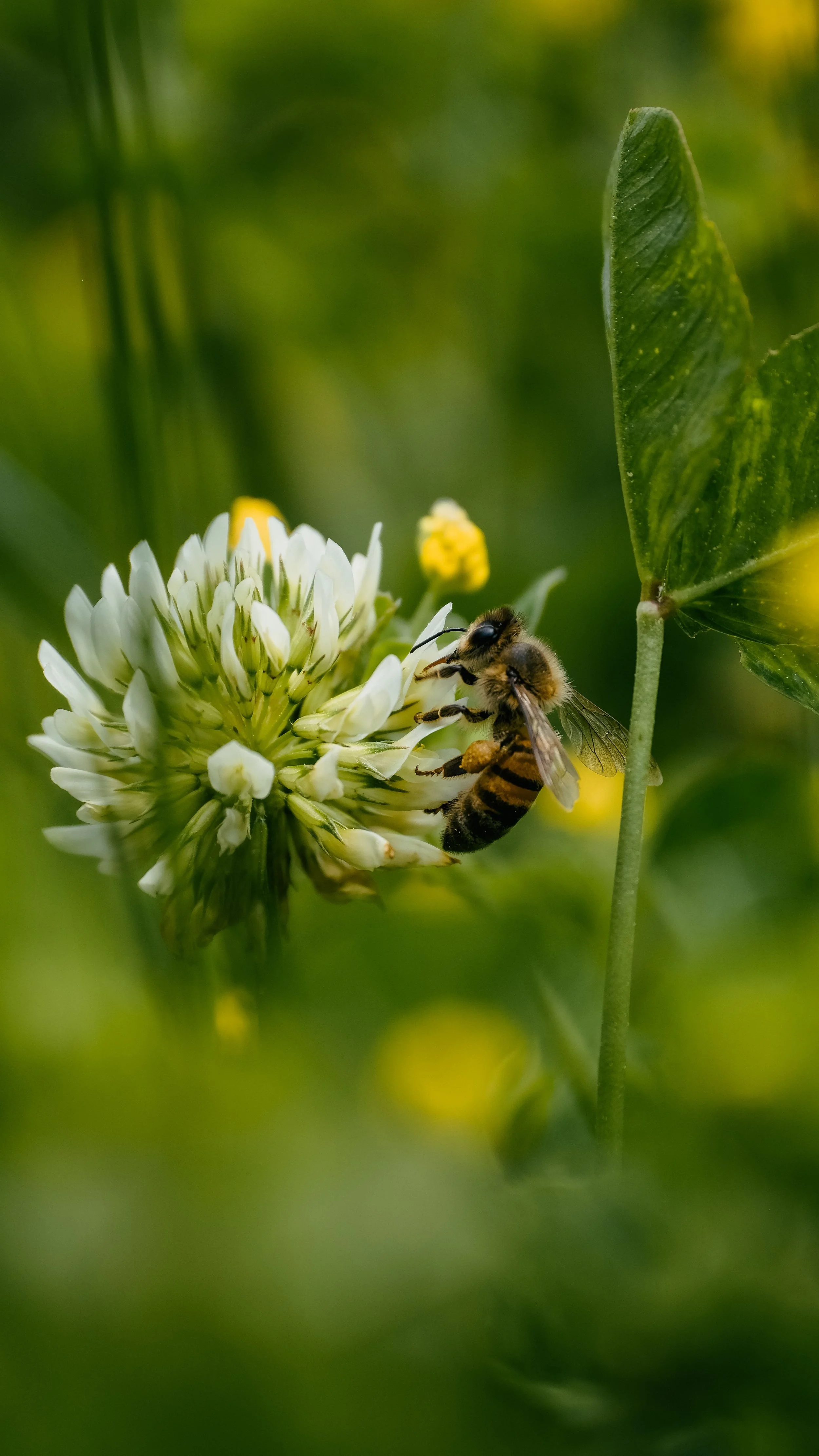
White clover brings another important piece to the pasture puzzle. As a legume, it can contribute biologically fixed nitrogen to the pasture system while producing highly nutritious feed for cows. It also complements ryegrass particularly well, although maintaining a productive clover component requires careful grazing and fertility management.
The important point is that neither species should be viewed in isolation.
A pasture is a living community. Ryegrass, clover, other plants, soil organisms, moisture, nutrients and grazing animals are all interacting. When one part of that system is under pressure, the effects can show up elsewhere.
A paddock may have been sown with an excellent ryegrass and clover mix, but if it is repeatedly grazed too early, allowed to become excessively mature, pugged during wet conditions or placed under significant fertility stress, the original investment in seed can quickly lose its value.
The plant needs an opportunity to recover.
The three-leaf principle
One of the most useful concepts in pasture management is the three-leaf principle for perennial ryegrass.
Following grazing, a ryegrass plant begins producing new leaves. Once the plant has reached approximately three fully emerged leaves, it has rebuilt a significant amount of its leaf area and is approaching a stage where another grazing can be highly productive.
The exact timing will vary with season, temperature, moisture, soil fertility and plant variety, so the three-leaf principle should not be treated as a rigid calendar rule.
Instead, think of it as a way of understanding what is happening inside the plant.
Grazing too soon repeatedly removes the plant's developing leaf area before it has had enough opportunity to replenish its reserves. Over time, this can weaken plants and reduce pasture persistence.
Leave it too long, however, and pasture quality begins to change. Older leaves accumulate, stems develop and the proportion of high-quality, easily digested feed can decline.
The sweet spot is about allowing the plant enough time to recover without allowing it to become unnecessarily mature.
“Good pasture management is not simply about how much grass is in front of the cows. It is about having the right amount of quality grass at the right stage of growth.”
Grazing is more than removing grass
It can be tempting to think of grazing as simply putting cows into a paddock and taking them out again once the feed has been eaten.
In reality, every grazing decision influences what happens next.
The height and density of the pasture before grazing affect cow intake. The residual left behind affects how quickly the plant can recover. The timing of the next grazing influences pasture quality, root growth and persistence.
This is why pasture management is both an art and a science.
Experienced farmers often develop an excellent eye for a paddock. They can walk through pasture and recognise when it is getting ahead, when it is struggling to recover and when it is ready to graze. Measurements such as pasture covers and growth rates can then add another layer of information to those observations.
Neither approach needs to replace the other.
Walking the farm and looking closely at the pasture remains incredibly valuable. Measurement simply gives the farmer more information with which to make the decision.
Don't chase the tallest pasture
One of the traps in pasture management is assuming that the tallest paddock must automatically be the best paddock.
It is easy to be impressed by a paddock carrying a large amount of grass. However, more pasture does not necessarily mean more usable feed.
As ryegrass matures, the plant moves towards producing stems and seedheads. The nutritional value and physical structure of the pasture change, and cows may become less efficient at harvesting the feed.
This is particularly important during spring, when pasture growth can move very quickly.
Allowing every paddock to become excessively mature because it appears to be carrying plenty of feed can create a pasture management problem rather than solving one.
The objective is not simply to grow more grass. It is to grow usable, high-quality grass and harvest it efficiently.
Protecting the plant after grazing
What happens after the cows leave the paddock is just as important as what happened while they were in it.
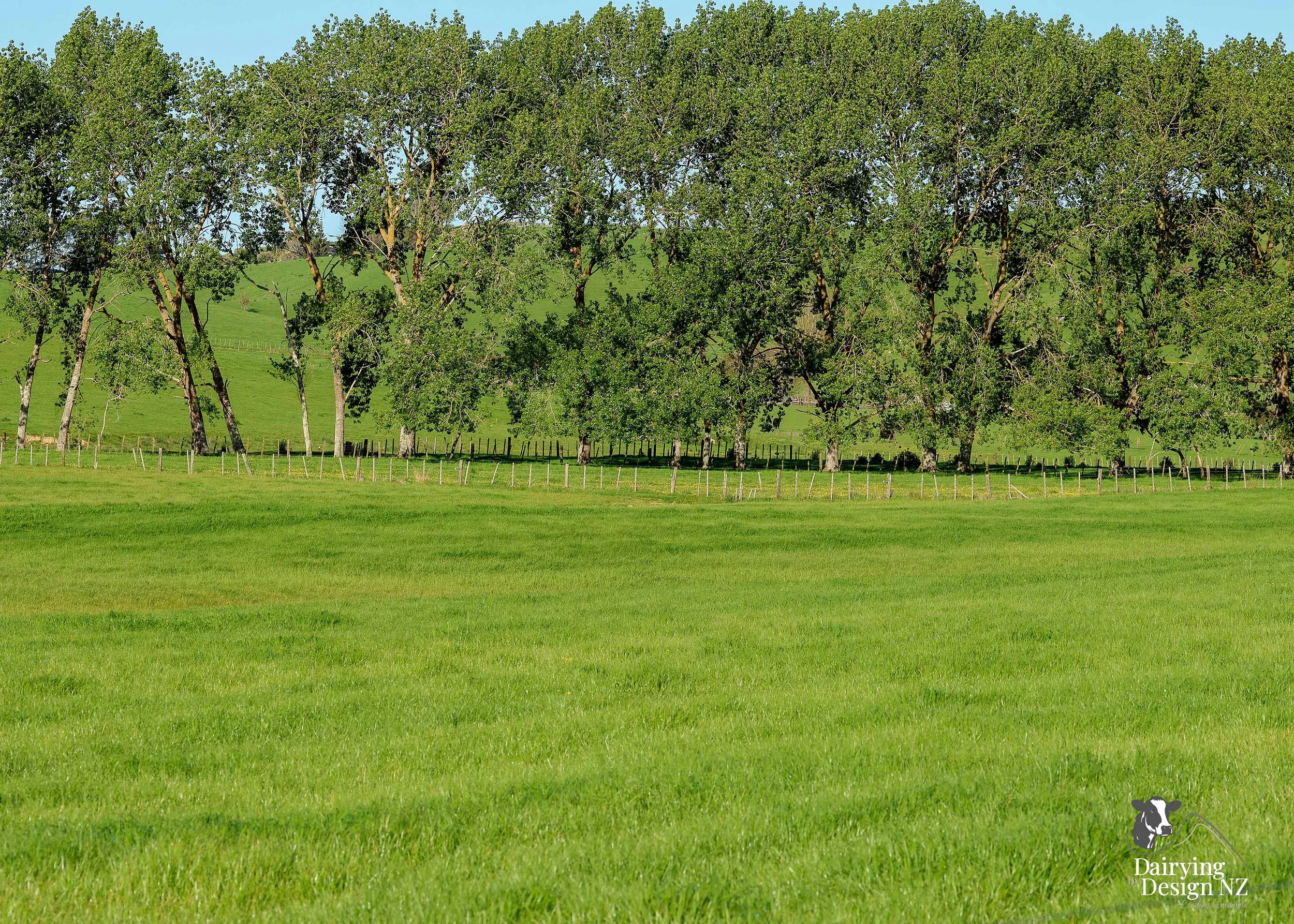
A pasture plant needs enough leaf area remaining to capture sunlight and continue growing. If the pasture is consistently grazed too hard, the plant has less leaf area available to drive recovery.
This is where residual management becomes important.
Leaving an appropriate residual does not mean leaving large amounts of wasted grass behind. It means avoiding the temptation to keep cows in the paddock until every last blade has disappeared.
Repeatedly forcing plants to recover from an excessively low residual can place unnecessary pressure on pasture persistence.
The same principle applies when conditions are difficult. During a dry summer, cold winter or particularly wet period, the plant may need more time and protection to recover.
Good grazing management recognises that the pasture is a crop.
And unlike a crop harvested once or twice a year, this crop is being harvested by cows repeatedly throughout the season.
Soil is part of the pasture equation
A conversation about pasture agronomy cannot stop at the leaves above the ground.
Underneath the pasture is the soil supporting the entire production system.
Ryegrass and clover need appropriate soil fertility, structure, moisture and biological activity to perform well. Compaction, poor drainage, nutrient deficiencies and unsuitable soil conditions can all restrict pasture growth, regardless of how good the seed mix looked when it went into the ground.
This is why pasture problems should not automatically be blamed on the seed.
Sometimes the problem is above ground. Sometimes it is below it.
Understanding that relationship is going to become increasingly important as we work through this seven-day series.
Know what your pasture is telling you
A farmer does not need to become a full-time agronomist to become better at pasture management.
Start by looking.
Walk different paddocks and compare them. Look at plant density, clover content, bare patches, weeds, soil condition and how quickly paddocks recover after grazing.
Look at what happens after rain. Look at the pasture during a dry spell. Look at paddocks that are performing well and compare them with those that are struggling.
Most importantly, look at the same paddocks repeatedly.
Pasture management becomes much easier when you understand what is normal for your own farm.
A paddock that consistently struggles to recover may be telling you something. It could be a fertility issue, drainage problem, compaction, grazing pressure, plant population issue or a combination of several factors.
The pasture is giving you clues. The challenge is learning to read them.
The Kiwi pasture advantage
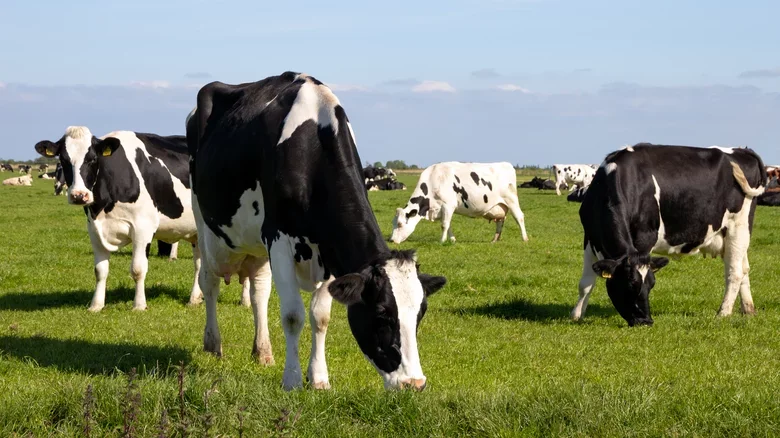
New Zealand's pasture-based dairy systems have a significant natural advantage because cows can harvest feed directly from the paddock rather than relying entirely on purchased or conserved feed.
But that advantage is not automatic.
It has to be managed.
Perennial ryegrass and white clover can provide an outstanding foundation, but their performance depends on how the farmer manages the plants, the soil and the cows interacting with them.
The three-leaf principle provides a useful starting point because it encourages farmers to think about pasture growth from the plant's perspective.
Instead of asking only, "How much grass is there?", ask, "Where is this plant in its growth cycle, and what will happen if I graze it now?"
That small change in thinking can lead to better grazing decisions, stronger pastures and more consistent home-grown feed.
And when home-grown feed is the foundation of the dairy system, protecting the pasture is ultimately protecting one of the farm's most valuable assets.
The three-leaf principle is not a stopwatch. It is a guide to understanding pasture recovery.
Use it alongside pasture observations, grazing residuals, seasonal conditions and measurements to make decisions that keep ryegrass growing strongly without allowing it to become unnecessarily mature.
A productive pasture is not created by simply growing more grass. It is created by growing the right pasture, grazing it at the right stage and giving it the opportunity to recover.
Tomorrow, we move beyond ryegrass and white clover and look at what happens when alternative pasture species such as chicory, plantain and lucerne are brought into the mix.
See you tomorrow for day two: Designing the perfect mix.