How to find and employ good farm staff
Finding good farm staff is one thing. Knowing whether someone will actually be good once they are on your farm is another.
A CV can tell you where someone has worked. An interview can tell you how confidently they can talk about themselves. References can provide another piece of the puzzle. But none of those things can completely predict what will happen when that person walks through the dairy shed at 4.30am, discovers the job is bigger than expected and has to get on with it without someone standing over them.
For dairy farmers, employing staff is often a significant decision. A good employee can make a farm easier to run, take pressure off the owner or manager and become someone you can genuinely rely on. The wrong person can create more work, damage team morale and leave you wondering how you missed the warning signs.
So, what should you actually look for?
Experience is only part of the picture
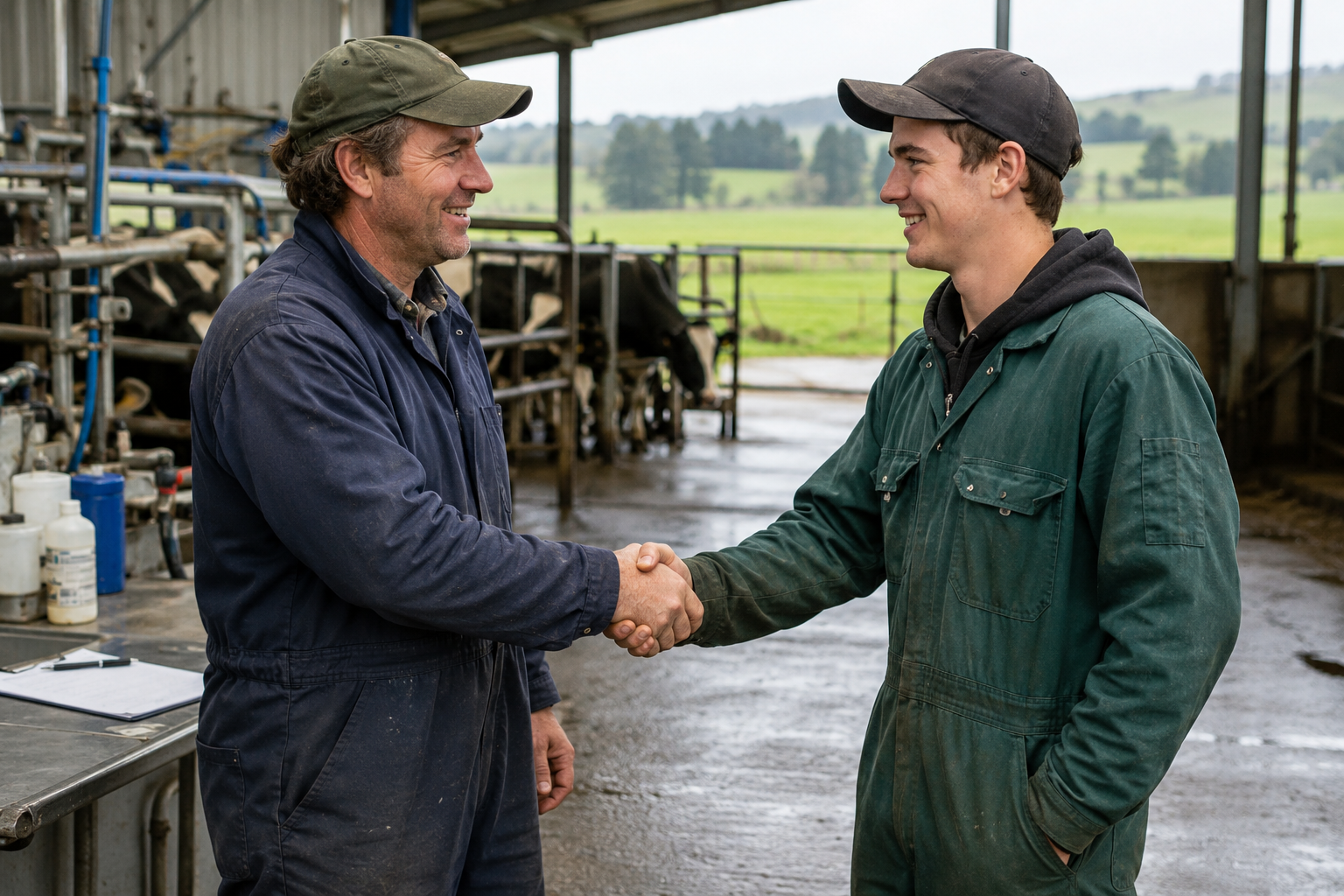
It is easy to assume that the person with the most dairy experience will automatically be the best employee.
That is not always the case.
Someone can have years of experience and still have poor work habits, resist instructions or lack interest in doing things properly. Another person might have less experience but have excellent initiative, common sense, a strong work ethic and a genuine willingness to learn.
Experience is valuable because it means a new employee may require less training. However, attitude determines what they are likely to do with that experience.
A good employee does not need to know everything on their first day. They do need to be prepared to listen.
Look for someone who is comfortable admitting when they do not know something. There is far less risk in an employee saying, “I haven't done that before, can you show me?” than someone confidently doing something incorrectly because they do not want to admit they are unsure.
“You can teach someone how your farm works. Teaching someone to care about doing a good job is much harder.”
Decide what a good employee means to your farm
Before advertising, think carefully about what you actually need.
Every dairy farm is different. The employee who is perfect for one operation may not suit another.
If you are running a large, highly organised operation, you may need someone who is comfortable working within established systems and following procedures accurately. On a smaller family farm, you may need someone who can turn their hand to a variety of jobs and recognise what needs doing without being told.
Perhaps your biggest requirement is someone who is confident with cows. Perhaps you need machinery skills. Perhaps you need someone who can eventually take responsibility for a section of the farm while you concentrate elsewhere.
Be specific.
Rather than simply looking for a “hard-working farm assistant”, consider the behaviours that would demonstrate that quality.
You want someone who turns up when they say they will. Someone who does not leave jobs half finished. Someone who looks after equipment. Someone who notices when a cow is not right. Someone who communicates when there is a problem rather than hoping it will disappear.
Those are the qualities that make a person useful on a farm.
Make the interview work harder for you
One of the problems with interviews is that candidates know they are supposed to give good answers.
Ask, “Are you reliable?” and almost everyone will say yes.
Ask, “Are you a hard worker?” and again, the answer is obvious.
Instead, ask questions that make them tell you what they have actually done.
Ask them to describe the hardest day they have experienced on a farm. Ask what went wrong and how they handled it.
Ask them about a mistake they have made. The answer is less important than how they talk about it. Do they accept responsibility, or is everyone else blamed?
Ask them about a time they disagreed with an employer. You are not necessarily looking for someone who has never disagreed with anyone. You are trying to understand how they deal with conflict.
Ask what they enjoy about dairy farming.
Ask what they find difficult.
Ask what they would like to learn.
The answers can give you a much better picture of the person than a series of questions where the expected answer is obvious.
Pay attention to the questions they ask you
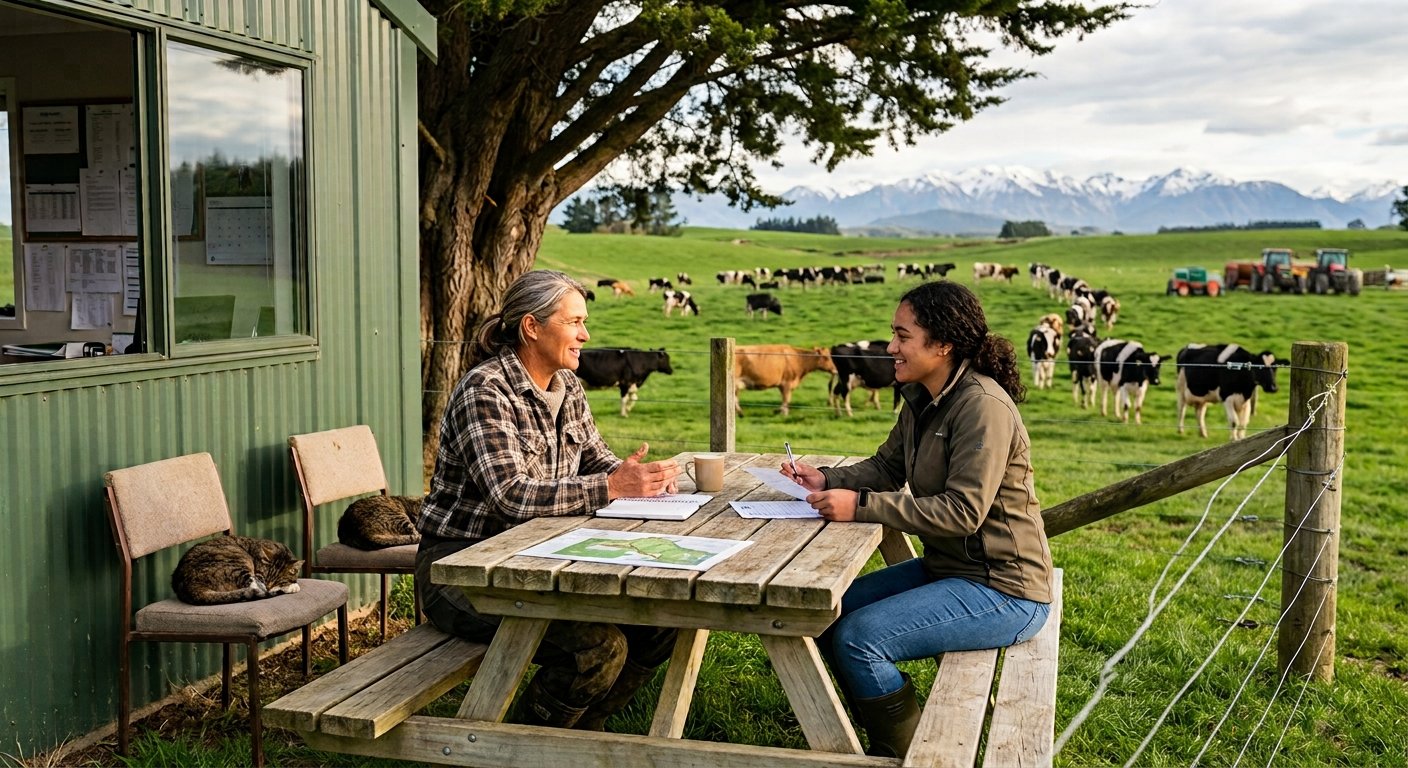
The interview is also an opportunity to see what interests the applicant.
Someone who asks about the cows, the farm system, the roster, their responsibilities and how the team works is showing that they are thinking about the job.
Someone who spends the entire interview talking about what they want without showing much interest in the actual farm may need closer consideration.
This does not mean there is a right or wrong list of questions. It is about whether the person appears genuinely interested in where they are applying.
A good employee does not have to be passionate about every aspect of farming. They do need to demonstrate that they understand they are joining an operating business rather than simply taking a job.
References are worth the phone call
A reference should not be treated as a formality.
If someone has given you the name of a previous employer, actually speak to them.
Ask specific questions.
Was the person reliable?
Did they turn up on time?
Could they be trusted to work without supervision?
Did they look after animals properly?
Did they follow instructions?
How did they get along with other staff?
How did they respond when they were corrected?
Would you employ them again?
That final question can be particularly revealing.
You are not necessarily looking for a perfect reference. Nobody is perfect and every employee will have areas they need to improve.
What you want is an honest picture.
If the previous employer tells you that the person was excellent with cows but needed reminders about keeping equipment tidy, that is useful information. You can decide whether that weakness matters to your operation.
Watch the little things
Once someone arrives on farm, the real assessment begins.
Do they arrive on time?
Do they look for work when they finish the job they were given?
Do they put tools away?
Do they close gates properly?
Do they treat animals calmly?
Do they notice when something is not right?
Do they tell you when they have made a mistake?
Do they remember what you showed them yesterday?
These small behaviours often reveal more than a CV ever could.
A person who has been shown something once and remembers it the next time is demonstrating that they are listening.
A person who makes a mistake, accepts correction and gets it right the next time is demonstrating that they can learn.
A person who repeatedly makes the same mistake, despite being shown what to do, is giving you a very different message.
Watch what happens when you walk away
One of the simplest ways to assess a new employee is to stop watching them.
When the farm owner is standing nearby, most employees will work hard.
What happens when you leave them to complete a job?
Does the standard remain the same?
This can tell you a great deal.
A good employee does not need someone constantly standing over them. They understand what needs to be achieved and take some ownership of getting there.
That does not mean they should make every decision themselves. New employees need direction, particularly when they are learning the farm's systems.
But over time, you should see increasing independence.
The aim is not to employ someone who needs fewer instructions on their first day. The aim is to employ someone who needs fewer instructions six months later because they have learned how your farm operates.
Do not judge too quickly
There is another side to this.
Sometimes a new employee looks unsuitable because they have not been properly trained.
Every farm has different systems. Your milking routine may be different from their previous farm. Your calf-rearing programme may be different. Your machinery, feeding system, stock handling and expectations may all be unfamiliar.
Give people a reasonable opportunity to learn.
Explain what you expect. Show them how you want it done. Let them ask questions. Then watch whether they improve.
That last part is important.
Nobody expects perfection while someone is learning. What you should expect is progress.
The biggest test is attitude
A good farm employee does not have to be the fastest person in the shed or the most experienced person in the team.
They need to care.
They care about doing the job properly. They care about the cows. They care about their workmates. They care enough to speak up when something is wrong.
They also understand that dairy farming is a team effort.
There will be mornings when everyone is tired. There will be weather that makes the job miserable. There will be breakdowns, sick cows, unexpected jobs and days when the planned finish time disappears.
You need people who can handle those moments without falling apart or making everyone else's day harder.
Remember that good staff are choosing too
Farmers are often focused on whether a candidate is good enough for their farm.
The candidate is also deciding whether your farm is somewhere they want to work.
If you want to attract good employees, you need to be honest about the job.
Be clear about the roster, hours, expectations, accommodation, responsibilities and time off. Do not sell the position as something it is not simply because you are desperate to fill a vacancy.
A person who accepts a job based on one set of expectations and discovers something completely different after arriving is unlikely to become a long-term employee.
Good recruitment starts with honesty.
Give good people a reason to stay
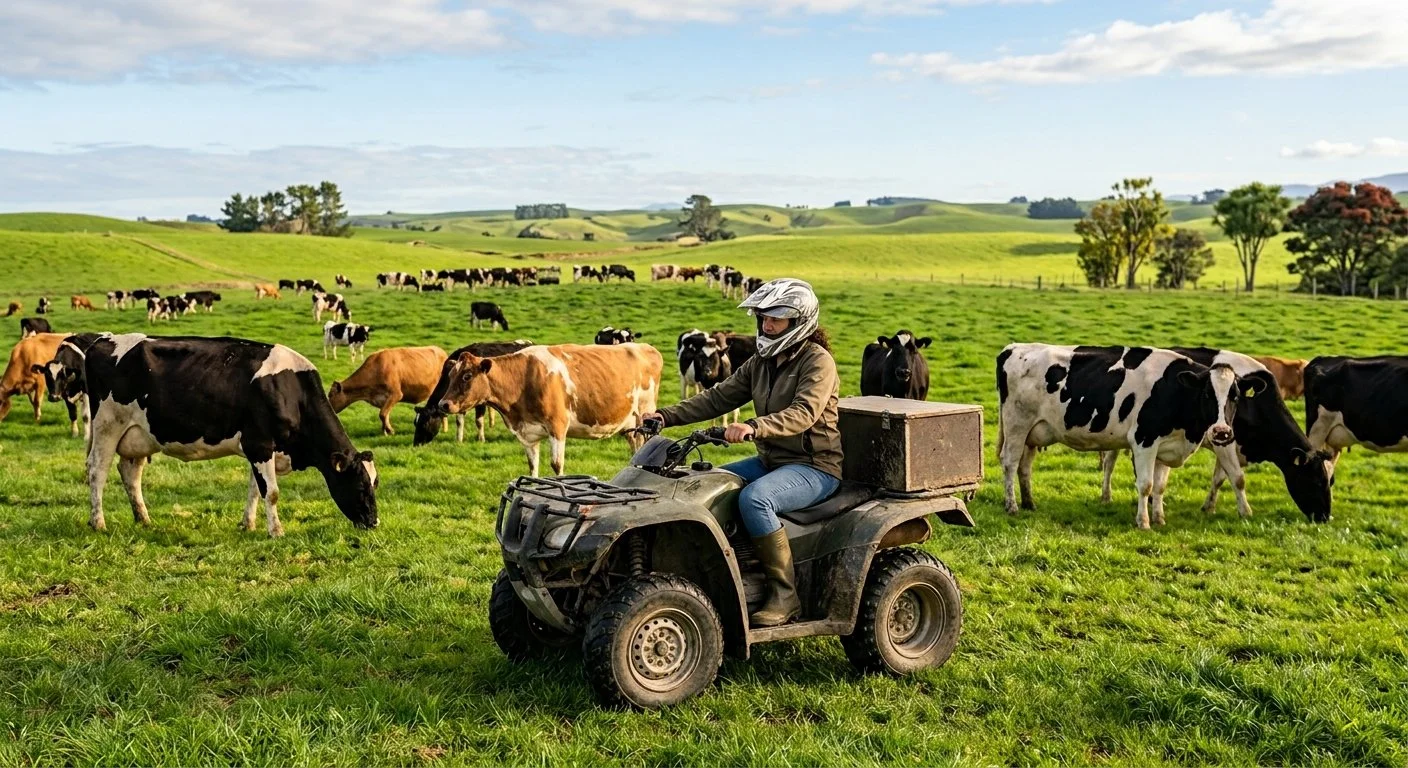
Finding a good employee is only half the job. Once you have one, look after them.
That does not mean giving every employee everything they ask for. It means treating people fairly, communicating properly and recognising when someone is doing a good job. Say thank you.
Explain why a change is being made rather than simply announcing it.
Ask how things are going.
If someone is struggling, address it early rather than allowing resentment to build.
If someone is doing exceptionally well, tell them.
People generally want to know that their work matters.
A farm can be a demanding workplace without being a miserable one.
There is no magic interview question that will guarantee you the perfect farm employee. People can surprise you in both directions.
The person who looks outstanding on paper may struggle once the reality of farm life hits. The quiet applicant with less experience may turn out to be one of the best employees you have ever employed.
That is why good recruitment is about looking at the whole person.
Consider their experience, but do not stop there. Look at their attitude, reliability, communication, willingness to learn and ability to take responsibility.
Check their references. Ask questions that require real examples rather than rehearsed answers.
And once they arrive on farm, watch what they do.
Do they improve?
Do they take pride in their work?
Do they notice things?
Do they take responsibility?
Can you trust them when you are not standing beside them?
Ultimately, that is the test.
The best employee is not necessarily the person who tells you in an interview that they are hard-working.
It is the person who proves it when there is nobody there to applaud them.