The Scale of American Dairy: Where Technology Meets Big Business
"From family farms to some of the world's largest dairy operations, the American dairy industry proves there is more than one way to produce milk efficiently."
Across seven days, our global dairy journey has taken us through some of the most fascinating milk-producing regions in the world.
We have travelled from India's diverse dairy systems, to Egypt's desert camel dairies, Israel's technology-driven farms and Ireland's pasture-based production model.
Now we arrive in the United States — a country where dairy farming operates on a scale unlike almost anywhere else in the world.
Here, dairy production combines science, technology, specialised management and sheer scale to supply milk and dairy products to one of the world's largest consumer markets.
The American dairy industry is a fascinating contrast of traditional farming values and cutting-edge innovation.
It is a place where family farms continue through generations, while some operations manage thousands of cows using technology that would have seemed impossible only a few decades ago.
Welcome to the final instalment of "How the World Produces Milk", where we explore how the United States has built one of the world's most productive and technologically advanced dairy industries.
A Dairy Industry Built on Scale
The first thing that stands out about American dairy farming is scale.
Unlike the pasture-based systems common in New Zealand and Ireland, much of the United States dairy industry operates through larger, specialised farms.
This model has developed partly because of geography.
Different regions across the country provide different advantages, from the cooler climates of the northern states to the irrigated agricultural regions of the west.
Large dairy farms are often located close to feed production areas, allowing farmers to efficiently grow, harvest and store the enormous quantities of feed required to support their herds.
While the size of these farms may look very different from what many New Zealand farmers are familiar with, the focus remains the same — healthy cows producing high-quality milk efficiently.
Feeding Cows for Maximum Performance
American dairy farming is heavily focused on nutrition.
With large herds requiring consistent performance, feed management has become a highly specialised science.
Many farms produce or source carefully balanced rations containing forage crops such as corn silage, alfalfa and other high-quality feeds.
Nutritionists work closely with farmers to develop diets that support milk production, rumen health and cow longevity.
Rather than relying primarily on grazed pasture, American systems often use controlled feeding environments where every kilogram of dry matter is carefully measured.
The objective is not simply to feed more. It is to feed smarter.
“The future of dairy farming is not defined by herd size. It is defined by how well farmers understand their cows, manage their resources and adapt to change.”
Technology Inside the Dairy Shed
Technology has become one of the defining features of modern American dairy farming.
From automated milking systems to advanced herd monitoring, many farms use data to make faster and more accurate decisions.
Sensors can track cow activity, health indicators and production patterns, helping farmers identify changes before they become major problems.
Robotic systems are also becoming increasingly common, allowing cows to choose when they are milked while providing farmers with detailed information about each animal.
This approach creates a more individualised management system where every cow's performance and wellbeing can be monitored.
The result is a shift from managing the herd as a whole to managing thousands of individual cows.
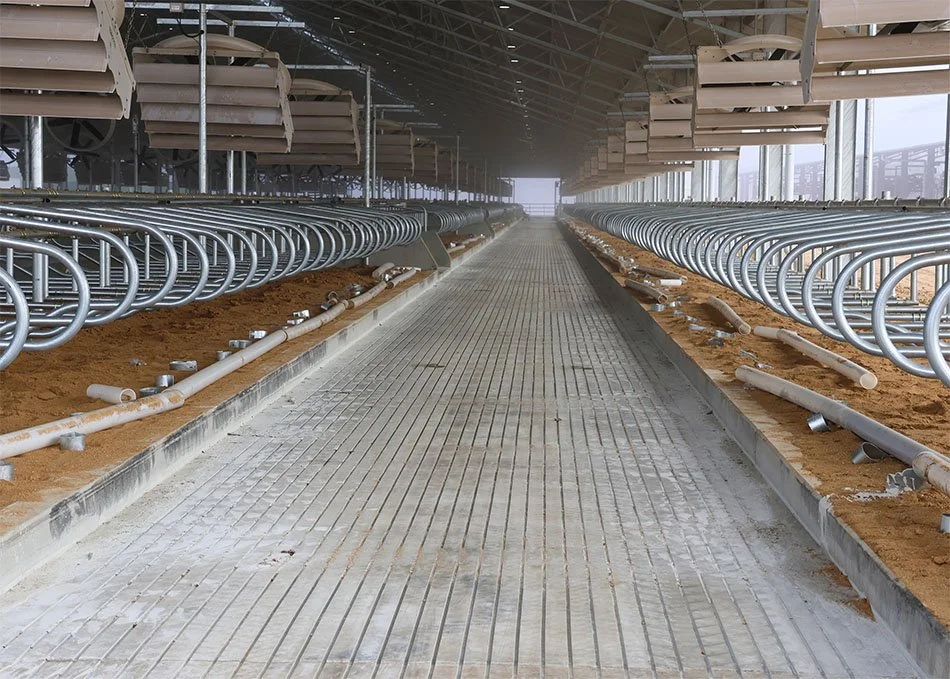
Photo supplied by inBarn
Cow Comfort at a New Level
One of the most important developments in large-scale dairy farming has been the focus on cow comfort.
Modern American dairies invest heavily in creating environments where cows can rest, eat and move comfortably.
Large freestall barns protect cows from extreme weather conditions, while ventilation, cooling systems and carefully designed bedding areas help maintain animal welfare.
In regions where summer temperatures can become severe, cooling technology plays an essential role in protecting milk production and fertility.
The message from leading American dairy farms is clear — productive cows are comfortable cows.
Efficiency Through Specialisation
American dairy farms have developed highly specialised teams to manage different aspects of production.
Veterinarians, nutritionists, reproduction specialists and farm managers often work together using detailed information to guide decisions.
This level of specialisation allows farmers to focus on continuous improvement.
Whether it is improving fertility, reducing environmental impact or increasing milk quality, decisions are increasingly driven by data rather than guesswork.
Sustainability and the Future
Like dairy farmers everywhere, American producers are facing increasing pressure to improve sustainability.
Many farms are investing in renewable energy, manure management systems and technologies designed to reduce environmental impact.
Anaerobic digesters, which capture methane from manure and convert it into energy, are becoming more common on larger operations.
Water management, resource efficiency and reducing waste are also becoming central parts of future planning.
The challenge is the same worldwide — producing nutritious food while protecting the resources needed for future generations.
What Can New Zealand Learn?
The United States represents a very different dairy system from New Zealand.
Where New Zealand has built its competitive advantage around pasture and low-cost grazing systems, American dairy farming has focused on scale, consistency and technological efficiency.
Neither system is perfect, and neither system suits every environment.
The greatest lesson from travelling the world of dairy is that successful farming comes from understanding your own strengths.
India demonstrates the importance of diversity.
Egypt shows how animals can thrive in extreme environments.
Israel proves the power of innovation.
Ireland highlights the value of grass.
And the United States demonstrates what can be achieved when technology, investment and specialised management come together.
Across every country, one thing remains constant.
Behind every litre of milk is a farmer making decisions every day to care for animals, manage resources and produce quality food.
The future of dairy will not belong to one country or one farming model.
It will belong to farmers who continue learning, adapting and finding better ways to produce milk for a changing world.
Series Conclusion
Seven Countries. Seven Dairy Stories. One Global Industry.
From traditional systems to technological breakthroughs, our journey around the world has shown there is no single pathway to successful dairy farming.
Every country brings its own challenges, opportunities and innovations.
Yet the foundation remains unchanged.
Great dairy farming starts with great cows, skilled farmers and a commitment to doing better every season.