
Managing digital dermatitis

Welcome to Day 6 of our seven-day series looking at feed and nutrition management. Today, we turn our attention to something that can have a very different effect on the herd but is just as important to keep under control: digital dermatitis and the ongoing battle to keep cows on sound, healthy feet.
Foot problems have a habit of becoming expensive before they become obvious. A cow that is slightly uncomfortable may spend less time walking, alter her behaviour around the herd or become reluctant to move through the dairy shed. By the time she is noticeably lame, the problem may have been developing for some time.
The disease was first diagnosed in New Zealand dairy herds in 2004, with reported cases increasing from around 2011 onwards. Since then, it has become established across many of the country’s major dairy-farming regions. While the disease is now found on a number of farms, the proportion of affected cows within individual herds generally remains relatively low.
Digital dermatitis is therefore not simply a hoof-care issue. It is a herd management issue involving the environment, hygiene, cow flow, footbath management, early detection and treatment.
Start with the environment
Digital dermatitis thrives where cows are regularly exposed to wet, dirty conditions. Areas such as collecting yards, races, stand-off areas and around water troughs can become particularly important because cows may spend considerable time there with their feet exposed to moisture and manure.
Keeping every concrete surface perfectly clean and dry is neither realistic nor necessary on a working dairy farm. The important question is whether the environment is creating unnecessary pressure on the cows' feet.
Where manure and moisture are continually building up, improving drainage, scraping, cleaning and cow flow can help reduce exposure. Good shed design and sensible infrastructure can therefore play an important role in foot health.
This is one reason why digital dermatitis should not be treated as something that starts and finishes at the footbath.
“The footbath is part of the solution, but it cannot compensate for a dirty environment and poor foot hygiene.”
Know what you are looking for
Early detection is important because digital dermatitis can be much easier to manage when lesions are identified before they become severe and painful.
Farmers and staff should become familiar with what affected areas can look like, including red, inflamed or raw-looking lesions around the heel area. Some lesions can be small and easily missed, particularly when cows are moving quickly through the shed.
Regular observation is therefore valuable.
Lameness itself is a warning sign, but waiting until a cow is obviously lame is not ideal. Watching how cows walk, stand and move through the dairy can provide useful clues, particularly when an individual cow starts behaving differently from the rest of the herd.
The footbath has a job to do
Footbaths can be an important part of a digital dermatitis control programme, but they need to be designed and managed properly.
A footbath that is too short, too shallow or poorly positioned may not provide consistent coverage of the feet. If cows are rushing through it, jumping over it or avoiding parts of the solution, the effectiveness of the process can be compromised.
The bath needs to fit the cow flow and the shed rather than being treated as an afterthought.
It also needs to be practical for the people managing it. If changing, cleaning or preparing the footbath is unnecessarily difficult, there is a greater risk that the routine will not be followed consistently.
Clean solution matters
A footbath solution does not remain in perfect condition indefinitely. As cows pass through, manure and other organic material accumulate and the solution becomes contaminated.
This is why simply putting a chemical into a bath and leaving it there for as long as possible is not a reliable management strategy.
The solution needs to be changed according to the product requirements and the level of contamination. Following the label instructions for the particular footbath product being used is important, as different products have different requirements for concentration, preparation, contact time and disposal.
More chemical does not automatically mean better results.
The objective is to use an appropriate product correctly and consistently rather than assuming that making the solution stronger will solve the problem.
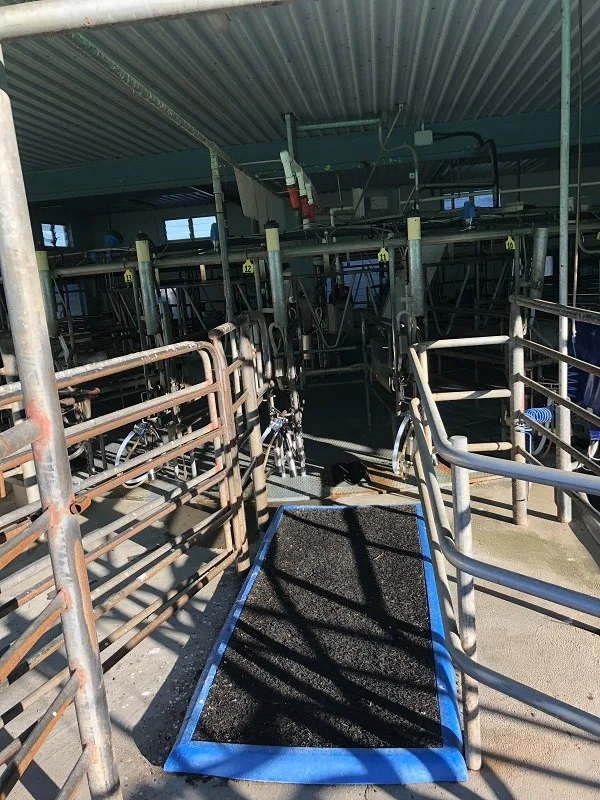
Photo courtesy of Bugess Matting - Hoofbond Footbath
Preparation is part of the job
There is often a temptation to think of the footbath as a five-minute job at the end of milking. In reality, good footbath management starts before the first cow walks through it.
The bath needs to be prepared correctly, the solution needs to be appropriate for the intended use and the surrounding area needs to allow cows to move through without unnecessary disruption.
If the bath is being used as part of a regular herd programme, everyone involved needs to understand what the process is and why it matters.
Consistency is particularly important when several people share the milking routine.
Don't forget individual treatment
A footbath is a herd-level management tool. It should not be viewed as a substitute for examining and treating individual cows with active lesions.
When a cow is identified with digital dermatitis, she may need individual attention rather than simply being sent through the next footbath with everyone else.
The appropriate treatment will depend on the lesion and the farm's veterinary and animal-health programme. Farmers should work with their veterinarian or suitably qualified animal-health professional where individual treatment decisions are required.
The important point is to act early rather than allowing a small lesion to become a larger and more painful problem.
Foot health and lameness are connected
Digital dermatitis is one possible cause of lameness, but not every lame cow has digital dermatitis.
That distinction matters.
Sole ulcers, white line disease, bruising and other hoof problems can have different causes and require different approaches. Treating every case of lameness as though it were the same problem can mean the underlying cause is missed.
This is where good records become useful.
If lameness is increasing, or particular groups of cows are repeatedly affected, the pattern may provide clues about what is happening in the herd.
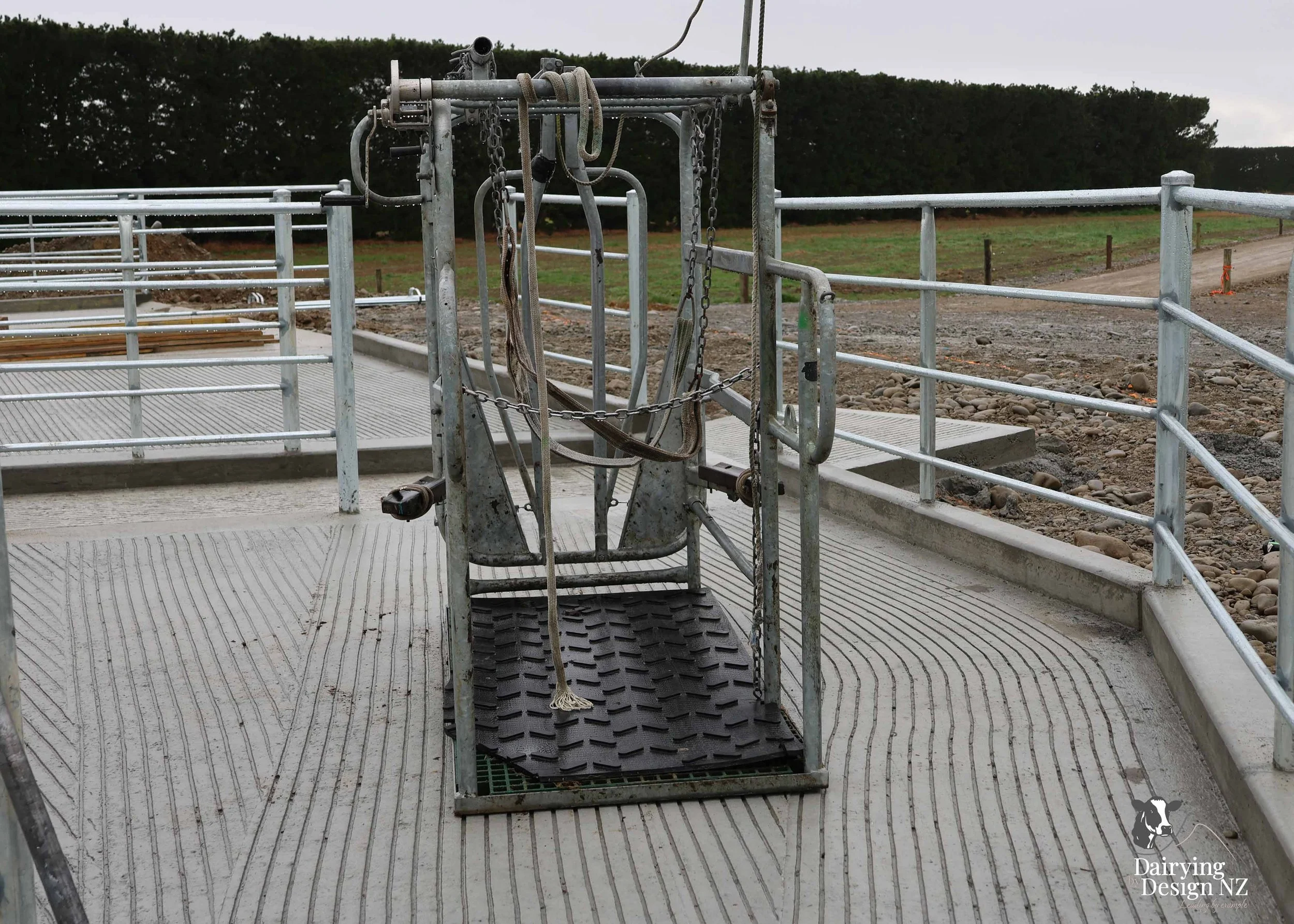
Photo by Dianna Malcolm
Hoof trimming has a role
Functional hoof trimming can be an important part of maintaining good foot health, particularly when carried out appropriately and by someone with the necessary skills.
The aim is not simply to trim every cow as aggressively as possible. It is about maintaining appropriate hoof shape, identifying problems and dealing with lesions or abnormalities before they become more serious.
A well-managed hoof-care programme should complement environmental management and digital dermatitis control rather than being used as a replacement for them.
Biosecurity starts at the boundary
Digital dermatitis can move between groups and farms, which makes biosecurity another important consideration.
Introducing animals from another property, sharing equipment or allowing livestock to come into contact with contaminated areas can create opportunities for infectious foot conditions to spread.
Farmers cannot always control every risk, but they can think about where animals, people and equipment are moving and whether unnecessary cross-contamination can be reduced.
This is particularly relevant when outside hoof-care personnel are working across multiple farms. Sensible hygiene practices around equipment and handling can help reduce the opportunity for organisms to be carried from one herd to another.
Cow flow makes a difference
The way cows move through the farm can have an effect on both foot health and the practical management of digital dermatitis.
Long periods standing in wet or contaminated areas increase exposure. Rough or damaged concrete can also contribute to discomfort and affect how confidently cows move.
If cows are regularly bunching up in particular areas, slipping on surfaces or spending longer than necessary waiting in wet conditions, it is worth asking whether infrastructure changes could reduce the pressure.
Sometimes the answer is not another product or another treatment. It may be fixing the bit of the farm that everyone has learned to work around.
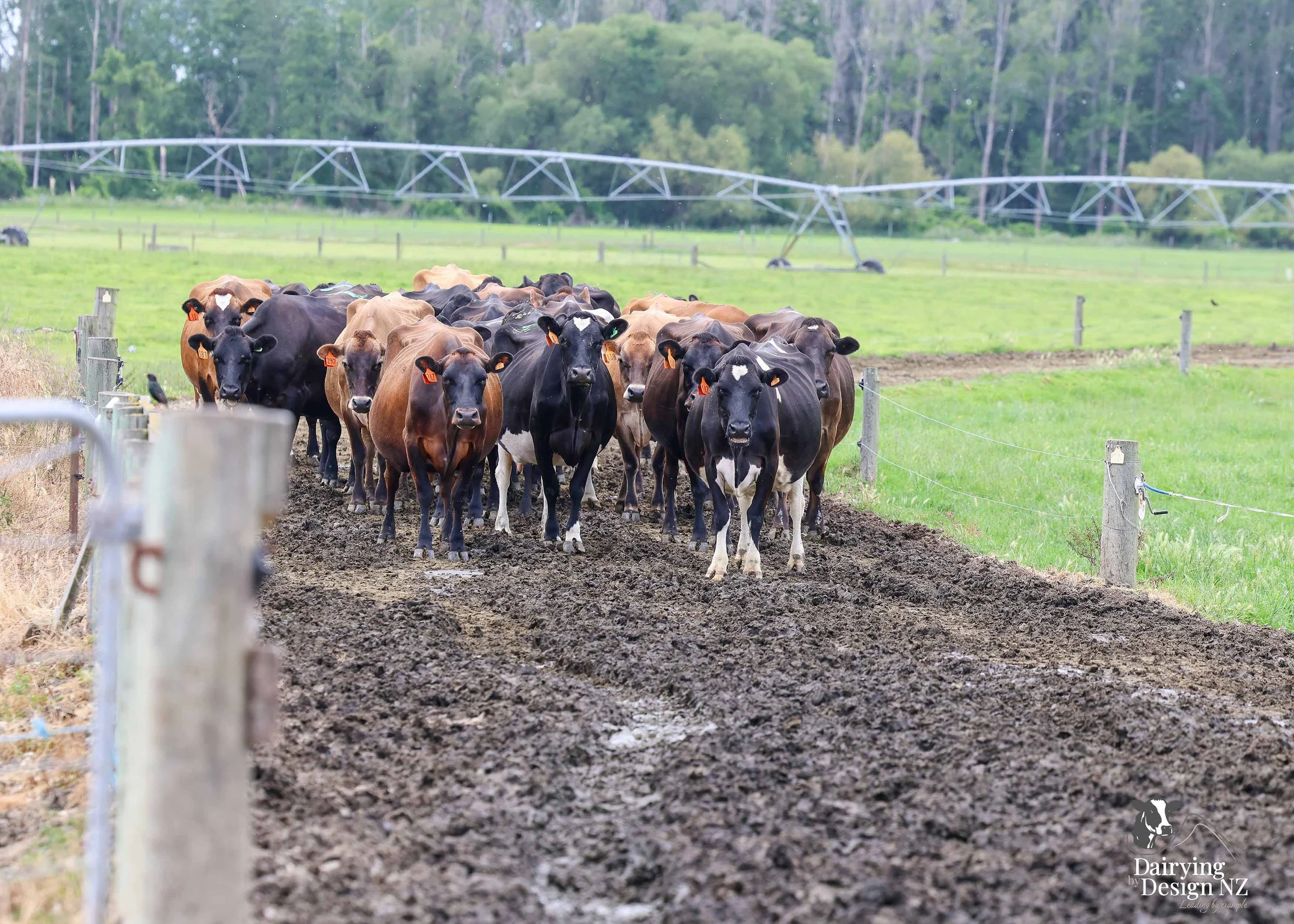
Photo by Dianna Malcolm
Watch the problem areas
Farmers often know exactly where cows tend to get dirty because those areas are visible every day.
The same approach can be applied to foot health.
If digital dermatitis cases are more common at particular times of year, in certain groups or around particular parts of the farm, those patterns are worth recording. Weather, rainfall, stocking pressure, shed conditions and cow flow can all influence the level of environmental challenge.
Looking for patterns makes it easier to move from simply treating cases to managing the reasons those cases are occurring.
Staff need to know the plan
A digital dermatitis programme works better when everyone on the farm understands what to look for and what to do when they find it.
The person drafting cows, the person milking, the person responsible for hoof care and the person managing the footbath may all see different parts of the problem.
Clear communication means a cow that is noticed walking differently does not simply disappear into the herd without anyone following up.
It also means everyone knows the footbath routine, understands the product being used and knows who to tell when there is a problem.
Prevention is easier than playing catch-up
Once digital dermatitis becomes established in a herd, getting it under control can take considerably more effort than preventing unnecessary spread and exposure in the first place.
That does not mean every case can be prevented. Dairy farms are working environments, and cows are exposed to wet and dirty conditions as part of normal farming.
But reducing the environmental challenge, maintaining good footbath practices, identifying affected cows early and dealing with cases promptly can all contribute to better foot health.
The objective is not perfection. It is reducing the number of opportunities for a manageable problem to become a herd-wide headache.
Measure what is happening
It is difficult to know whether a foot-health programme is working if nobody is keeping track.
Records do not need to become another giant spreadsheet. Even basic information about lameness cases, digital dermatitis treatments, hoof-trimming findings and recurring problem areas can help identify trends.
If the number of cases is increasing, something may need to change.
If cases are decreasing and cows are moving well, the current programme may be doing its job.
The important thing is having enough information to know which situation you are dealing with.
Look at the whole system
Digital dermatitis is often discussed as though the answer is simply a better footbath. In reality, good control is much broader.
It involves the condition of the walking surfaces, the amount of manure and moisture present, cow flow, time spent standing, footbath design, solution management, individual treatment, hoof care and biosecurity.
Each part contributes to the overall picture.
A farm can have an excellent footbath but still struggle if cows are continually standing in contaminated conditions. Equally, a clean environment will not solve an established problem if affected cows are not being identified and treated appropriately.
The most useful approach is to look at the whole system rather than searching for one magic fix.
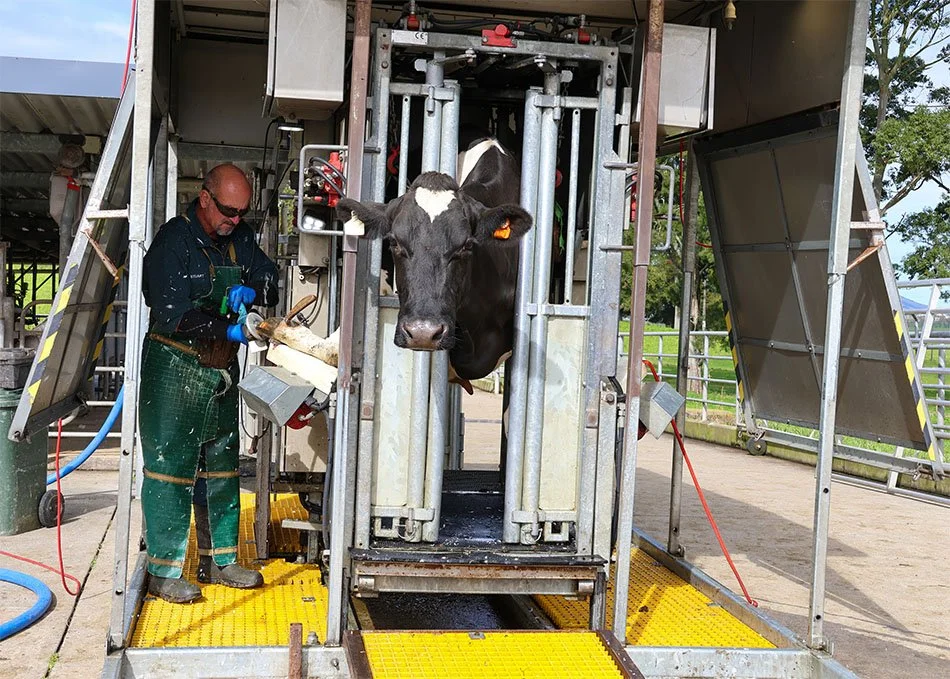
Photo by Dianna Malcolm - Stuart Rogers from Hoofit tending to a cows hoof.
Good feet are productive feet
Healthy feet allow cows to move comfortably between paddocks, feed, water and the dairy. They are more able to behave normally, compete for feed and maintain their usual routines.
Foot health is therefore closely connected with the wider productivity and welfare of the herd.
The farmer does not need to become a hoof specialist overnight. But knowing what normal movement looks like, noticing changes early and having a clear plan for managing foot problems can make a substantial difference.
Digital dermatitis may be small in physical size, but its impact can be considerably bigger if it is ignored.
Managing digital dermatitis starts with reducing the environmental challenge. Pay attention to wet and dirty areas, cow flow, standing times, walking surfaces and places where manure tends to accumulate.
Make sure the footbath is practical, correctly prepared and managed consistently. Use the appropriate product according to its label instructions, including concentration, contact time, handling and disposal requirements, and remember that a contaminated solution is unlikely to provide the same protection as a properly managed one.
Identify affected cows early and deal with individual lesions appropriately rather than relying on the herd footbath alone. Keep an eye on lameness patterns and hoof-trimming findings so recurring problems can be identified rather than repeatedly treated without looking for the cause.
Finally, remember that foot health is a whole-farm issue. Good hygiene, sensible infrastructure, consistent routines, early detection and biosecurity all have a role to play. The aim is to keep cows comfortable, mobile and moving confidently through the system.
Tomorrow, Day 7 will bring our seven-day series to a close by looking at the economics of sexed semen, when it can make sense to use sexed semen and where beef genetics can fit into a herd replacement strategy. See you tomorrow.