
by Dianna Malcolm for Daviesway DASCO (Australia)
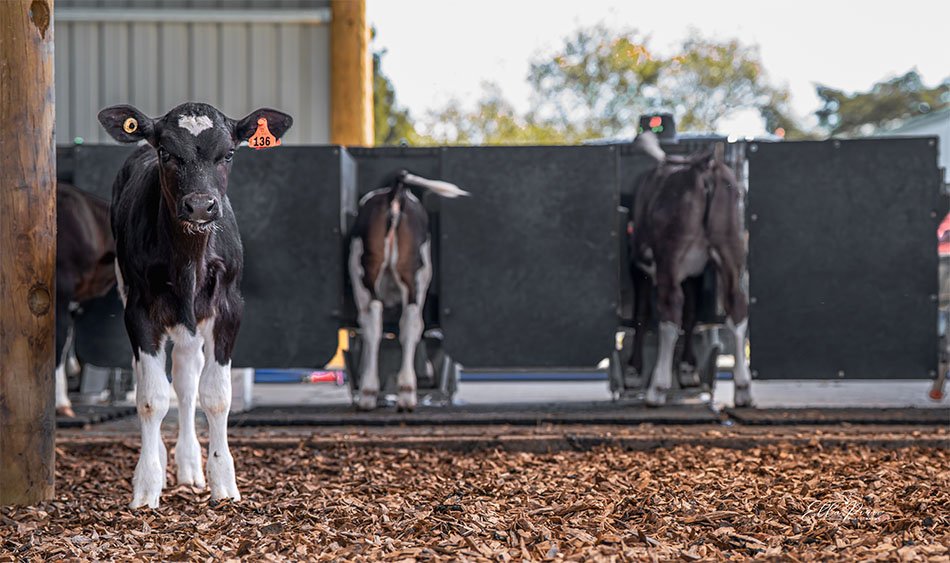
Photo: Ella Pirie
Half of a cow’s lifetime height and growth is achieved in the first six months of its life, according to a US calf-rearing specialist.
David Kuehnel was raised on a family farm in Wisconsin, which reared 1200 special fed veal calves every year. He went on to major in Meat and Animal Science at the University of Wisconsin, and he is the former president of Milk Products for Land O’Lakes – the biggest producer of milk replacer in North America. Today, he runs consultancy firm, Rule of Three.
“There is no such thing as compensatory frame growth – a short calf will be a short cow.”
Talking to dairy farmers throughout Victoria a few years ago as a guest of Daviesway DASCO, David explained that 25% of a calf’s lifetime weight gain also happened within that precious six-month window of birth.
And, for every additional 100gms of Average Daily Weight Gain (ADG) achieved from birth to breeding, producers could expect an additional 821 litres of production on the first three lactations – or a seven to one Return on Investment (ROI).
“We can argue whether or not it was an increase of 600 litres or 1000 litres,” David told one group in northern Victoria. “But the key point, and the takeaway message, is that the better the weight gain we achieve pre-puberty and pre-breeding age, the bigger the impact on the future milking ability of those individuals.
“And, you can’t recover it, if you don’t have it to begin with.
“There is no such thing as compensatory frame growth – a short calf will be a short cow. I’m talking not just scale and size. I’m also talking body, lung, liver and digestive capacity. They are all set in early life.”
He acknowledged that every operation was different, but stressed that the reality of the math, and the ROI didn’t change. The subjective part of the story lay only in the way that producers chose to prioritise their next generation.
US studies reveal that calves fed higher solids diet the first eight weeks gained 11kg (16.1%) more weight, were 3.3cm (3.8%) taller, were 5.6cm (7.3%) longer and had 33 litres (17.2%) more body volume.
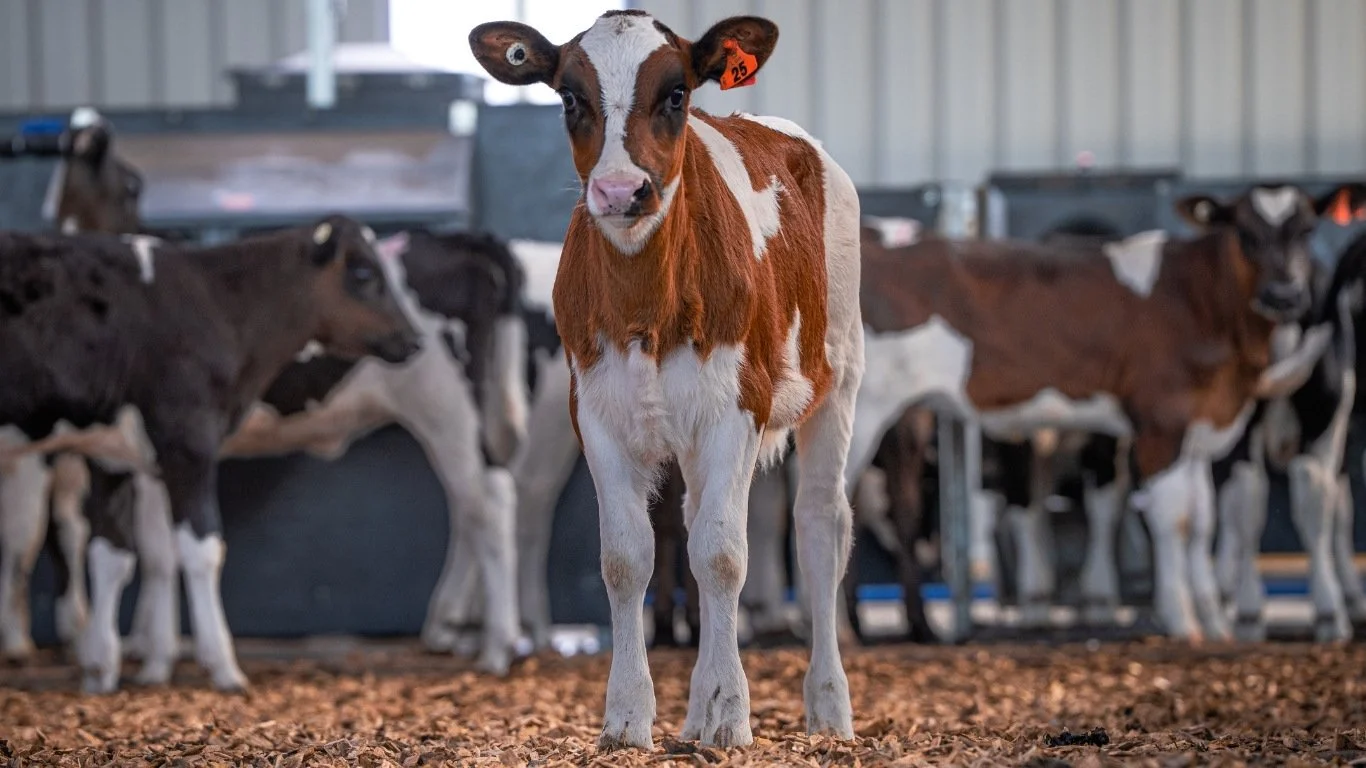
Photo: Dianna Malcolm
Replacement animals or extra cash in replacements?
David was sensitive to the cost of rearing replacement animals in a tight economy. But he offered some options to address the issue. Using a baseline of a 100-cow herd, he explained that producers needed 63 herd replacements if they had an average first-calving age of 23 months (and a cull rate of 30%). At an average first-calving age of 24 months (with a cull rate of 40%), the number of replacement heifers jumped to 88.
“I’d advise to invest only in the calves with the greatest potential and sell your surplus animals as early as possible,” he said. “Re-invest that money into rearing the calves you choose to keep better.
“I think that’s a more positive result than saying, ‘I didn’t have enough money to raise them well, but I raised them all’.
As the conversation turned to the value of using probiotics in the calf shed, David said it was today an important part of the calf-rearing puzzle.
“We’ve learned so much about this subject in the last few years, and we now know there is a really strong interactive relationship between the balance of the bacteria in the gut, and the general health of the animal,” David said.
“The calf’s rumen and intestinal tract is not functioning when it is born,” he said. “We have to develop it.
“And, probiotics – when they are fed at high enough concentrations – have so much to do with developing and supporting the immune system.”

Photo: Dianna Malcolm