
This is day 7, and the final day, of our 7-day series on summer feed: making every kilogram count. Over the past week we have looked at pasture quality, grazing management, feed utilisation, cow behaviour, supplements, protecting the pasture base and preparing for those inevitable moments when summer decides to test the plan.
Today, it is time to put it all together.
Because making every kilogram count is not about one clever trick or one perfect feed decision. It is about a collection of everyday choices that, when they all point in the same direction, can make a significant difference to the efficiency of the whole farm.
Start with what you have
Every farm enters summer with a different starting point.
Pasture covers will differ. Soil types will differ. Stocking rates will differ. Feed reserves will differ. Some farms will be dealing with reliable summer rainfall while others know that a dry spell can arrive almost without warning.
There is no universal summer feed recipe.
The starting point is knowing what you have and being realistic about what the farm is likely to produce as the season progresses.
That means looking at pasture, feed reserves, cow demand and the likely impact of the weather. It also means recognising that the situation can change.
A feed plan is a useful tool, but it should be treated as a working document rather than something carved in stone.
Make the paddock earn its keep
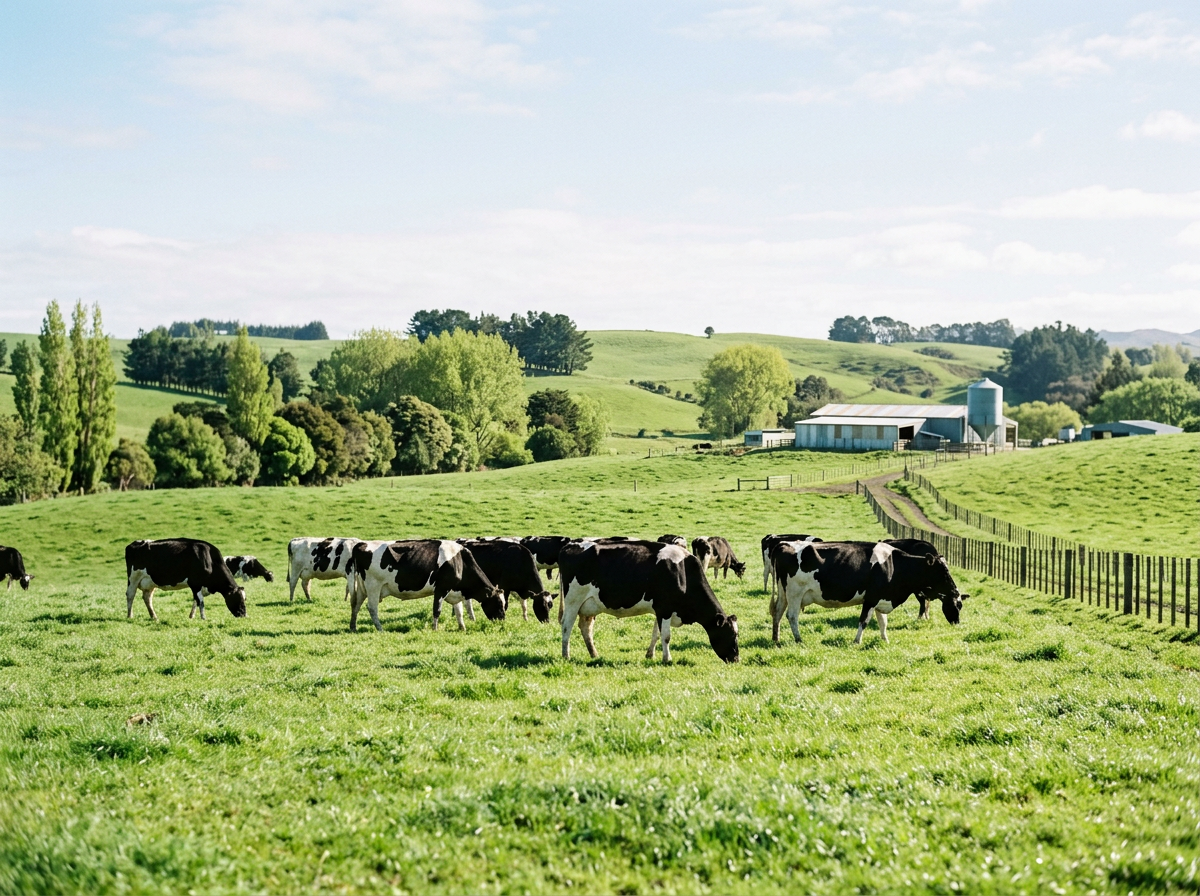
Every paddock has a job to do.
Some will be carrying the herd through the current rotation. Some may be recovering. Some may be producing particularly well, while others may be under pressure from dry conditions.
The challenge is to manage them according to what they can realistically deliver.
That means avoiding the temptation to treat every paddock exactly the same. Pasture growth is rarely uniform across an entire farm, and the cows certainly do not care whether the paddock number says they are supposed to be having a good day.
Look at what is actually growing.
If one area is producing strongly and another is struggling, the grazing plan may need to reflect that. If a paddock is becoming too mature, it may need a different approach from one that is being hit hard by dry weather.
The more closely the grazing plan matches what the farm is actually doing, the more efficiently the available feed can be used.
Feed the cow, not the spreadsheet
Numbers are essential in dairy farming, but they are only part of the picture.
Pasture covers, rotation length, feed inventories and production figures all help tell the story. The cows provide another chapter.
Watch them.
Are they eating with enthusiasm? Are they settled? Are they spending too much time walking? Are they bunching up? Are they seeking shade? Are they leaving more feed behind than expected?
Look at milk production and cow condition as well.
If the numbers say there should be plenty of feed available but the cows are telling a different story, it is worth investigating.
Perhaps pasture quality has changed. Perhaps the weather is affecting grazing behaviour. Perhaps the allocation is not working as intended.
The important thing is not to automatically assume the spreadsheet is wrong or the cows are wrong.
Sometimes both are right, but they are measuring different parts of the system.
Protect tomorrow's feed
One of the strongest themes throughout this series has been the importance of thinking beyond today's grazing.
Summer can encourage short-term thinking because the immediate priority is keeping cows fed. But the paddock being grazed today is also part of the feed supply for the weeks ahead.
Protecting pasture recovery is therefore a critical part of making every kilogram count.
This does not mean avoiding grazing pressure altogether. It means understanding the condition of the pasture and recognising when it is becoming vulnerable.
The objective is to finish the summer with something left in the tank rather than discovering that the farm has used every available option just when the season still has plenty of running left.

Use supplements with a purpose
Supplements can be extremely useful, but they work best when they have a defined role.
Sometimes they are there to fill a genuine feed deficit. Sometimes they help maintain intake when pasture quality falls. Sometimes they protect the pasture base during dry conditions.
Whatever the reason, knowing why the supplement is being fed makes it easier to decide whether it is still doing the job.
If conditions change, the feeding strategy may need to change too.
There is little value in continuing with yesterday's supplement programme simply because yesterday's programme worked.
Summer is all about adjusting to the conditions in front of you.
Look for the leaks
If the goal is to make every kilogram count, it makes sense to look for where kilograms are disappearing.
Some losses will be unavoidable. Others may be reduced with a little attention.
Feed trampled into the ground, poor storage, spoiled conserved feed, uneven allocations and cows spending unnecessary time away from grazing all represent opportunities to improve.
None of these losses necessarily looks dramatic on its own.
But dairy farming is a numbers game, and small daily losses have a habit of becoming rather larger annual ones.
Finding those leaks is often less expensive than trying to produce more feed to compensate for them.
Make decisions before the crisis
Perhaps the most valuable habit a farmer can develop around summer feed is looking ahead.
If pasture growth is declining, notice it early.
If feed reserves are disappearing faster than expected, work out why.
If cow condition is slipping, investigate before it becomes a bigger problem.
If a dry spell looks likely, consider the options while there is still time to choose between them.
Early decisions generally give you more choices.
Late decisions tend to give you fewer.
And fewer choices usually mean more pressure.
Do not chase every kilogram
There is an important distinction between making every kilogram count and trying to squeeze every possible kilogram out of the system.
They are not the same thing.
Making every kilogram count means using feed efficiently and making sensible decisions about where it creates the most value.
Chasing every kilogram can sometimes mean pushing pasture, cows or feed reserves harder than is sensible.
The best result is not necessarily the highest possible production figure on one particular day.
It is a farming system that remains productive, profitable and resilient as conditions change.
“Making every kilogram count is not about having more feed. It is about making better use of the feed you already have.”
Keep the system simple enough to use
There is plenty of information available to dairy farmers, and modern farming provides more measurements and data than ever before.
That can be incredibly useful.
But information only becomes valuable when it helps you make a better decision.
A summer feed system does not need to become so complicated that nobody has time to actually look at the cows.
Keep the important numbers in front of you. Know what the pasture is doing. Know what feed is available. Know what the cows are telling you.
Then use that information to make practical decisions.
Sometimes the best system is the one that can be understood quickly during a busy morning and still makes sense when the afternoon brings a completely different weather forecast.
Think about the season as a whole
Summer feed management does not begin and end with today's paddock.
Every decision connects to the next one.
Today's grazing affects tomorrow's pasture. Today's supplement use affects next month's feed reserves. Today's cow condition can influence the months ahead.
Thinking about those connections helps keep the focus on the whole system.
A good summer is not simply one where cows are fed every day.
It is one where the pasture has been managed well, feed has been used efficiently, cows have remained healthy and productive, and the farm has retained enough flexibility to deal with whatever comes next.
That is what making every kilogram count is really about.
The small things add up
There is no single summer feed decision that will transform every dairy farm.
The gains often come from the little things.
A better grazing allocation here. Less wastage there. A feed decision made a week earlier. A closer look at residuals. Better water access. More attention to cow behaviour. A supplement used at exactly the point it is needed. A pasture saved because the farmer recognised that the weather was changing.
Individually, those decisions may seem small.
Put them together across a whole summer, and they can add up to a much more efficient feed system.
And that is something worth remembering when the season gets busy.

That's a wrap
And that brings us to the end of our 7-day series on summer feed: making every kilogram count.
Summer will always bring a few surprises. Some will involve too much grass, some not enough, and some will involve looking at the weather forecast and wondering whether the person who wrote it has ever actually been on a dairy farm.
But with a close eye on pasture, a good understanding of the cows, sensible use of supplements and a willingness to adjust the plan, there is plenty that can be done to make the most of the feed available.
The aim is not perfection.
It is efficiency, good decision-making and keeping the whole system moving in the right direction.
Thanks for joining us for the past seven days, and from all of us at Dairying by Design NZ, we hope the season ahead delivers plenty of grass, happy cows and just enough rain to keep everyone smiling.
Until our next 7-day series, keep looking after the cows, the pasture and the kilograms in between.